

305
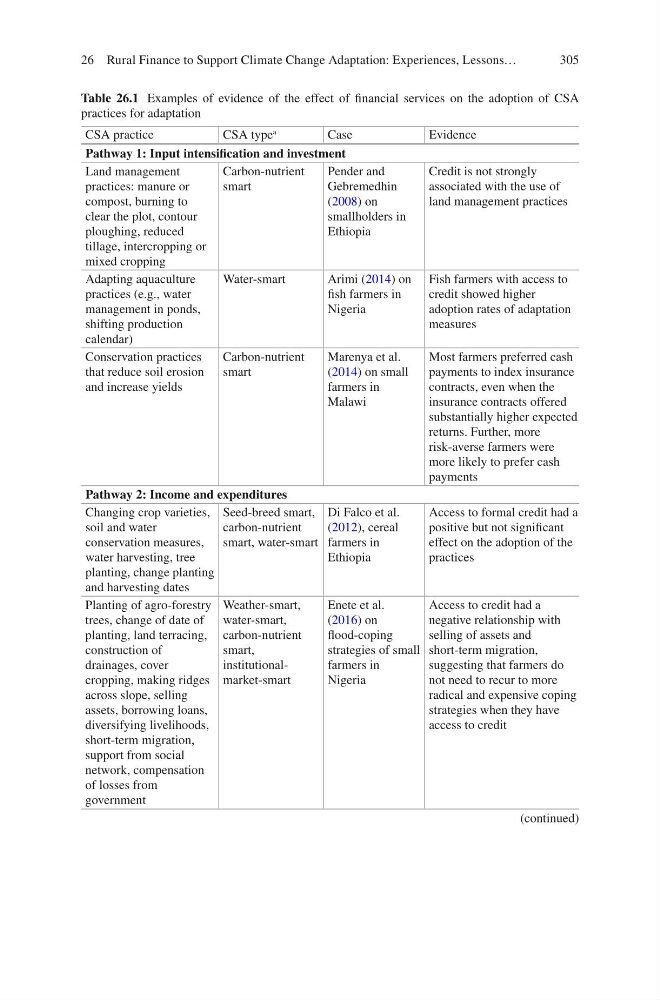
Table 26.1 Examples of evidence of the effect of financial services on the adoption of CSA
practices for adaptation
CSA practice
CSA type
a
Case
Evidence
Pathway 1: Input intensification and investment
Land management
practices: manure or
compost, burning to
clear the plot, contour
ploughing, reduced
tillage, intercropping or
mixed cropping
Carbon-nutrient
smart
Pender and
Gebremedhin
(2008) on
smallholders in
Ethiopia
Credit is not strongly
associated with the use of
land management practices
Adapting aquaculture
practices (e.g., water
management in ponds,
shifting production
calendar)
Water-smart
Arimi (2014) on
fish farmers in
Nigeria
Fish farmers with access to
credit showed higher
adoption rates of adaptation
measures
Conservation practices
that reduce soil erosion
and increase yields
Carbon-nutrient
smart
Marenya et al.
(2014) on small
farmers in
Malawi
Most farmers preferred cash
payments to index insurance
contracts, even when the
insurance contracts offered
substantially higher expected
returns. Further, more
risk-averse farmers were
more likely to prefer cash
payments
Pathway 2: Income and expenditures
Changing crop varieties,
soil and water
conservation measures,
water harvesting, tree
planting, change planting
and harvesting dates
Seed-breed smart,
carbon-nutrient
smart, water-smart
Di Falco et al.
(2012), cereal
farmers in
Ethiopia
Access to formal credit had a
positive but not significant
effect on the adoption of the
practices
Planting of agro-forestry
trees, change of date of
planting, land terracing,
construction of
drainages, cover
cropping, making ridges
across slope, selling
assets, borrowing loans,
diversifying livelihoods,
short-term migration,
support from social
network, compensation
of losses from
government
Weather-smart,
water-smart,
carbon-nutrient
smart,
institutionalmarket- smart
Enete et al.
(2016) on
flood-coping
strategies of small
farmers in
Nigeria
Access to credit had a
negative relationship with
selling of assets and
short-term migration,
suggesting that farmers do
not need to recur to more
radical and expensive coping
strategies when they have
access to credit
(continued)
26 Rural Finance to Support Climate Change Adaptation: Experiences, Lessons…
Table 26.1 Examples of evidence of the effect of financial services on the adoption of CSA
practices for adaptation
CSA practice
CSA type
a
Case
Evidence
Pathway 1: Input intensification and investment
Land management
practices: manure or
compost, burning to
clear the plot, contour
ploughing, reduced
tillage, intercropping or
mixed cropping
Carbon-nutrient
smart
Pender and
Gebremedhin
(2008) on
smallholders in
Ethiopia
Credit is not strongly
associated with the use of
land management practices
Adapting aquaculture
practices (e.g., water
management in ponds,
shifting production
calendar)
Water-smart
Arimi (2014) on
fish farmers in
Nigeria
Fish farmers with access to
credit showed higher
adoption rates of adaptation
measures
Conservation practices
that reduce soil erosion
and increase yields
Carbon-nutrient
smart
Marenya et al.
(2014) on small
farmers in
Malawi
Most farmers preferred cash
payments to index insurance
contracts, even when the
insurance contracts offered
substantially higher expected
returns. Further, more
risk-averse farmers were
more likely to prefer cash
payments
Pathway 2: Income and expenditures
Changing crop varieties,
soil and water
conservation measures,
water harvesting, tree
planting, change planting
and harvesting dates
Seed-breed smart,
carbon-nutrient
smart, water-smart
Di Falco et al.
(2012), cereal
farmers in
Ethiopia
Access to formal credit had a
positive but not significant
effect on the adoption of the
practices
Planting of agro-forestry
trees, change of date of
planting, land terracing,
construction of
drainages, cover
cropping, making ridges
across slope, selling
assets, borrowing loans,
diversifying livelihoods,
short-term migration,
support from social
network, compensation
of losses from
government
Weather-smart,
water-smart,
carbon-nutrient
smart,
institutionalmarket- smart
Enete et al.
(2016) on
flood-coping
strategies of small
farmers in
Nigeria
Access to credit had a
negative relationship with
selling of assets and
short-term migration,
suggesting that farmers do
not need to recur to more
radical and expensive coping
strategies when they have
access to credit
(continued)
26 Rural Finance to Support Climate Change Adaptation: Experiences, Lessons…