

145
and semiarid zones. Future analyses of these data should examine if the distribution
of practices and agroecologies reflects key criteria such as percentage of the population that relies on the production of the agricultural output studied for food security, etc.
While the data set contains information on 39 agricultural products such as milk,
pulses, spices, cotton, etc., the vast majority of data comprise only a handful of
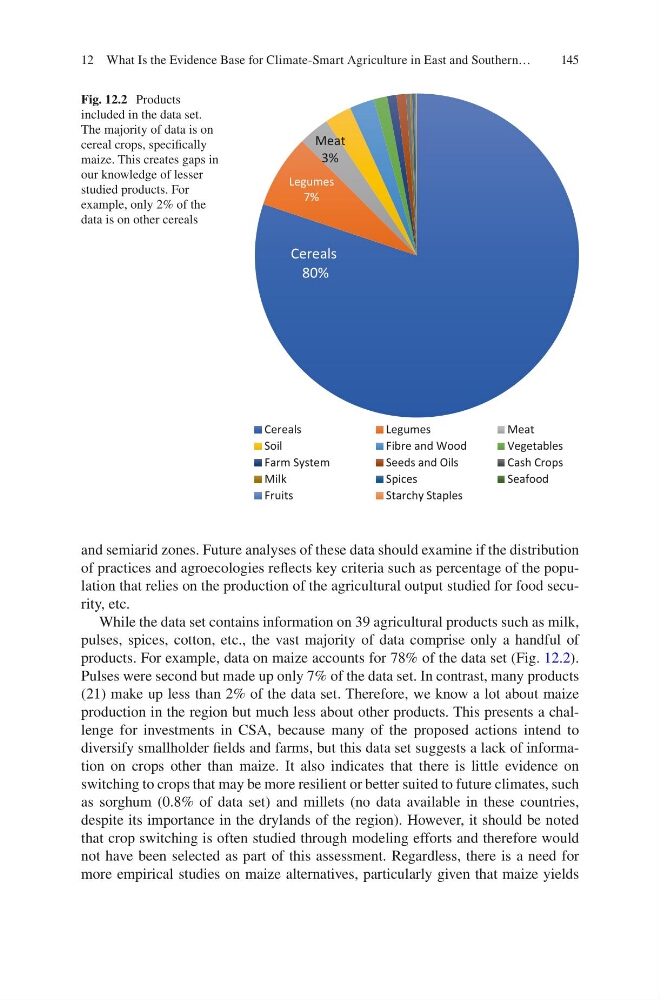
products. For example, data on maize accounts for 78% of the data set (Fig. 12.2).
Pulses were second but made up only 7% of the data set. In contrast, many products
(21) make up less than 2% of the data set. Therefore, we know a lot about maize
production in the region but much less about other products. This presents a challenge for investments in CSA, because many of the proposed actions intend to
diversify smallholder fields and farms, but this data set suggests a lack of information on crops other than maize. It also indicates that there is little evidence on
switching to crops that may be more resilient or better suited to future climates, such
as sorghum (0.8% of data set) and millets (no data available in these countries,
despite its importance in the drylands of the region). However, it should be noted
that crop switching is often studied through modeling efforts and therefore would
not have been selected as part of this assessment. Regardless, there is a need for
more empirical studies on maize alternatives, particularly given that maize yields
Cereals
Legumes
Meat
Soil
Fibre and Wood
Vegetables
Farm System
Seeds and Oils
Cash Crops
Milk
Spices
Seafood
Fruits
Starchy Staples
Cereals
80%
Legumes
7%
Meat
3%
Fig. 12.2 Products
included in the data set.
The majority of data is on
cereal crops, specifically
maize. This creates gaps in
our knowledge of lesser
studied products. For
example, only 2% of the
data is on other cereals
12 What Is the Evidence Base for Climate-Smart Agriculture in East and Southern…
and semiarid zones. Future analyses of these data should examine if the distribution
of practices and agroecologies reflects key criteria such as percentage of the population that relies on the production of the agricultural output studied for food security, etc.
While the data set contains information on 39 agricultural products such as milk,
pulses, spices, cotton, etc., the vast majority of data comprise only a handful of
products. For example, data on maize accounts for 78% of the data set (Fig. 12.2).
Pulses were second but made up only 7% of the data set. In contrast, many products
(21) make up less than 2% of the data set. Therefore, we know a lot about maize
production in the region but much less about other products. This presents a challenge for investments in CSA, because many of the proposed actions intend to
diversify smallholder fields and farms, but this data set suggests a lack of information on crops other than maize. It also indicates that there is little evidence on
switching to crops that may be more resilient or better suited to future climates, such
as sorghum (0.8% of data set) and millets (no data available in these countries,
despite its importance in the drylands of the region). However, it should be noted
that crop switching is often studied through modeling efforts and therefore would
not have been selected as part of this assessment. Regardless, there is a need for
more empirical studies on maize alternatives, particularly given that maize yields
Cereals
Legumes
Meat
Soil
Fibre and Wood
Vegetables
Farm System
Seeds and Oils
Cash Crops
Milk
Spices
Seafood
Fruits
Starchy Staples
Cereals
80%
Legumes
7%
Meat
3%
Fig. 12.2 Products
included in the data set.
The majority of data is on
cereal crops, specifically
maize. This creates gaps in
our knowledge of lesser
studied products. For
example, only 2% of the
data is on other cereals
12 What Is the Evidence Base for Climate-Smart Agriculture in East and Southern…