

Optical Imaging in Biology: Basics and Applications
649
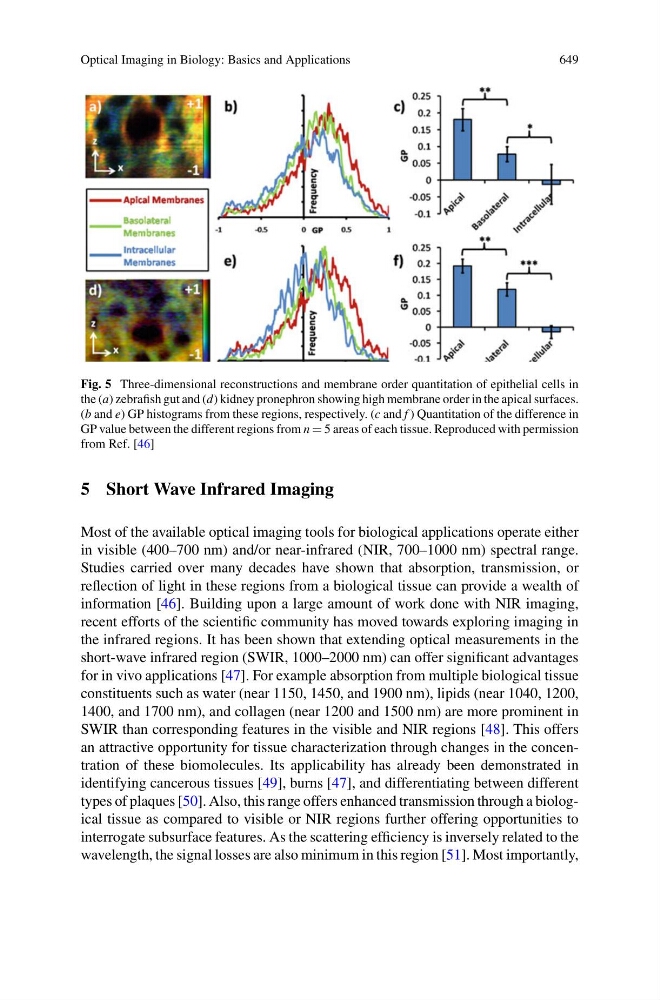
Fig. 5 Three-dimensional reconstructions and membrane order quantitation of epithelial cells in
the (a) zebrafish gut and (d) kidney pronephron showing high membrane order in the apical surfaces.
(b and e) GP histograms from these regions, respectively. (c and f ) Quantitation of the difference in
GP value between the different regions from n = 5 areas of each tissue. Reproduced with permission
from Ref. [46]
5 Short Wave Infrared Imaging
Most of the available optical imaging tools for biological applications operate either
in visible (400–700 nm) and/or near-infrared (NIR, 700–1000 nm) spectral range.
Studies carried over many decades have shown that absorption, transmission, or
reflection of light in these regions from a biological tissue can provide a wealth of
information [46]. Building upon a large amount of work done with NIR imaging,
recent efforts of the scientific community has moved towards exploring imaging in
the infrared regions. It has been shown that extending optical measurements in the
short-wave infrared region (SWIR, 1000–2000 nm) can offer significant advantages
for in vivo applications [47]. For example absorption from multiple biological tissue
constituents such as water (near 1150, 1450, and 1900 nm), lipids (near 1040, 1200,
1400, and 1700 nm), and collagen (near 1200 and 1500 nm) are more prominent in
SWIR than corresponding features in the visible and NIR regions [48]. This offers
an attractive opportunity for tissue characterization through changes in the concentration of these biomolecules. Its applicability has already been demonstrated in
identifying cancerous tissues [49], burns [47], and differentiating between different
types of plaques [50]. Also, this range offers enhanced transmission through a biological tissue as compared to visible or NIR regions further offering opportunities to
interrogate subsurface features. As the scattering efficiency is inversely related to the
wavelength, the signal losses are also minimum in this region [51]. Most importantly,