

418
A. Mathur et al.
XPS study resulted in 9 times increment in the rate constant value towards BPA
photocatalytic degradation reaction. An asymmetrical O 1s peak corresponds
to the catalyst TiO 2 (200 °C, 3 h) and TiO 2 (400 °C, 3 h) respectively. Here
nature of the O atom was determined by deconvoluting this asymmetric peak.
Deconvoluted peak near binding energy 530 eV in both the catalysts ascribed
to the lattice oxygen originating from the contribution of Ti–O bonds while
the higher energy component at binding energy of ca.531 eV results from the
surface absorbed oxygen species. Here N 1s spectra obtained for TiO 2 (200 °C,
3 h) was deconvoluted into two peaks situated near to 399 and 401 eV. These
are characteristic peaks of N 1s present in chelating agent and when bonded to
titania respectively.
(b) To find out dopant concentration: Apart from this, XPS technique is useful to
find out the amount of the dopant at surface and also the surface changes before
and after the catalytic reaction. For example, Ravinder et al. have synthesized
a series of Al-doped titania nanoparticle catalysts to remove fluoroquinolonebased pollutants from the waste water [3]. The presence of Al-ion in the TiO 2
lattice was shown with the help of XPS and the survey spectrum was used
to calculate the amount of dopant present in all the prepared photocatalysts.
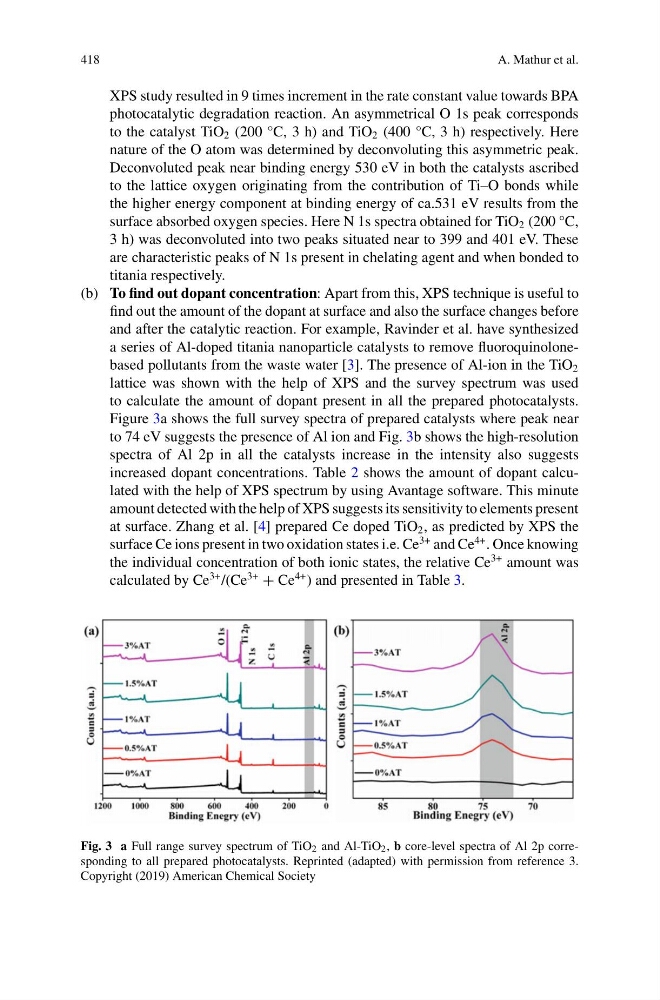
Figure 3a shows the full survey spectra of prepared catalysts where peak near
to 74 eV suggests the presence of Al ion and Fig. 3b shows the high-resolution
spectra of Al 2p in all the catalysts increase in the intensity also suggests
increased dopant concentrations. Table 2 shows the amount of dopant calculated with the help of XPS spectrum by using Avantage software. This minute
amount detected with the help of XPS suggests its sensitivity to elements present
at surface. Zhang et al. [4] prepared Ce doped TiO 2 , as predicted by XPS the
surface Ce ions present in two oxidation states i.e. Ce
3+ and Ce
4+ . Once knowing
the individual concentration of both ionic states, the relative Ce
3+ amount was
calculated by Ce
3+ /(Ce
3+
+ Ce
4+ ) and presented in Table 3.
Fig. 3 a Full range survey spectrum of TiO 2 and Al-TiO 2 , b core-level spectra of Al 2p corresponding to all prepared photocatalysts. Reprinted (adapted) with permission from reference 3.
Copyright (2019) American Chemical Society
A. Mathur et al.
XPS study resulted in 9 times increment in the rate constant value towards BPA
photocatalytic degradation reaction. An asymmetrical O 1s peak corresponds
to the catalyst TiO 2 (200 °C, 3 h) and TiO 2 (400 °C, 3 h) respectively. Here
nature of the O atom was determined by deconvoluting this asymmetric peak.
Deconvoluted peak near binding energy 530 eV in both the catalysts ascribed
to the lattice oxygen originating from the contribution of Ti–O bonds while
the higher energy component at binding energy of ca.531 eV results from the
surface absorbed oxygen species. Here N 1s spectra obtained for TiO 2 (200 °C,
3 h) was deconvoluted into two peaks situated near to 399 and 401 eV. These
are characteristic peaks of N 1s present in chelating agent and when bonded to
titania respectively.
(b) To find out dopant concentration: Apart from this, XPS technique is useful to
find out the amount of the dopant at surface and also the surface changes before
and after the catalytic reaction. For example, Ravinder et al. have synthesized
a series of Al-doped titania nanoparticle catalysts to remove fluoroquinolonebased pollutants from the waste water [3]. The presence of Al-ion in the TiO 2
lattice was shown with the help of XPS and the survey spectrum was used
to calculate the amount of dopant present in all the prepared photocatalysts.
Figure 3a shows the full survey spectra of prepared catalysts where peak near
to 74 eV suggests the presence of Al ion and Fig. 3b shows the high-resolution
spectra of Al 2p in all the catalysts increase in the intensity also suggests
increased dopant concentrations. Table 2 shows the amount of dopant calculated with the help of XPS spectrum by using Avantage software. This minute
amount detected with the help of XPS suggests its sensitivity to elements present
at surface. Zhang et al. [4] prepared Ce doped TiO 2 , as predicted by XPS the
surface Ce ions present in two oxidation states i.e. Ce
3+ and Ce
4+ . Once knowing
the individual concentration of both ionic states, the relative Ce
3+ amount was
calculated by Ce
3+ /(Ce
3+
+ Ce
4+ ) and presented in Table 3.
Fig. 3 a Full range survey spectrum of TiO 2 and Al-TiO 2 , b core-level spectra of Al 2p corresponding to all prepared photocatalysts. Reprinted (adapted) with permission from reference 3.
Copyright (2019) American Chemical Society