

314
R. Das et al.
alloy compared to normal LIBS. V. V. Krisi observed a 2–20 times amplification of
selected spectral lines from an aluminum foil by depositing Ag–Cu and Ni–C NPs
[41]. A. Sherbini et al. observed that ZnO nanomaterial provides higher emission
signals than that of the bulk material [42]. They have also demonstrated the NELIBS
signal emission as a function of laser wavelength and observed that the average
electron density and temperature are identical in both bulk and nanomaterials.
The direct advantages of NELIBS have attracted the researchers’ attention from
various fields, as evident from the large number of research papers that have appeared
for various applications [43–45]. Apart from the typical nanosecond lasers, femtosecond lasers were also employed for evaluating the NELIBS [46, 47]. F. Yang et al.
obtained 30 times enhancement by combining NELIBS with femtosecond doublepulse LIBS on dielectrics [48]. They have reported that both the shape and distribution
of NPs significantly affect the emission enhancements. In this book chapter, we have
investigated and reported the LIBS signal enhancement of brass substrate in the
presence of Ag nanoparticles.
2 Materials and Methods
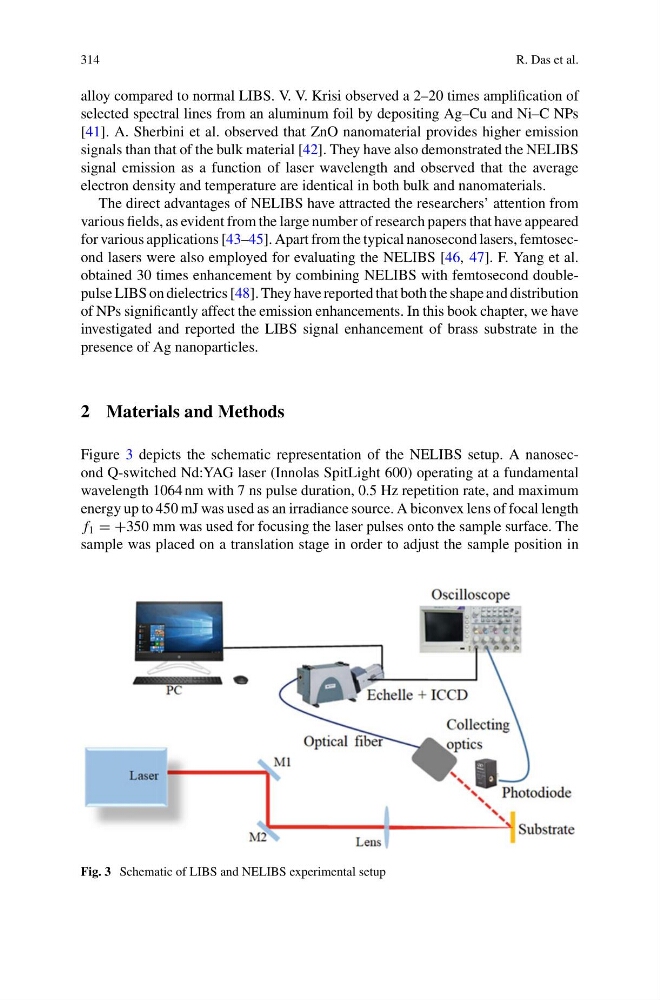
Figure 3 depicts the schematic representation of the NELIBS setup. A nanosecond Q-switched Nd:YAG laser (Innolas SpitLight 600) operating at a fundamental
wavelength 1064 nm with 7 ns pulse duration, 0.5 Hz repetition rate, and maximum
energy up to 450 mJ was used as an irradiance source. A biconvex lens of focal length
f 1 = +350 mm was used for focusing the laser pulses onto the sample surface. The
sample was placed on a translation stage in order to adjust the sample position in
Fig. 3 Schematic of LIBS and NELIBS experimental setup
R. Das et al.
alloy compared to normal LIBS. V. V. Krisi observed a 2–20 times amplification of
selected spectral lines from an aluminum foil by depositing Ag–Cu and Ni–C NPs
[41]. A. Sherbini et al. observed that ZnO nanomaterial provides higher emission
signals than that of the bulk material [42]. They have also demonstrated the NELIBS
signal emission as a function of laser wavelength and observed that the average
electron density and temperature are identical in both bulk and nanomaterials.
The direct advantages of NELIBS have attracted the researchers’ attention from
various fields, as evident from the large number of research papers that have appeared
for various applications [43–45]. Apart from the typical nanosecond lasers, femtosecond lasers were also employed for evaluating the NELIBS [46, 47]. F. Yang et al.
obtained 30 times enhancement by combining NELIBS with femtosecond doublepulse LIBS on dielectrics [48]. They have reported that both the shape and distribution
of NPs significantly affect the emission enhancements. In this book chapter, we have
investigated and reported the LIBS signal enhancement of brass substrate in the
presence of Ag nanoparticles.
2 Materials and Methods
Figure 3 depicts the schematic representation of the NELIBS setup. A nanosecond Q-switched Nd:YAG laser (Innolas SpitLight 600) operating at a fundamental
wavelength 1064 nm with 7 ns pulse duration, 0.5 Hz repetition rate, and maximum
energy up to 450 mJ was used as an irradiance source. A biconvex lens of focal length
f 1 = +350 mm was used for focusing the laser pulses onto the sample surface. The
sample was placed on a translation stage in order to adjust the sample position in
Fig. 3 Schematic of LIBS and NELIBS experimental setup