

Modern Experimental Techniques in Ultrafast Atomic …
277
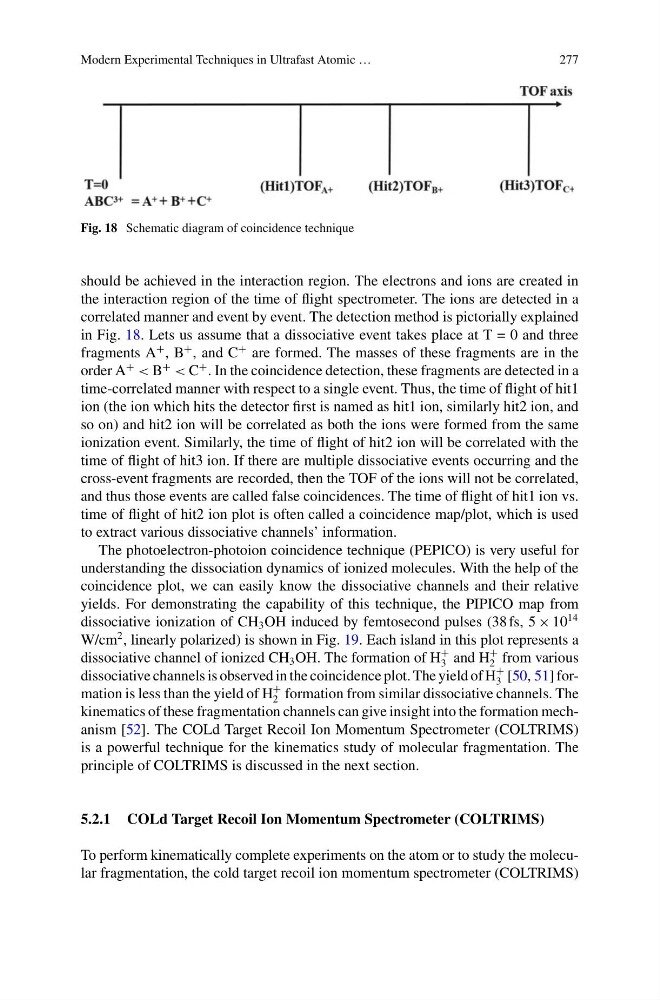
Fig. 18 Schematic diagram of coincidence technique
should be achieved in the interaction region. The electrons and ions are created in
the interaction region of the time of flight spectrometer. The ions are detected in a
correlated manner and event by event. The detection method is pictorially explained
in Fig. 18. Lets us assume that a dissociative event takes place at T = 0 and three
fragments A
+ , B
+ , and C
+ are formed. The masses of these fragments are in the
order A
+
< B
+
< C
+ . In the coincidence detection, these fragments are detected in a
time-correlated manner with respect to a single event. Thus, the time of flight of hit1
ion (the ion which hits the detector first is named as hit1 ion, similarly hit2 ion, and
so on) and hit2 ion will be correlated as both the ions were formed from the same
ionization event. Similarly, the time of flight of hit2 ion will be correlated with the
time of flight of hit3 ion. If there are multiple dissociative events occurring and the
cross-event fragments are recorded, then the TOF of the ions will not be correlated,
and thus those events are called false coincidences. The time of flight of hit1 ion vs.
time of flight of hit2 ion plot is often called a coincidence map/plot, which is used
to extract various dissociative channels’ information.
The photoelectron-photoion coincidence technique (PEPICO) is very useful for
understanding the dissociation dynamics of ionized molecules. With the help of the
coincidence plot, we can easily know the dissociative channels and their relative
yields. For demonstrating the capability of this technique, the PIPICO map from
dissociative ionization of CH 3 OH induced by femtosecond pulses (38 fs, 5 × 10
14
W/cm
2 , linearly polarized) is shown in Fig. 19. Each island in this plot represents a
dissociative channel of ionized CH 3 OH. The formation of H
+
3 and H
+
2 from various
dissociative channels is observed in the coincidence plot. The yield of H
+
3 [50, 51] formation is less than the yield of H
+
2 formation from similar dissociative channels. The
kinematics of these fragmentation channels can give insight into the formation mechanism [52]. The COLd Target Recoil Ion Momentum Spectrometer (COLTRIMS)
is a powerful technique for the kinematics study of molecular fragmentation. The
principle of COLTRIMS is discussed in the next section.
5.2.1 COLd Target Recoil Ion Momentum Spectrometer (COLTRIMS)
To perform kinematically complete experiments on the atom or to study the molecular fragmentation, the cold target recoil ion momentum spectrometer (COLTRIMS)
277
Fig. 18 Schematic diagram of coincidence technique
should be achieved in the interaction region. The electrons and ions are created in
the interaction region of the time of flight spectrometer. The ions are detected in a
correlated manner and event by event. The detection method is pictorially explained
in Fig. 18. Lets us assume that a dissociative event takes place at T = 0 and three
fragments A
+ , B
+ , and C
+ are formed. The masses of these fragments are in the
order A
+
< B
+
< C
+ . In the coincidence detection, these fragments are detected in a
time-correlated manner with respect to a single event. Thus, the time of flight of hit1
ion (the ion which hits the detector first is named as hit1 ion, similarly hit2 ion, and
so on) and hit2 ion will be correlated as both the ions were formed from the same
ionization event. Similarly, the time of flight of hit2 ion will be correlated with the
time of flight of hit3 ion. If there are multiple dissociative events occurring and the
cross-event fragments are recorded, then the TOF of the ions will not be correlated,
and thus those events are called false coincidences. The time of flight of hit1 ion vs.
time of flight of hit2 ion plot is often called a coincidence map/plot, which is used
to extract various dissociative channels’ information.
The photoelectron-photoion coincidence technique (PEPICO) is very useful for
understanding the dissociation dynamics of ionized molecules. With the help of the
coincidence plot, we can easily know the dissociative channels and their relative
yields. For demonstrating the capability of this technique, the PIPICO map from
dissociative ionization of CH 3 OH induced by femtosecond pulses (38 fs, 5 × 10
14
W/cm
2 , linearly polarized) is shown in Fig. 19. Each island in this plot represents a
dissociative channel of ionized CH 3 OH. The formation of H
+
3 and H
+
2 from various
dissociative channels is observed in the coincidence plot. The yield of H
+
3 [50, 51] formation is less than the yield of H
+
2 formation from similar dissociative channels. The
kinematics of these fragmentation channels can give insight into the formation mechanism [52]. The COLd Target Recoil Ion Momentum Spectrometer (COLTRIMS)
is a powerful technique for the kinematics study of molecular fragmentation. The
principle of COLTRIMS is discussed in the next section.
5.2.1 COLd Target Recoil Ion Momentum Spectrometer (COLTRIMS)
To perform kinematically complete experiments on the atom or to study the molecular fragmentation, the cold target recoil ion momentum spectrometer (COLTRIMS)