

268
P. Madhusudhan et al.
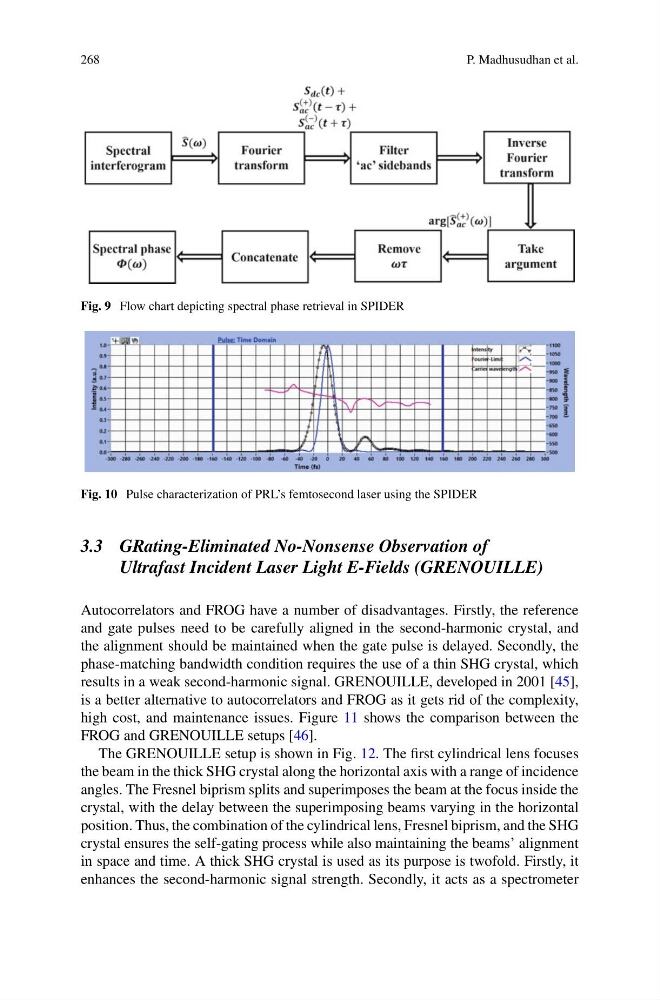
Fig. 9 Flow chart depicting spectral phase retrieval in SPIDER
Fig. 10 Pulse characterization of PRL’s femtosecond laser using the SPIDER
3.3 GRating-Eliminated No-Nonsense Observation of
Ultrafast Incident Laser Light E-Fields (GRENOUILLE)
Autocorrelators and FROG have a number of disadvantages. Firstly, the reference
and gate pulses need to be carefully aligned in the second-harmonic crystal, and
the alignment should be maintained when the gate pulse is delayed. Secondly, the
phase-matching bandwidth condition requires the use of a thin SHG crystal, which
results in a weak second-harmonic signal. GRENOUILLE, developed in 2001 [45],
is a better alternative to autocorrelators and FROG as it gets rid of the complexity,
high cost, and maintenance issues. Figure 11 shows the comparison between the
FROG and GRENOUILLE setups [46].
The GRENOUILLE setup is shown in Fig. 12. The first cylindrical lens focuses
the beam in the thick SHG crystal along the horizontal axis with a range of incidence
angles. The Fresnel biprism splits and superimposes the beam at the focus inside the
crystal, with the delay between the superimposing beams varying in the horizontal
position. Thus, the combination of the cylindrical lens, Fresnel biprism, and the SHG
crystal ensures the self-gating process while also maintaining the beams’ alignment
in space and time. A thick SHG crystal is used as its purpose is twofold. Firstly, it
enhances the second-harmonic signal strength. Secondly, it acts as a spectrometer
P. Madhusudhan et al.
Fig. 9 Flow chart depicting spectral phase retrieval in SPIDER
Fig. 10 Pulse characterization of PRL’s femtosecond laser using the SPIDER
3.3 GRating-Eliminated No-Nonsense Observation of
Ultrafast Incident Laser Light E-Fields (GRENOUILLE)
Autocorrelators and FROG have a number of disadvantages. Firstly, the reference
and gate pulses need to be carefully aligned in the second-harmonic crystal, and
the alignment should be maintained when the gate pulse is delayed. Secondly, the
phase-matching bandwidth condition requires the use of a thin SHG crystal, which
results in a weak second-harmonic signal. GRENOUILLE, developed in 2001 [45],
is a better alternative to autocorrelators and FROG as it gets rid of the complexity,
high cost, and maintenance issues. Figure 11 shows the comparison between the
FROG and GRENOUILLE setups [46].
The GRENOUILLE setup is shown in Fig. 12. The first cylindrical lens focuses
the beam in the thick SHG crystal along the horizontal axis with a range of incidence
angles. The Fresnel biprism splits and superimposes the beam at the focus inside the
crystal, with the delay between the superimposing beams varying in the horizontal
position. Thus, the combination of the cylindrical lens, Fresnel biprism, and the SHG
crystal ensures the self-gating process while also maintaining the beams’ alignment
in space and time. A thick SHG crystal is used as its purpose is twofold. Firstly, it
enhances the second-harmonic signal strength. Secondly, it acts as a spectrometer