

would be permitted; an alternative where GNP, USFS, and MDOT would recommend constructing and/or modifying snow sheds (the preferred alternative); an
alternative similar to the previous alternative but that also included a 10-year special
use permit for explosive control during snow shed construction; and, finally, an
alternative that allowed explosive avalanche control without concomitant snow
shed work (NPS 2008a).
After an extensive analysis and public comment period, GNP selected the preferred alternative and a “record of decision” (ROD) was signed in September 2008.
The ROD permitted BNSF to install a weather station and snow depth sensor within
GNP, and for BNSF to conduct non-explosive snow stability testing. It allowed the
installation of avalanche detection devices, but limited the use of explosives to
extenuating emergency conditions where human lives or resources were at risk and
after other options, including delays, had been exhausted. The ROD recommended
that BNSF construct or modify snow sheds in high-risk slide paths (NPS 2008b).
The search for solutions to the avalanche problem in the GNESA corridor rose
quickly to the upper echelons of corporate and government management. As the
situation became political, both sides became entrenched in their positions and the
collaborative environment of GNESA disappeared. In the end, GNP prevailed in
their position but at the cost of some of the close working relationships built within
GNESA. Hard feelings remained for some time, and, to date, BNSF has not
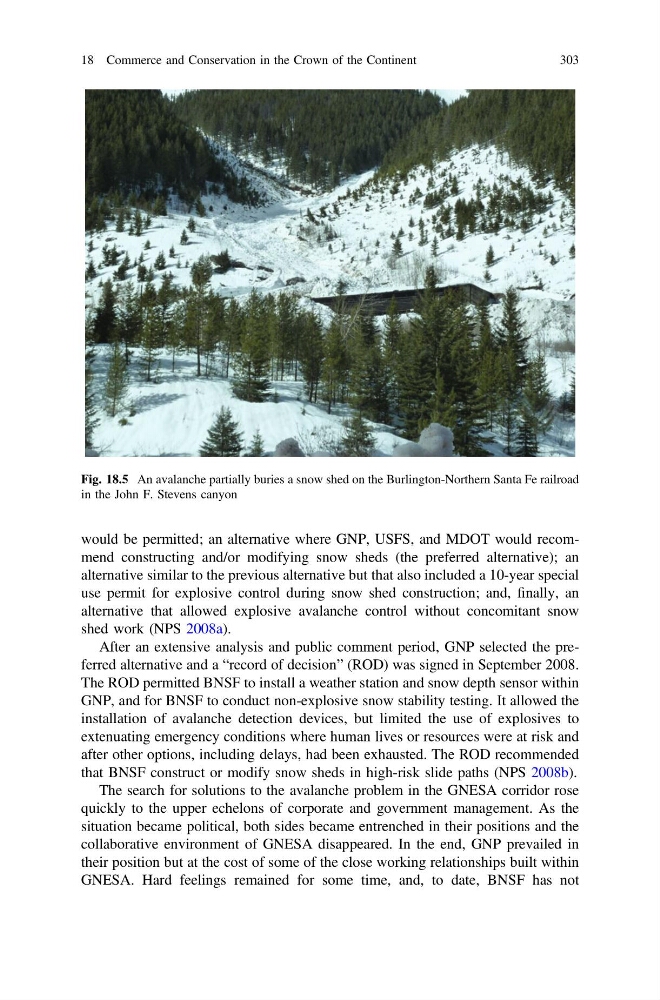
Fig. 18.5 An avalanche partially buries a snow shed on the Burlington-Northern Santa Fe railroad
in the John F. Stevens canyon
18 Commerce and Conservation in the Crown of the Continent
303
alternative similar to the previous alternative but that also included a 10-year special
use permit for explosive control during snow shed construction; and, finally, an
alternative that allowed explosive avalanche control without concomitant snow
shed work (NPS 2008a).
After an extensive analysis and public comment period, GNP selected the preferred alternative and a “record of decision” (ROD) was signed in September 2008.
The ROD permitted BNSF to install a weather station and snow depth sensor within
GNP, and for BNSF to conduct non-explosive snow stability testing. It allowed the
installation of avalanche detection devices, but limited the use of explosives to
extenuating emergency conditions where human lives or resources were at risk and
after other options, including delays, had been exhausted. The ROD recommended
that BNSF construct or modify snow sheds in high-risk slide paths (NPS 2008b).
The search for solutions to the avalanche problem in the GNESA corridor rose
quickly to the upper echelons of corporate and government management. As the
situation became political, both sides became entrenched in their positions and the
collaborative environment of GNESA disappeared. In the end, GNP prevailed in
their position but at the cost of some of the close working relationships built within
GNESA. Hard feelings remained for some time, and, to date, BNSF has not
Fig. 18.5 An avalanche partially buries a snow shed on the Burlington-Northern Santa Fe railroad
in the John F. Stevens canyon
18 Commerce and Conservation in the Crown of the Continent
303