

6.5.2 Nobeyama Radio Observatory and Molecular Clouds
1. Dawn of millimeter-wave astronomy
Molecular-line astronomy had begun with the discoveries of an OH line (λ18 cm) in
1963, NH 3 (anmonia, λ1.23 cm) in 1968, and H 2 CO (formaldehyde, λ6.21 cm) in
1969. In the 1970s, discoveries of molecular lines moved to millimeter and submillimeter lines, such as CO (monoxide carbon, λ0.260 cm) and CH 3 OH (methyl
alcohol, λ0.820 cm). These lines were observed with an11-m millimeter-wave
telescope at the Kitt Peak National Radio Observatory in the USA.
In Japan, a millimeter-wave radio parabolic telescope with a 6-m aperture was
constructed by Akabane Kenji, Morimoto Masaki, and Kaifu Norio at the Mitaka
campus of the TAO in 1972. With this telescope they discovered some interstellar
molecules such as (H 2 CO) n (para-folmaldehyde, λ0.412 cm) and CH 3 NH 2 (methylamine, λ0.411, 0.348 cm) in the Orion and Sagittarius nebulae (Morimoto and Kaifu
1972; Akabane et al. 1974).
With this success, the construction program of the 45-m millimeter-wave radio
telescope became a reality.
2. Nobeyama Radio Observatory
The NRO, in Nobeyama, Nagano Prefecture, was thus established in 1982 with a
45-m millimeter-wave telescope and an array telescope system. This array is composed of five 10-m telescopes for interferometric observations. The 45-m telescope
is the largest one by aperture in the world; its surface accuracy reaches 0.01 mm, and
its tracking accuracy is 0.1 arcsec at a 180
angle. The angular resolution reaches
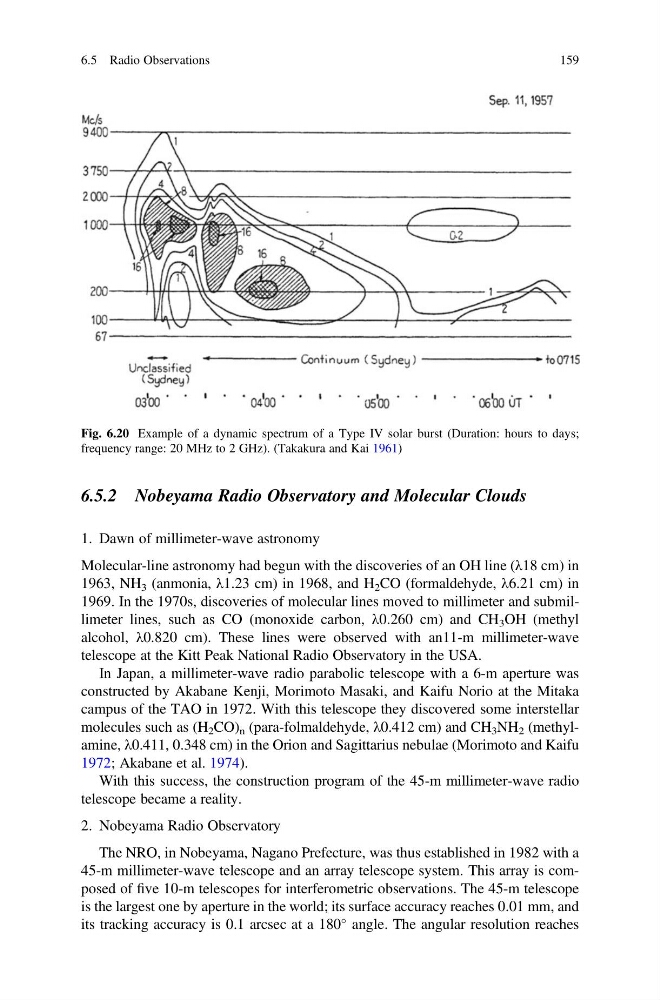
Fig. 6.20 Example of a dynamic spectrum of a Type IV solar burst (Duration: hours to days;
frequency range: 20 MHz to 2 GHz). (Takakura and Kai 1961)
6.5 Radio Observations
159
1. Dawn of millimeter-wave astronomy
Molecular-line astronomy had begun with the discoveries of an OH line (λ18 cm) in
1963, NH 3 (anmonia, λ1.23 cm) in 1968, and H 2 CO (formaldehyde, λ6.21 cm) in
1969. In the 1970s, discoveries of molecular lines moved to millimeter and submillimeter lines, such as CO (monoxide carbon, λ0.260 cm) and CH 3 OH (methyl
alcohol, λ0.820 cm). These lines were observed with an11-m millimeter-wave
telescope at the Kitt Peak National Radio Observatory in the USA.
In Japan, a millimeter-wave radio parabolic telescope with a 6-m aperture was
constructed by Akabane Kenji, Morimoto Masaki, and Kaifu Norio at the Mitaka
campus of the TAO in 1972. With this telescope they discovered some interstellar
molecules such as (H 2 CO) n (para-folmaldehyde, λ0.412 cm) and CH 3 NH 2 (methylamine, λ0.411, 0.348 cm) in the Orion and Sagittarius nebulae (Morimoto and Kaifu
1972; Akabane et al. 1974).
With this success, the construction program of the 45-m millimeter-wave radio
telescope became a reality.
2. Nobeyama Radio Observatory
The NRO, in Nobeyama, Nagano Prefecture, was thus established in 1982 with a
45-m millimeter-wave telescope and an array telescope system. This array is composed of five 10-m telescopes for interferometric observations. The 45-m telescope
is the largest one by aperture in the world; its surface accuracy reaches 0.01 mm, and
its tracking accuracy is 0.1 arcsec at a 180
angle. The angular resolution reaches
Fig. 6.20 Example of a dynamic spectrum of a Type IV solar burst (Duration: hours to days;
frequency range: 20 MHz to 2 GHz). (Takakura and Kai 1961)
6.5 Radio Observations
159