

3.1 Off-the-Shelf Global Search Metaheuristic Algorithms
Global search generic metaheuristic algorithms have been naturally the first optimizers tested. The detailed results obtained with six algorithms of this class have
been reported in [6]. Two algorithms, namely the Strength Pareto Evolutionary
Algorithm (SPEA2) [17] and the Non-dominated Sorting Genetic Algorithm
(NSGA-II) [18], have proven consistently best performances in terms of convergence speed to the Pareto front. However, these algorithms involve heavy computations, due to their inherent slow convergence near to the optimum and
genericity (i.e. they make no attempt to take advantage of the problem structure).
This fact motivates further research among the three following lines.
3.2 Hybrid Algorithms Combining Global and Local Search
Hybrid algorithms combine global search (or exploration) and local search (or
exploitation) so as to take advantage of their assets while offsetting their drawbacks.
Two coupling schemes between global search and local search have been used:
(1) sequential approach (explored to some extent in [10]): global search identifies
first the most promising regions of the design space and then its final solutions
are transferred to the local search method (described in Sect. 3.4) for further
local refinement;
(2) integrated approach (explored in [7]): the local search module is embedded in
the global search algorithm; the local search is called at a certain pace to
improve locally the best current candidate solutions. Specifically, [7] has
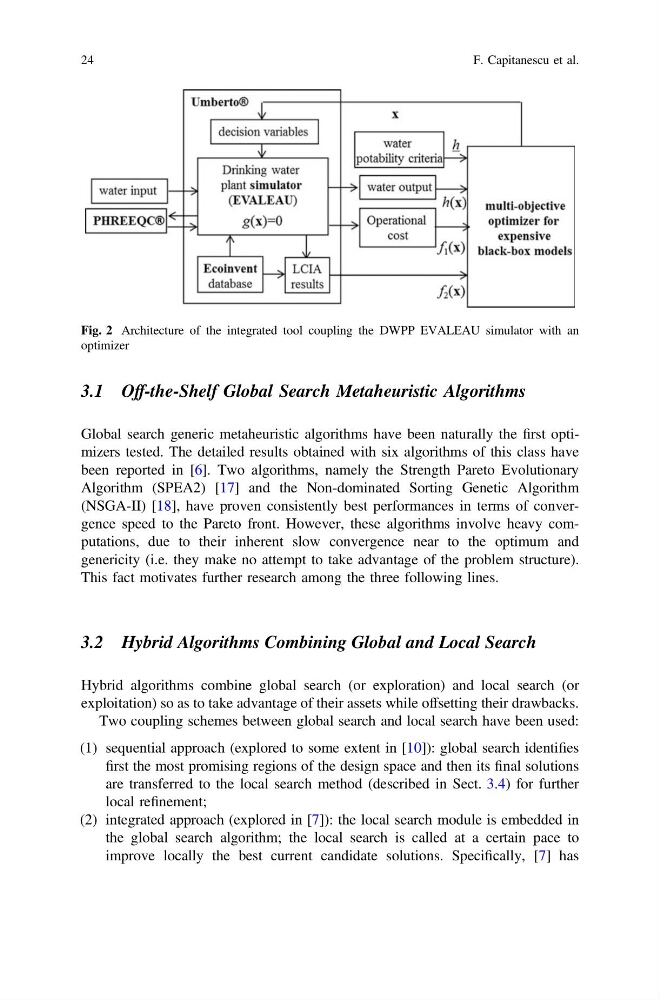
Fig. 2 Architecture of the integrated tool coupling the DWPP EVALEAU simulator with an
optimizer
24
F. Capitanescu et al.
Global search generic metaheuristic algorithms have been naturally the first optimizers tested. The detailed results obtained with six algorithms of this class have
been reported in [6]. Two algorithms, namely the Strength Pareto Evolutionary
Algorithm (SPEA2) [17] and the Non-dominated Sorting Genetic Algorithm
(NSGA-II) [18], have proven consistently best performances in terms of convergence speed to the Pareto front. However, these algorithms involve heavy computations, due to their inherent slow convergence near to the optimum and
genericity (i.e. they make no attempt to take advantage of the problem structure).
This fact motivates further research among the three following lines.
3.2 Hybrid Algorithms Combining Global and Local Search
Hybrid algorithms combine global search (or exploration) and local search (or
exploitation) so as to take advantage of their assets while offsetting their drawbacks.
Two coupling schemes between global search and local search have been used:
(1) sequential approach (explored to some extent in [10]): global search identifies
first the most promising regions of the design space and then its final solutions
are transferred to the local search method (described in Sect. 3.4) for further
local refinement;
(2) integrated approach (explored in [7]): the local search module is embedded in
the global search algorithm; the local search is called at a certain pace to
improve locally the best current candidate solutions. Specifically, [7] has
Fig. 2 Architecture of the integrated tool coupling the DWPP EVALEAU simulator with an
optimizer
24
F. Capitanescu et al.