

2.1 Technical Evaluation Performed on Lab Scale
Several research questions and methods are involved in the technical evaluation e.g.
laboratory cultivation and mechanical testing. By the use of elementary analysis,
the composition of substances/molecules in mixed food waste was identified. The
results show that mixed food waste contains required N and C for E.coli growth,
although additional N would increase C use. Enzymatic hydrolysis and carbohydrate analysis was then used to show how the carbon sources included could be
made more accessible for E.coli uptake [6]. Through laboratory cultivating tests it
was assessed if E.coli could grow on mixed food waste. The results show that the
liquid fraction of the waste supports growth and the solids can be used as carbon
source. To determin if the water content of MFW was optimal for E.coli growth,
mechanical property tests were made. The results show that the water content was
too high for industrial production, described in Rex et al. [7].
2.2 Social Evaluation Based on Innovation Systems
Several research questions and methods were also involved in the social system
evaluation, e.g. policy analysis, analysis of societal acceptance, actor and market
analyses. A policy analysis was performed to assess how existing rules and regulations influence the possibility to realize SA production from mixed food waste in
Sweden. The main source of data for the analysis were documents on policy
directives and instruments complemented with workshops and interviews with
focus groups. A key result is that there are hardly any policy instruments supporting
bio-based chemical development on national and EU level. So far there exists only
declarations of intent in various policy documents and reports and limited R&D
subsidies. Another key result is that subsidies and investments in the development
of biofuels, in particular biogas, for the transport sector influence the access of
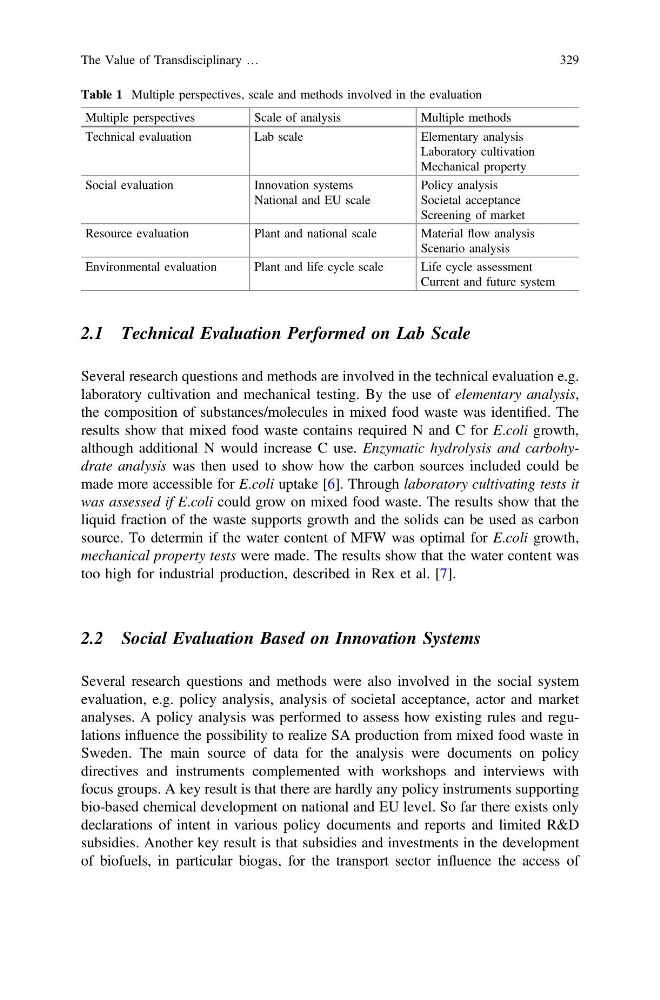
Table 1 Multiple perspectives, scale and methods involved in the evaluation
Multiple perspectives
Scale of analysis
Multiple methods
Technical evaluation
Lab scale
Elementary analysis
Laboratory cultivation
Mechanical property
Social evaluation
Innovation systems
National and EU scale
Policy analysis
Societal acceptance
Screening of market
Resource evaluation
Plant and national scale
Material flow analysis
Scenario analysis
Environmental evaluation
Plant and life cycle scale
Life cycle assessment
Current and future system
The Value of Transdisciplinary …
329
Several research questions and methods are involved in the technical evaluation e.g.
laboratory cultivation and mechanical testing. By the use of elementary analysis,
the composition of substances/molecules in mixed food waste was identified. The
results show that mixed food waste contains required N and C for E.coli growth,
although additional N would increase C use. Enzymatic hydrolysis and carbohydrate analysis was then used to show how the carbon sources included could be
made more accessible for E.coli uptake [6]. Through laboratory cultivating tests it
was assessed if E.coli could grow on mixed food waste. The results show that the
liquid fraction of the waste supports growth and the solids can be used as carbon
source. To determin if the water content of MFW was optimal for E.coli growth,
mechanical property tests were made. The results show that the water content was
too high for industrial production, described in Rex et al. [7].
2.2 Social Evaluation Based on Innovation Systems
Several research questions and methods were also involved in the social system
evaluation, e.g. policy analysis, analysis of societal acceptance, actor and market
analyses. A policy analysis was performed to assess how existing rules and regulations influence the possibility to realize SA production from mixed food waste in
Sweden. The main source of data for the analysis were documents on policy
directives and instruments complemented with workshops and interviews with
focus groups. A key result is that there are hardly any policy instruments supporting
bio-based chemical development on national and EU level. So far there exists only
declarations of intent in various policy documents and reports and limited R&D
subsidies. Another key result is that subsidies and investments in the development
of biofuels, in particular biogas, for the transport sector influence the access of
Table 1 Multiple perspectives, scale and methods involved in the evaluation
Multiple perspectives
Scale of analysis
Multiple methods
Technical evaluation
Lab scale
Elementary analysis
Laboratory cultivation
Mechanical property
Social evaluation
Innovation systems
National and EU scale
Policy analysis
Societal acceptance
Screening of market
Resource evaluation
Plant and national scale
Material flow analysis
Scenario analysis
Environmental evaluation
Plant and life cycle scale
Life cycle assessment
Current and future system
The Value of Transdisciplinary …
329