

Considering the second phase of our methodology, extending LCSA performances uncertainty to MCDA methods, we applied the three MCDA methods
through two sets of weighting factors, as presented in Table 1.
Finally, for the third phase of our method, Fig. 5 presents the probability that the
scenario with retreading scores better than the scenario without retreading, considering the three MCDA methods, two sets of weighting factors provided by
decision makers (Table 1) and the probabilistic environmental, social and economic
performances obtained by LCSA approach (Fig. 3). The confidence level is
obtained by the counts of simulations where a scenario ranks higher than the other
and normalized the count by total number of simulations.
Scenario with retreading is the preferred solution compared to scenario without
retreading with more than 80% probability for the weighted sum and Topsis
methods. The preference of the retreading scenario is reduced down up to 60% with
the Prométhée II method, because this type of approach (outranking) takes into
account the indifference and preference thresholds, creating the zones of equivalence and weak preference. As such, scenario with retreading seems to be a strong
compromise solution for our case study for all combinations of MCDA methods
and sets of weighting factors.
3.3 Discussion
This research highlights that it is feasible to account for the uncertainty associated
with LCSA indicators in a decision-making process when applying MCDA
methods. We were able to generate ranking about the preference of an option
compared to the other whilst informing the decision-maker on the level of
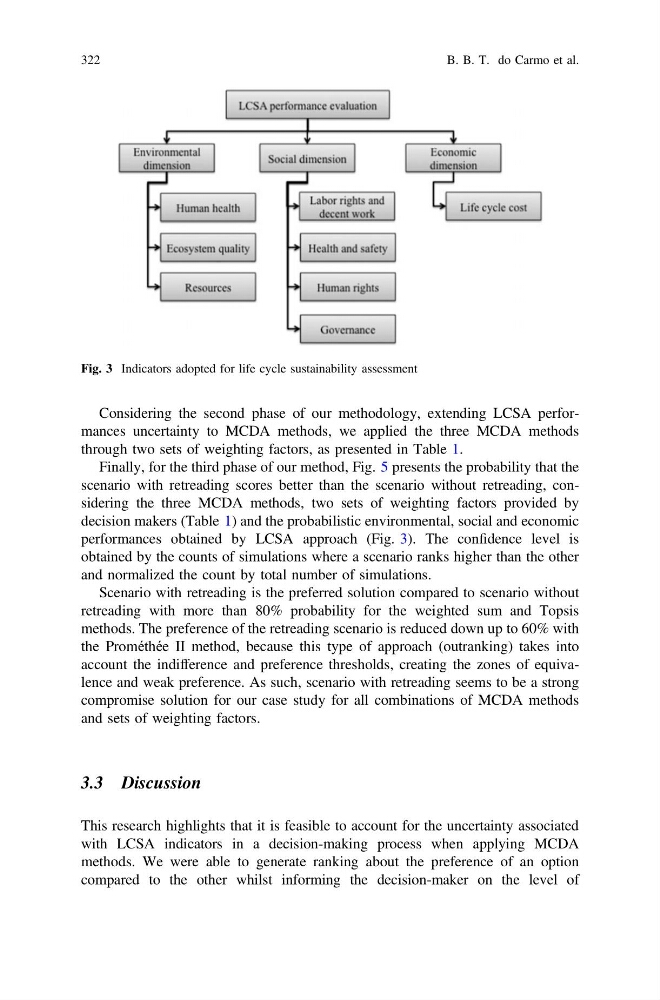
Fig. 3 Indicators adopted for life cycle sustainability assessment
322
B. B. T. do Carmo et al.
through two sets of weighting factors, as presented in Table 1.
Finally, for the third phase of our method, Fig. 5 presents the probability that the
scenario with retreading scores better than the scenario without retreading, considering the three MCDA methods, two sets of weighting factors provided by
decision makers (Table 1) and the probabilistic environmental, social and economic
performances obtained by LCSA approach (Fig. 3). The confidence level is
obtained by the counts of simulations where a scenario ranks higher than the other
and normalized the count by total number of simulations.
Scenario with retreading is the preferred solution compared to scenario without
retreading with more than 80% probability for the weighted sum and Topsis
methods. The preference of the retreading scenario is reduced down up to 60% with
the Prométhée II method, because this type of approach (outranking) takes into
account the indifference and preference thresholds, creating the zones of equivalence and weak preference. As such, scenario with retreading seems to be a strong
compromise solution for our case study for all combinations of MCDA methods
and sets of weighting factors.
3.3 Discussion
This research highlights that it is feasible to account for the uncertainty associated
with LCSA indicators in a decision-making process when applying MCDA
methods. We were able to generate ranking about the preference of an option
compared to the other whilst informing the decision-maker on the level of
Fig. 3 Indicators adopted for life cycle sustainability assessment
322
B. B. T. do Carmo et al.