

293
presented as a profi le or imprint and contributions are scaled (normalized) against
annual global totals for each of the indicators and the economic size of the business
(Clift and Wright 2000 ). By comparing the potential environmental impacts of a
business to the economic size of the business, the OBIA approach helped to identify
those areas where most benefi t to the global environment can be achieved. The
insights arising from the application of OBIA led to Unilever focusing on three
sustainability themes in the late 1990s and early 2000s, namely sustainable fi sheries, including the co-creation of the Marine Stewardship Council together with
WWF (Constance and Bonanno 2000 ), the Sustainable Agriculture Initiative
(Unilever 2010 ) and the creation of institutions such as the Roundtable for
Sustainable Palm Oil and the Sustainable Water Initiative.
Unilever continues to innovatively develop and apply LCA and life cycle thinking to help inform strategy and to engage a broader range of stakeholders both
within the company and outside. At a product level, recent method developments
and applications have included new approaches: to fi ll data gaps in agricultural data
(Milà i Canals et al. 2011 ; Roches et al. 2010 ; Nemecek et al. 2012 ); to better represent the impacts arising from land use change (Flynn et al. 2012 ; Milà i Canals
et al. 2013 ); to better represent the impacts arising from product disposal (Muñoz
et al. 2013 ); and the application of new methods for assessing impacts related to
water (Jefferies et al. 2012 and Van Hoof et al. 2011 ). In addition, we have developed approaches to conduct brand/portfolio footprints with examples of Knorr and
Ben & Jerry’s (Garcia Suarez et al. 2008 ; Milà i Canals et al. 2010 ). LCA also
formed one of the elements of the innovative Brand Imprint process that Unilever
Product
LCA
Overall
Business
Impact
Assessment
Brand
Imprint
USLP
footprint
Systems
thinking
1980
1990
2000
2010
Defining 3
corporate
sustainability
initiatives
Embedding
sustainability in
Brands/marketing
Integrated
business strategy
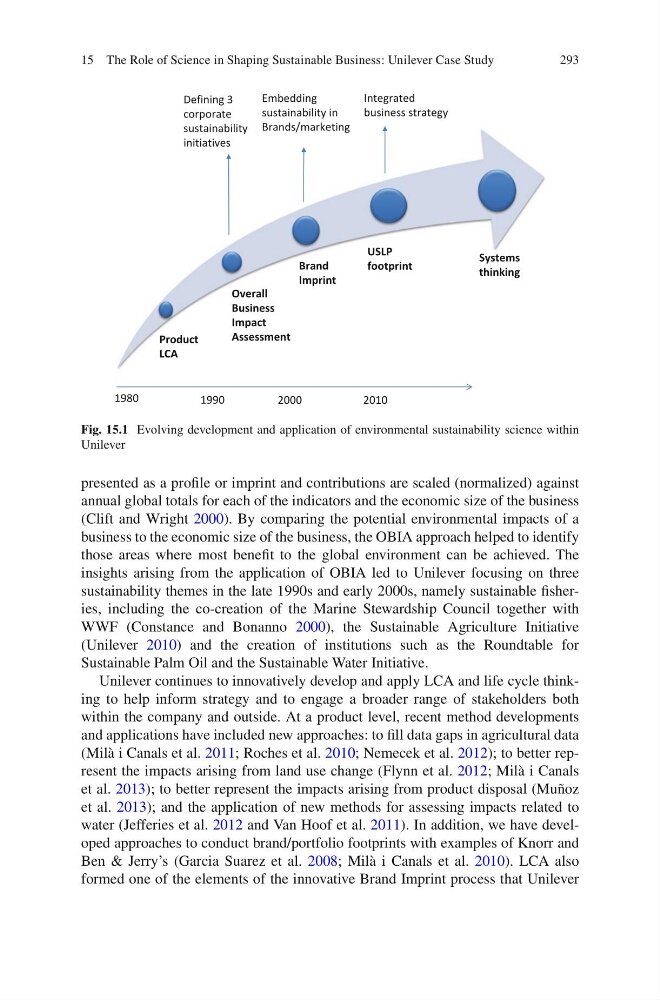
Fig. 15.1 Evolving development and application of environmental sustainability science within
Unilever
15 The Role of Science in Shaping Sustainable Business: Unilever Case Study
presented as a profi le or imprint and contributions are scaled (normalized) against
annual global totals for each of the indicators and the economic size of the business
(Clift and Wright 2000 ). By comparing the potential environmental impacts of a
business to the economic size of the business, the OBIA approach helped to identify
those areas where most benefi t to the global environment can be achieved. The
insights arising from the application of OBIA led to Unilever focusing on three
sustainability themes in the late 1990s and early 2000s, namely sustainable fi sheries, including the co-creation of the Marine Stewardship Council together with
WWF (Constance and Bonanno 2000 ), the Sustainable Agriculture Initiative
(Unilever 2010 ) and the creation of institutions such as the Roundtable for
Sustainable Palm Oil and the Sustainable Water Initiative.
Unilever continues to innovatively develop and apply LCA and life cycle thinking to help inform strategy and to engage a broader range of stakeholders both
within the company and outside. At a product level, recent method developments
and applications have included new approaches: to fi ll data gaps in agricultural data
(Milà i Canals et al. 2011 ; Roches et al. 2010 ; Nemecek et al. 2012 ); to better represent the impacts arising from land use change (Flynn et al. 2012 ; Milà i Canals
et al. 2013 ); to better represent the impacts arising from product disposal (Muñoz
et al. 2013 ); and the application of new methods for assessing impacts related to
water (Jefferies et al. 2012 and Van Hoof et al. 2011 ). In addition, we have developed approaches to conduct brand/portfolio footprints with examples of Knorr and
Ben & Jerry’s (Garcia Suarez et al. 2008 ; Milà i Canals et al. 2010 ). LCA also
formed one of the elements of the innovative Brand Imprint process that Unilever
Product
LCA
Overall
Business
Impact
Assessment
Brand
Imprint
USLP
footprint
Systems
thinking
1980
1990
2000
2010
Defining 3
corporate
sustainability
initiatives
Embedding
sustainability in
Brands/marketing
Integrated
business strategy
Fig. 15.1 Evolving development and application of environmental sustainability science within
Unilever
15 The Role of Science in Shaping Sustainable Business: Unilever Case Study