

231
countries to redefi ne their development paradigms lie in their high accumulated debt
and the enormous investments they have made in infrastructure that is not designed
for sustainability (see Chaps. 6 and 7 ). When examined further, these aspects may
reveal a potentially more optimistic picture for developing countries.
1.3 Previous Studies on IE in Developing Countries
Sustainable development is certainly not a simple, singular and well-tested path.
Many different interest groups are in confl ict over which environmental and social
challenges to tackle fi rst, as well as their solutions. As previous reviews on industrial ecology in developing countries suggest, IE offers an umbrella paradigm, a sort
of panoramic vision within which individual local crises could be approached with
pragmatic solutions. Industrial ecology based solutions offer the advantage of
simultaneously addressing several other interlinked problems to yield concurrent
benefi ts for all stakeholders (Chiu and Yong 2004 ; Lowe 2006 ). A SWOT analysis
of IE in developing countries, based on a previous study that looked at IE in Asian
developing countries (Chiu and Yong 2004 ), is presented in Table 11.1 . Some
strengths, such as rapid economic growth, can also be viewed as a weakness, opportunity and threat.
In the developing world context, characterized by immediate development challenges brought on by rapid industrialization and urbanization , Chertow ( 2008 ) suggests applying a narrower focus to the word “industry” in IE, rather than using it in
its broad sense to cover a range of anthropogenic activities. This suggestion may hold
well in contexts such as in Eco-Industrial Parks (EIPs) where resources are cycled
between industrial fi rms and collective benefi ts are realized to reduce environmental
and social impacts. However, even in these contexts it is important to realize that, in
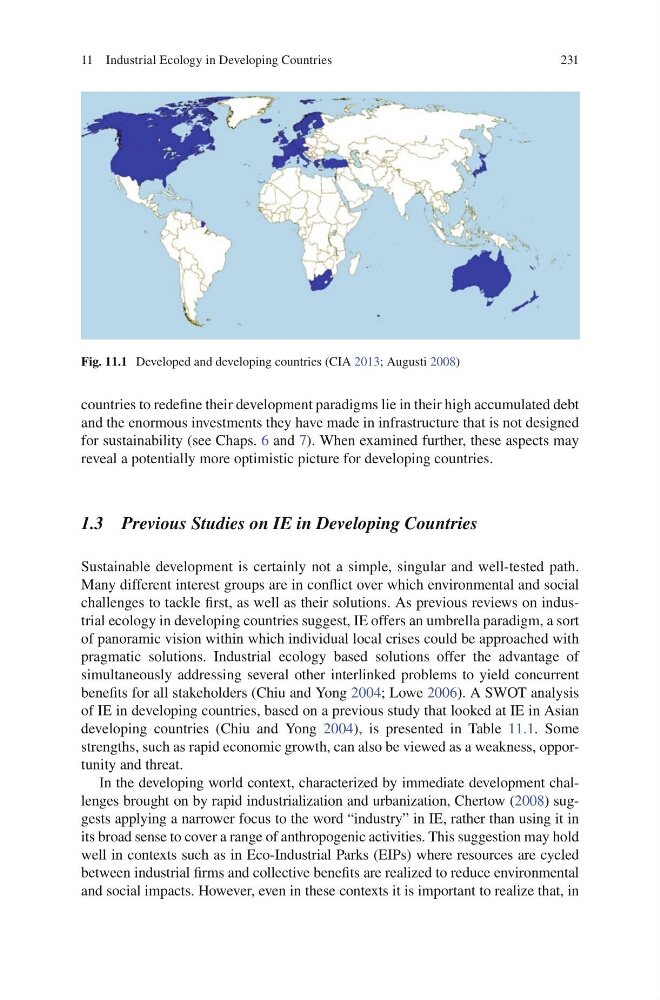
Fig. 11.1 Developed and developing countries (CIA 2013 ; Augusti 2008 )
11 Industrial Ecology in Developing Countries
countries to redefi ne their development paradigms lie in their high accumulated debt
and the enormous investments they have made in infrastructure that is not designed
for sustainability (see Chaps. 6 and 7 ). When examined further, these aspects may
reveal a potentially more optimistic picture for developing countries.
1.3 Previous Studies on IE in Developing Countries
Sustainable development is certainly not a simple, singular and well-tested path.
Many different interest groups are in confl ict over which environmental and social
challenges to tackle fi rst, as well as their solutions. As previous reviews on industrial ecology in developing countries suggest, IE offers an umbrella paradigm, a sort
of panoramic vision within which individual local crises could be approached with
pragmatic solutions. Industrial ecology based solutions offer the advantage of
simultaneously addressing several other interlinked problems to yield concurrent
benefi ts for all stakeholders (Chiu and Yong 2004 ; Lowe 2006 ). A SWOT analysis
of IE in developing countries, based on a previous study that looked at IE in Asian
developing countries (Chiu and Yong 2004 ), is presented in Table 11.1 . Some
strengths, such as rapid economic growth, can also be viewed as a weakness, opportunity and threat.
In the developing world context, characterized by immediate development challenges brought on by rapid industrialization and urbanization , Chertow ( 2008 ) suggests applying a narrower focus to the word “industry” in IE, rather than using it in
its broad sense to cover a range of anthropogenic activities. This suggestion may hold
well in contexts such as in Eco-Industrial Parks (EIPs) where resources are cycled
between industrial fi rms and collective benefi ts are realized to reduce environmental
and social impacts. However, even in these contexts it is important to realize that, in
Fig. 11.1 Developed and developing countries (CIA 2013 ; Augusti 2008 )
11 Industrial Ecology in Developing Countries