

190
Studies vary in the number of categories used for analysing household carbon
footprints, as shown in Table 9.2 . Some studies use the top 12 categories of the
Classifi cation of Individual Consumption According to Purpose (COICOP) system
which is part of the UN System of National Accounts (UN 2011 ).
9 COICOP categories are, however, primarily intended for economic rather than environmental analysis and so other researchers modify the categories to reveal the carbon implications
of expenditures better. For example, Weber and Mathews ( 2008 ) add an extra category of ‘Utilities/home energy’.
Travel is rarely undertaken as an end in itself, as it is generally undertaken to
serve a purpose such as visiting friends, attending a football match or going to work.
Similarly, water heated by gas may be used for food related activities such as washing up, or, for example, for health and hygiene purposes. Acknowledging this, and
to further elucidate the activities that give rise to carbon emissions, Druckman and
Jackson ( 2009 , 2010 ) allocate carbon emissions to ‘functional uses’. In this approach
all carbon emissions that arise due to activities related to food (for example), such
as emissions due to driving to supermarkets, energy used in preparing food, cooking
and washing-up, emissions embedded in the production of food, and even those
9 The 12 top COICOP categories are: Clothing and footwear; Housing , water, electricity, gas and
other fuels; Furnishings, household equipment and routine household maintenance; Health;
Transport ; Communication; Recreation and culture; Education; Restaurants and hotels;
Miscellaneous goods and services.
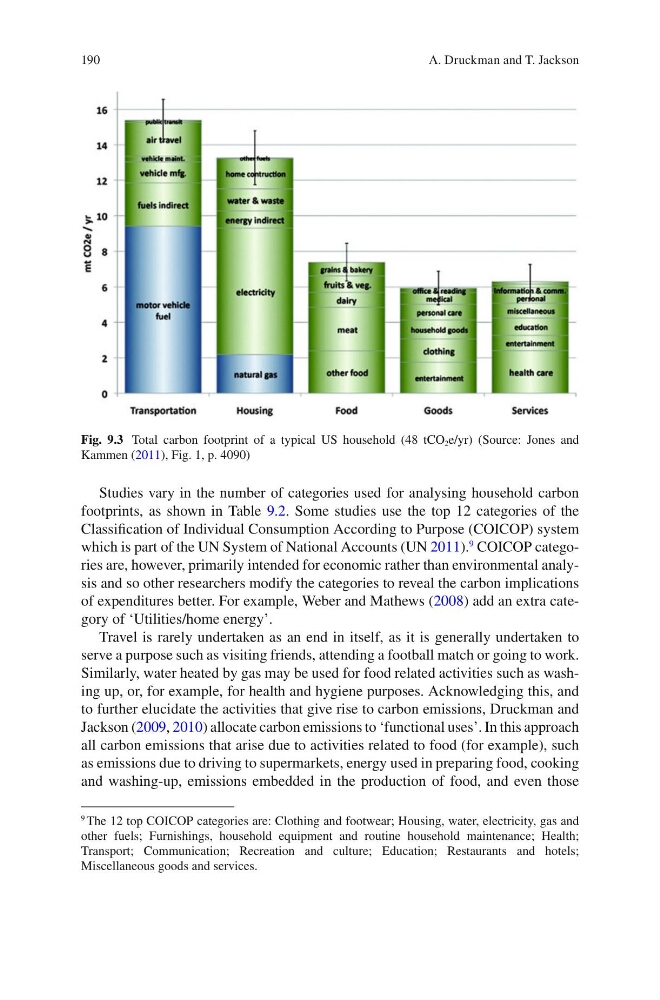
Fig. 9.3 Total carbon footprint of a typical US household (48 tCO 2 e/yr) (Source: Jones and
Kammen ( 2011 ), Fig. 1, p. 4090)
A. Druckman and T. Jackson
Studies vary in the number of categories used for analysing household carbon
footprints, as shown in Table 9.2 . Some studies use the top 12 categories of the
Classifi cation of Individual Consumption According to Purpose (COICOP) system
which is part of the UN System of National Accounts (UN 2011 ).
9 COICOP categories are, however, primarily intended for economic rather than environmental analysis and so other researchers modify the categories to reveal the carbon implications
of expenditures better. For example, Weber and Mathews ( 2008 ) add an extra category of ‘Utilities/home energy’.
Travel is rarely undertaken as an end in itself, as it is generally undertaken to
serve a purpose such as visiting friends, attending a football match or going to work.
Similarly, water heated by gas may be used for food related activities such as washing up, or, for example, for health and hygiene purposes. Acknowledging this, and
to further elucidate the activities that give rise to carbon emissions, Druckman and
Jackson ( 2009 , 2010 ) allocate carbon emissions to ‘functional uses’. In this approach
all carbon emissions that arise due to activities related to food (for example), such
as emissions due to driving to supermarkets, energy used in preparing food, cooking
and washing-up, emissions embedded in the production of food, and even those
9 The 12 top COICOP categories are: Clothing and footwear; Housing , water, electricity, gas and
other fuels; Furnishings, household equipment and routine household maintenance; Health;
Transport ; Communication; Recreation and culture; Education; Restaurants and hotels;
Miscellaneous goods and services.
Fig. 9.3 Total carbon footprint of a typical US household (48 tCO 2 e/yr) (Source: Jones and
Kammen ( 2011 ), Fig. 1, p. 4090)
A. Druckman and T. Jackson