

13 Range-Finding Radio Navigation Systems
239
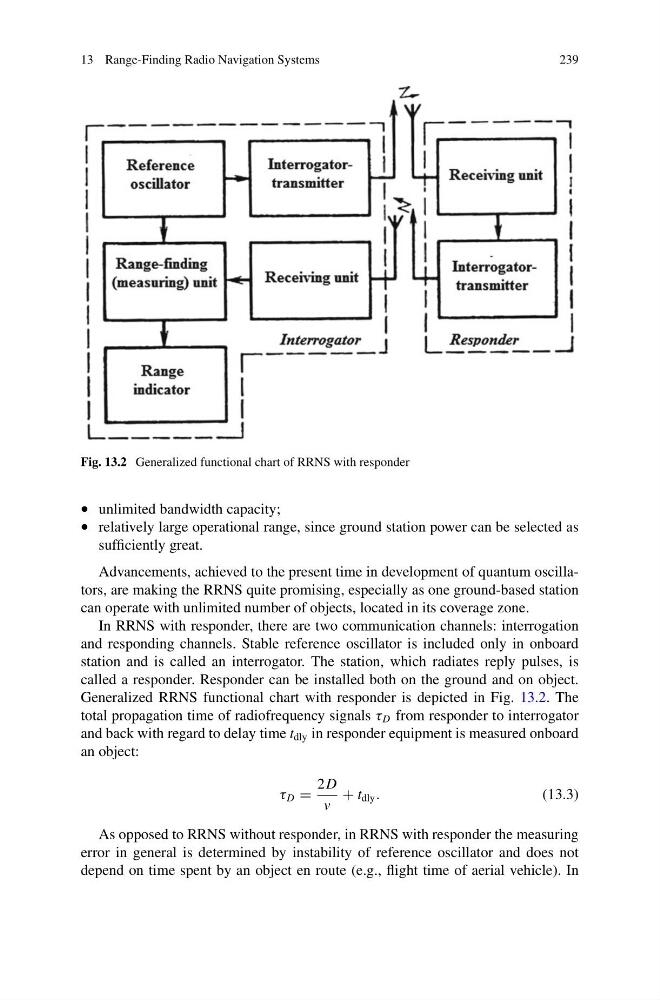
Fig. 13.2 Generalized functional chart of RRNS with responder
• unlimited bandwidth capacity;
• relatively large operational range, since ground station power can be selected as
sufficiently great.
Advancements, achieved to the present time in development of quantum oscillators, are making the RRNS quite promising, especially as one ground-based station
can operate with unlimited number of objects, located in its coverage zone.
In RRNS with responder, there are two communication channels: interrogation
and responding channels. Stable reference oscillator is included only in onboard
station and is called an interrogator. The station, which radiates reply pulses, is
called a responder. Responder can be installed both on the ground and on object.
Generalized RRNS functional chart with responder is depicted in Fig. 13.2. The
total propagation time of radiofrequency signals τ D from responder to interrogator
and back with regard to delay time t dly in responder equipment is measured onboard
an object:
τ D =
2D
v
+ t dly .
(13.3)
As opposed to RRNS without responder, in RRNS with responder the measuring
error in general is determined by instability of reference oscillator and does not
depend on time spent by an object en route (e.g., flight time of aerial vehicle). In
239
Fig. 13.2 Generalized functional chart of RRNS with responder
• unlimited bandwidth capacity;
• relatively large operational range, since ground station power can be selected as
sufficiently great.
Advancements, achieved to the present time in development of quantum oscillators, are making the RRNS quite promising, especially as one ground-based station
can operate with unlimited number of objects, located in its coverage zone.
In RRNS with responder, there are two communication channels: interrogation
and responding channels. Stable reference oscillator is included only in onboard
station and is called an interrogator. The station, which radiates reply pulses, is
called a responder. Responder can be installed both on the ground and on object.
Generalized RRNS functional chart with responder is depicted in Fig. 13.2. The
total propagation time of radiofrequency signals τ D from responder to interrogator
and back with regard to delay time t dly in responder equipment is measured onboard
an object:
τ D =
2D
v
+ t dly .
(13.3)
As opposed to RRNS without responder, in RRNS with responder the measuring
error in general is determined by instability of reference oscillator and does not
depend on time spent by an object en route (e.g., flight time of aerial vehicle). In