

238
13 Range-Finding Radio Navigation Systems
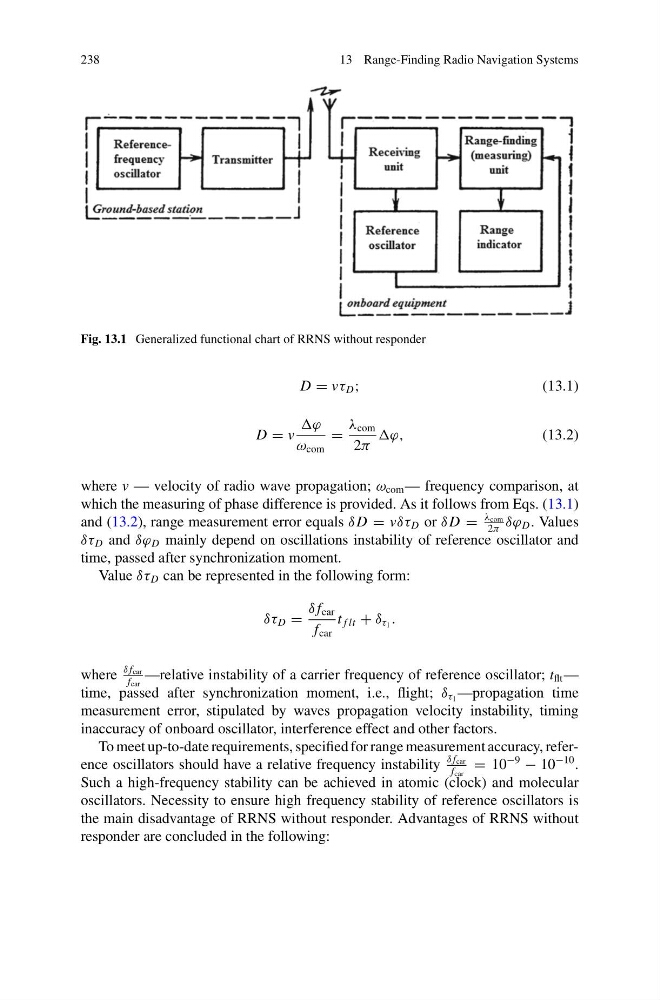
Fig. 13.1 Generalized functional chart of RRNS without responder
D = vτ D ;
(13.1)
D = v
ϕ
ω com
=
λ com
2π
(13.2)
where v — velocity of radio wave propagation; ω com — frequency comparison, at
which the measuring of phase difference is provided. As it follows from Eqs. (13.1)
and (13.2), range measurement error equals δ D = vδτ D or δ D =
λ com
2π
δϕ D . Values
δτ D and δϕ D mainly depend on oscillations instability of reference oscillator and
time, passed after synchronization moment.
Value δτ D can be represented in the following form:
δτ D =
δ f car
f car
t f lt + δ τ 1 .
where
δ f car
f car
—relative instability of a carrier frequency of reference oscillator; t flt —
time, passed after synchronization moment, i.e., flight; δ τ 1 —propagation time
measurement error, stipulated by waves propagation velocity instability, timing
inaccuracy of onboard oscillator, interference effect and other factors.
To meet up-to-date requirements, specified for range measurement accuracy, reference oscillators should have a relative frequency instability
δ f car
f car
= 10
−9
− 10
−10 .
Such a high-frequency stability can be achieved in atomic (clock) and molecular
oscillators. Necessity to ensure high frequency stability of reference oscillators is
the main disadvantage of RRNS without responder. Advantages of RRNS without
responder are concluded in the following:
13 Range-Finding Radio Navigation Systems
Fig. 13.1 Generalized functional chart of RRNS without responder
D = vτ D ;
(13.1)
D = v
ϕ
ω com
=
λ com
2π
(13.2)
where v — velocity of radio wave propagation; ω com — frequency comparison, at
which the measuring of phase difference is provided. As it follows from Eqs. (13.1)
and (13.2), range measurement error equals δ D = vδτ D or δ D =
λ com
2π
δϕ D . Values
δτ D and δϕ D mainly depend on oscillations instability of reference oscillator and
time, passed after synchronization moment.
Value δτ D can be represented in the following form:
δτ D =
δ f car
f car
t f lt + δ τ 1 .
where
δ f car
f car
—relative instability of a carrier frequency of reference oscillator; t flt —
time, passed after synchronization moment, i.e., flight; δ τ 1 —propagation time
measurement error, stipulated by waves propagation velocity instability, timing
inaccuracy of onboard oscillator, interference effect and other factors.
To meet up-to-date requirements, specified for range measurement accuracy, reference oscillators should have a relative frequency instability
δ f car
f car
= 10
−9
− 10
−10 .
Such a high-frequency stability can be achieved in atomic (clock) and molecular
oscillators. Necessity to ensure high frequency stability of reference oscillators is
the main disadvantage of RRNS without responder. Advantages of RRNS without
responder are concluded in the following: