

204
11 Radar Systems of Air Transport
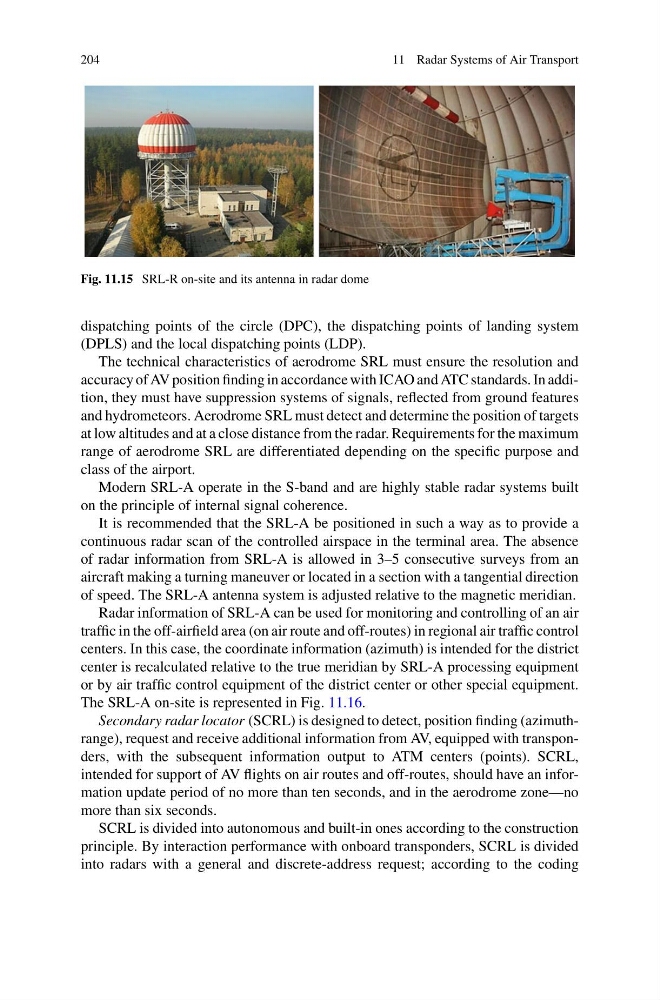
Fig. 11.15 SRL-R on-site and its antenna in radar dome
dispatching points of the circle (DPC), the dispatching points of landing system
(DPLS) and the local dispatching points (LDP).
The technical characteristics of aerodrome SRL must ensure the resolution and
accuracy of AV position finding in accordance with ICAO and ATC standards. In addition, they must have suppression systems of signals, reflected from ground features
and hydrometeors. Aerodrome SRL must detect and determine the position of targets
at low altitudes and at a close distance from the radar. Requirements for the maximum
range of aerodrome SRL are differentiated depending on the specific purpose and
class of the airport.
Modern SRL-A operate in the S-band and are highly stable radar systems built
on the principle of internal signal coherence.
It is recommended that the SRL-A be positioned in such a way as to provide a
continuous radar scan of the controlled airspace in the terminal area. The absence
of radar information from SRL-A is allowed in 3–5 consecutive surveys from an
aircraft making a turning maneuver or located in a section with a tangential direction
of speed. The SRL-A antenna system is adjusted relative to the magnetic meridian.
Radar information of SRL-A can be used for monitoring and controlling of an air
traffic in the off-airfield area (on air route and off-routes) in regional air traffic control
centers. In this case, the coordinate information (azimuth) is intended for the district
center is recalculated relative to the true meridian by SRL-A processing equipment
or by air traffic control equipment of the district center or other special equipment.
The SRL-A on-site is represented in Fig. 11.16.
Secondary radar locator (SCRL) is designed to detect, position finding (azimuthrange), request and receive additional information from AV, equipped with transponders, with the subsequent information output to ATM centers (points). SCRL,
intended for support of AV flights on air routes and off-routes, should have an information update period of no more than ten seconds, and in the aerodrome zone—no
more than six seconds.
SCRL is divided into autonomous and built-in ones according to the construction
principle. By interaction performance with onboard transponders, SCRL is divided
into radars with a general and discrete-address request; according to the coding
11 Radar Systems of Air Transport
Fig. 11.15 SRL-R on-site and its antenna in radar dome
dispatching points of the circle (DPC), the dispatching points of landing system
(DPLS) and the local dispatching points (LDP).
The technical characteristics of aerodrome SRL must ensure the resolution and
accuracy of AV position finding in accordance with ICAO and ATC standards. In addition, they must have suppression systems of signals, reflected from ground features
and hydrometeors. Aerodrome SRL must detect and determine the position of targets
at low altitudes and at a close distance from the radar. Requirements for the maximum
range of aerodrome SRL are differentiated depending on the specific purpose and
class of the airport.
Modern SRL-A operate in the S-band and are highly stable radar systems built
on the principle of internal signal coherence.
It is recommended that the SRL-A be positioned in such a way as to provide a
continuous radar scan of the controlled airspace in the terminal area. The absence
of radar information from SRL-A is allowed in 3–5 consecutive surveys from an
aircraft making a turning maneuver or located in a section with a tangential direction
of speed. The SRL-A antenna system is adjusted relative to the magnetic meridian.
Radar information of SRL-A can be used for monitoring and controlling of an air
traffic in the off-airfield area (on air route and off-routes) in regional air traffic control
centers. In this case, the coordinate information (azimuth) is intended for the district
center is recalculated relative to the true meridian by SRL-A processing equipment
or by air traffic control equipment of the district center or other special equipment.
The SRL-A on-site is represented in Fig. 11.16.
Secondary radar locator (SCRL) is designed to detect, position finding (azimuthrange), request and receive additional information from AV, equipped with transponders, with the subsequent information output to ATM centers (points). SCRL,
intended for support of AV flights on air routes and off-routes, should have an information update period of no more than ten seconds, and in the aerodrome zone—no
more than six seconds.
SCRL is divided into autonomous and built-in ones according to the construction
principle. By interaction performance with onboard transponders, SCRL is divided
into radars with a general and discrete-address request; according to the coding