

9 Compensation of Signals from Stationary Objects
179
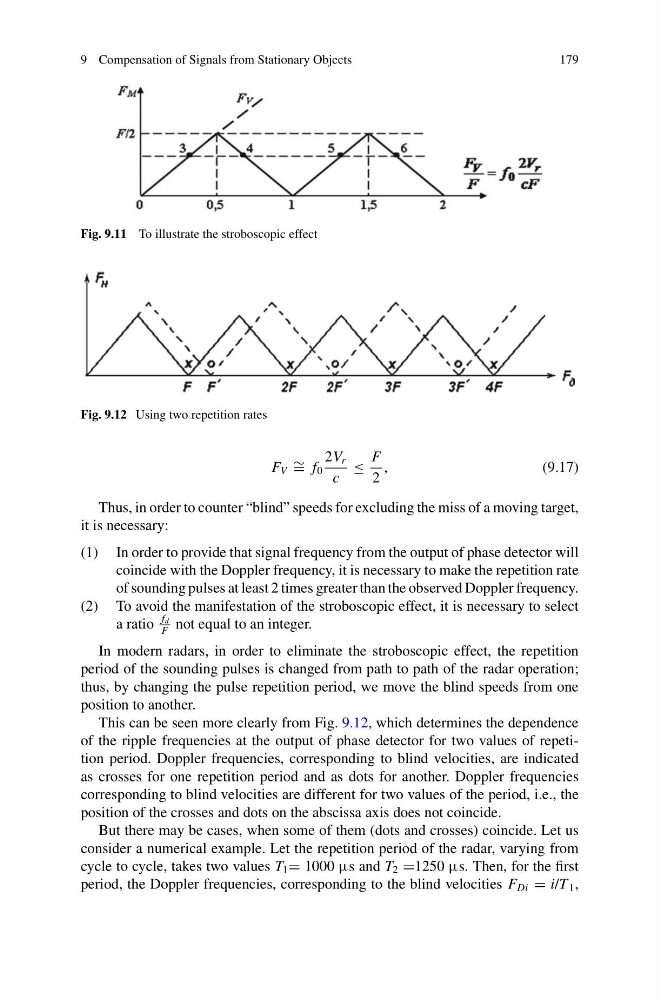
Fig. 9.11 To illustrate the stroboscopic effect
Fig. 9.12 Using two repetition rates
F V ∼ = f 0
2V r
c
≤
F
2
,
(9.17)
Thus, in order to counter “blind” speeds for excluding the miss of a moving target,
it is necessary:
(1) In order to provide that signal frequency from the output of phase detector will
coincide with the Doppler frequency, it is necessary to make the repetition rate
of sounding pulses at least 2 times greater than the observed Doppler frequency.
(2) To avoid the manifestation of the stroboscopic effect, it is necessary to select
a ratio
f d
F
not equal to an integer.
In modern radars, in order to eliminate the stroboscopic effect, the repetition
period of the sounding pulses is changed from path to path of the radar operation;
thus, by changing the pulse repetition period, we move the blind speeds from one
position to another.
This can be seen more clearly from Fig. 9.12, which determines the dependence
of the ripple frequencies at the output of phase detector for two values of repetition period. Doppler frequencies, corresponding to blind velocities, are indicated
as crosses for one repetition period and as dots for another. Doppler frequencies
corresponding to blind velocities are different for two values of the period, i.e., the
position of the crosses and dots on the abscissa axis does not coincide.
But there may be cases, when some of them (dots and crosses) coincide. Let us
consider a numerical example. Let the repetition period of the radar, varying from
cycle to cycle, takes two values T 1 = 1000 μs and T 2 =1250 μs. Then, for the first
period, the Doppler frequencies, corresponding to the blind velocities F Di = i/T 1 ,
179
Fig. 9.11 To illustrate the stroboscopic effect
Fig. 9.12 Using two repetition rates
F V ∼ = f 0
2V r
c
≤
F
2
,
(9.17)
Thus, in order to counter “blind” speeds for excluding the miss of a moving target,
it is necessary:
(1) In order to provide that signal frequency from the output of phase detector will
coincide with the Doppler frequency, it is necessary to make the repetition rate
of sounding pulses at least 2 times greater than the observed Doppler frequency.
(2) To avoid the manifestation of the stroboscopic effect, it is necessary to select
a ratio
f d
F
not equal to an integer.
In modern radars, in order to eliminate the stroboscopic effect, the repetition
period of the sounding pulses is changed from path to path of the radar operation;
thus, by changing the pulse repetition period, we move the blind speeds from one
position to another.
This can be seen more clearly from Fig. 9.12, which determines the dependence
of the ripple frequencies at the output of phase detector for two values of repetition period. Doppler frequencies, corresponding to blind velocities, are indicated
as crosses for one repetition period and as dots for another. Doppler frequencies
corresponding to blind velocities are different for two values of the period, i.e., the
position of the crosses and dots on the abscissa axis does not coincide.
But there may be cases, when some of them (dots and crosses) coincide. Let us
consider a numerical example. Let the repetition period of the radar, varying from
cycle to cycle, takes two values T 1 = 1000 μs and T 2 =1250 μs. Then, for the first
period, the Doppler frequencies, corresponding to the blind velocities F Di = i/T 1 ,