

116
5 Performance Characteristics of Radar Location …
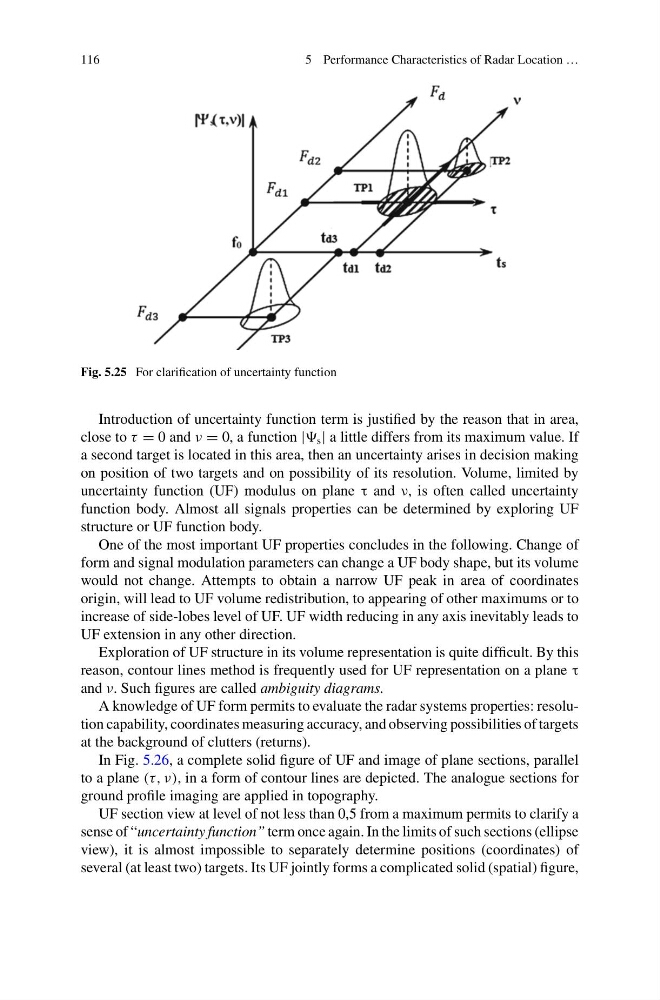
Fig. 5.25 For clarification of uncertainty function
Introduction of uncertainty function term is justified by the reason that in area,
close to τ = 0 and ν = 0, a function | s | a little differs from its maximum value. If
a second target is located in this area, then an uncertainty arises in decision making
on position of two targets and on possibility of its resolution. Volume, limited by
uncertainty function (UF) modulus on plane τ and ν, is often called uncertainty
function body. Almost all signals properties can be determined by exploring UF
structure or UF function body.
One of the most important UF properties concludes in the following. Change of
form and signal modulation parameters can change a UF body shape, but its volume
would not change. Attempts to obtain a narrow UF peak in area of coordinates
origin, will lead to UF volume redistribution, to appearing of other maximums or to
increase of side-lobes level of UF. UF width reducing in any axis inevitably leads to
UF extension in any other direction.
Exploration of UF structure in its volume representation is quite difficult. By this
reason, contour lines method is frequently used for UF representation on a plane τ
and ν. Such figures are called ambiguity diagrams.
A knowledge of UF form permits to evaluate the radar systems properties: resolution capability, coordinates measuring accuracy, and observing possibilities of targets
at the background of clutters (returns).
In Fig. 5.26, a complete solid figure of UF and image of plane sections, parallel
to a plane (τ, ν), in a form of contour lines are depicted. The analogue sections for
ground profile imaging are applied in topography.
UF section view at level of not less than 0,5 from a maximum permits to clarify a
sense of “uncertainty function” term once again. In the limits of such sections (ellipse
view), it is almost impossible to separately determine positions (coordinates) of
several (at least two) targets. Its UF jointly forms a complicated solid (spatial) figure,
5 Performance Characteristics of Radar Location …
Fig. 5.25 For clarification of uncertainty function
Introduction of uncertainty function term is justified by the reason that in area,
close to τ = 0 and ν = 0, a function | s | a little differs from its maximum value. If
a second target is located in this area, then an uncertainty arises in decision making
on position of two targets and on possibility of its resolution. Volume, limited by
uncertainty function (UF) modulus on plane τ and ν, is often called uncertainty
function body. Almost all signals properties can be determined by exploring UF
structure or UF function body.
One of the most important UF properties concludes in the following. Change of
form and signal modulation parameters can change a UF body shape, but its volume
would not change. Attempts to obtain a narrow UF peak in area of coordinates
origin, will lead to UF volume redistribution, to appearing of other maximums or to
increase of side-lobes level of UF. UF width reducing in any axis inevitably leads to
UF extension in any other direction.
Exploration of UF structure in its volume representation is quite difficult. By this
reason, contour lines method is frequently used for UF representation on a plane τ
and ν. Such figures are called ambiguity diagrams.
A knowledge of UF form permits to evaluate the radar systems properties: resolution capability, coordinates measuring accuracy, and observing possibilities of targets
at the background of clutters (returns).
In Fig. 5.26, a complete solid figure of UF and image of plane sections, parallel
to a plane (τ, ν), in a form of contour lines are depicted. The analogue sections for
ground profile imaging are applied in topography.
UF section view at level of not less than 0,5 from a maximum permits to clarify a
sense of “uncertainty function” term once again. In the limits of such sections (ellipse
view), it is almost impossible to separately determine positions (coordinates) of
several (at least two) targets. Its UF jointly forms a complicated solid (spatial) figure,