

84
5 Performance Characteristics of Radar Location …
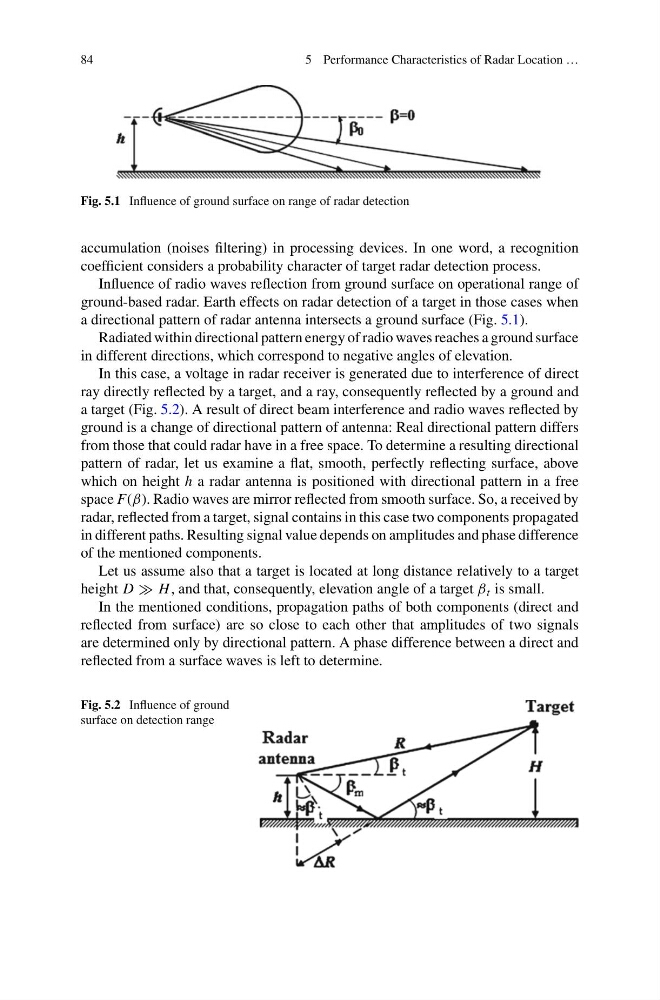
Fig. 5.1 Influence of ground surface on range of radar detection
accumulation (noises filtering) in processing devices. In one word, a recognition
coefficient considers a probability character of target radar detection process.
Influence of radio waves reflection from ground surface on operational range of
ground-based radar. Earth effects on radar detection of a target in those cases when
a directional pattern of radar antenna intersects a ground surface (Fig. 5.1).
Radiated within directional pattern energy of radio waves reaches a ground surface
in different directions, which correspond to negative angles of elevation.
In this case, a voltage in radar receiver is generated due to interference of direct
ray directly reflected by a target, and a ray, consequently reflected by a ground and
a target (Fig. 5.2). A result of direct beam interference and radio waves reflected by
ground is a change of directional pattern of antenna: Real directional pattern differs
from those that could radar have in a free space. To determine a resulting directional
pattern of radar, let us examine a flat, smooth, perfectly reflecting surface, above
which on height h a radar antenna is positioned with directional pattern in a free
space F(β). Radio waves are mirror reflected from smooth surface. So, a received by
radar, reflected from a target, signal contains in this case two components propagated
in different paths. Resulting signal value depends on amplitudes and phase difference
of the mentioned components.
Let us assume also that a target is located at long distance relatively to a target
height D H , and that, consequently, elevation angle of a target β t is small.
In the mentioned conditions, propagation paths of both components (direct and
reflected from surface) are so close to each other that amplitudes of two signals
are determined only by directional pattern. A phase difference between a direct and
reflected from a surface waves is left to determine.
Fig. 5.2 Influence of ground
surface on detection range
5 Performance Characteristics of Radar Location …
Fig. 5.1 Influence of ground surface on range of radar detection
accumulation (noises filtering) in processing devices. In one word, a recognition
coefficient considers a probability character of target radar detection process.
Influence of radio waves reflection from ground surface on operational range of
ground-based radar. Earth effects on radar detection of a target in those cases when
a directional pattern of radar antenna intersects a ground surface (Fig. 5.1).
Radiated within directional pattern energy of radio waves reaches a ground surface
in different directions, which correspond to negative angles of elevation.
In this case, a voltage in radar receiver is generated due to interference of direct
ray directly reflected by a target, and a ray, consequently reflected by a ground and
a target (Fig. 5.2). A result of direct beam interference and radio waves reflected by
ground is a change of directional pattern of antenna: Real directional pattern differs
from those that could radar have in a free space. To determine a resulting directional
pattern of radar, let us examine a flat, smooth, perfectly reflecting surface, above
which on height h a radar antenna is positioned with directional pattern in a free
space F(β). Radio waves are mirror reflected from smooth surface. So, a received by
radar, reflected from a target, signal contains in this case two components propagated
in different paths. Resulting signal value depends on amplitudes and phase difference
of the mentioned components.
Let us assume also that a target is located at long distance relatively to a target
height D H , and that, consequently, elevation angle of a target β t is small.
In the mentioned conditions, propagation paths of both components (direct and
reflected from surface) are so close to each other that amplitudes of two signals
are determined only by directional pattern. A phase difference between a direct and
reflected from a surface waves is left to determine.
Fig. 5.2 Influence of ground
surface on detection range