

7 Barriers to Point of Care Testing in India and South Africa
79
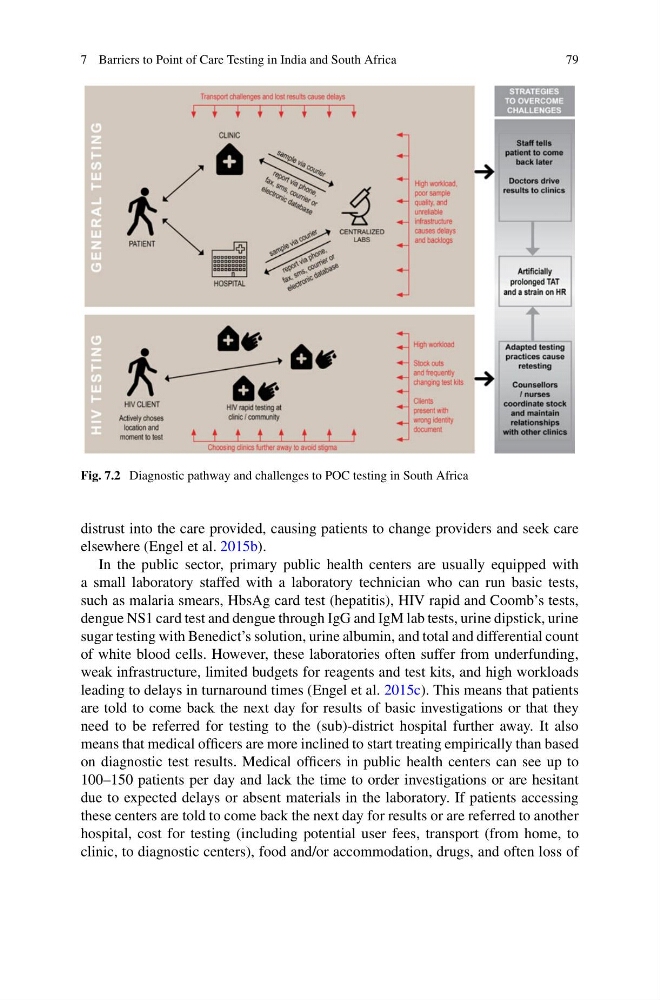
Fig. 7.2 Diagnostic pathway and challenges to POC testing in South Africa
distrust into the care provided, causing patients to change providers and seek care
elsewhere (Engel et al. 2015b).
In the public sector, primary public health centers are usually equipped with
a small laboratory staffed with a laboratory technician who can run basic tests,
such as malaria smears, HbsAg card test (hepatitis), HIV rapid and Coomb’s tests,
dengue NS1 card test and dengue through IgG and IgM lab tests, urine dipstick, urine
sugar testing with Benedict’s solution, urine albumin, and total and differential count
of white blood cells. However, these laboratories often suffer from underfunding,
weak infrastructure, limited budgets for reagents and test kits, and high workloads
leading to delays in turnaround times (Engel et al. 2015c). This means that patients
are told to come back the next day for results of basic investigations or that they
need to be referred for testing to the (sub)-district hospital further away. It also
means that medical officers are more inclined to start treating empirically than based
on diagnostic test results. Medical officers in public health centers can see up to
100–150 patients per day and lack the time to order investigations or are hesitant
due to expected delays or absent materials in the laboratory. If patients accessing
these centers are told to come back the next day for results or are referred to another
hospital, cost for testing (including potential user fees, transport (from home, to
clinic, to diagnostic centers), food and/or accommodation, drugs, and often loss of
79
Fig. 7.2 Diagnostic pathway and challenges to POC testing in South Africa
distrust into the care provided, causing patients to change providers and seek care
elsewhere (Engel et al. 2015b).
In the public sector, primary public health centers are usually equipped with
a small laboratory staffed with a laboratory technician who can run basic tests,
such as malaria smears, HbsAg card test (hepatitis), HIV rapid and Coomb’s tests,
dengue NS1 card test and dengue through IgG and IgM lab tests, urine dipstick, urine
sugar testing with Benedict’s solution, urine albumin, and total and differential count
of white blood cells. However, these laboratories often suffer from underfunding,
weak infrastructure, limited budgets for reagents and test kits, and high workloads
leading to delays in turnaround times (Engel et al. 2015c). This means that patients
are told to come back the next day for results of basic investigations or that they
need to be referred for testing to the (sub)-district hospital further away. It also
means that medical officers are more inclined to start treating empirically than based
on diagnostic test results. Medical officers in public health centers can see up to
100–150 patients per day and lack the time to order investigations or are hesitant
due to expected delays or absent materials in the laboratory. If patients accessing
these centers are told to come back the next day for results or are referred to another
hospital, cost for testing (including potential user fees, transport (from home, to
clinic, to diagnostic centers), food and/or accommodation, drugs, and often loss of