

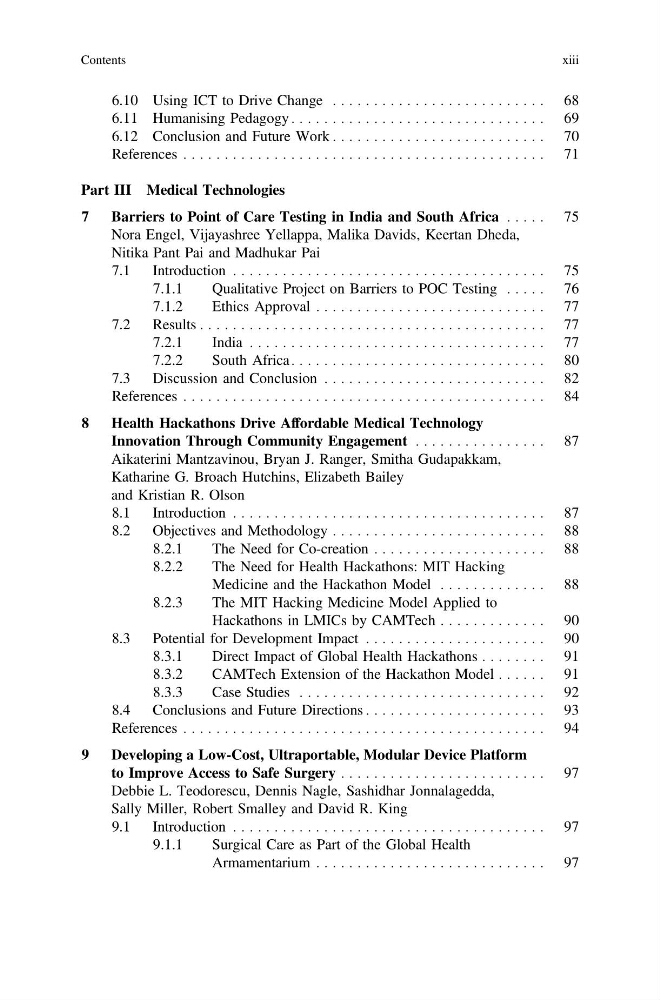
6.10 Using ICT to Drive Change . . . . . . . . . . . . . . . . . . . . . . . . . . 68
6.11 Humanising Pedagogy . . . . . . . . . . . . . . . . . . . . . . . . . . . . . . . 69
6.12 Conclusion and Future Work . . . . . . . . . . . . . . . . . . . . . . . . . . 70
References . . . . . . . . . . . . . . . . . . . . . . . . . . . . . . . . . . . . . . . . . . . . 71
Part III Medical Technologies
7 Barriers to Point of Care Testing in India and South Africa . . . . . 75
Nora Engel, Vijayashree Yellappa, Malika Davids, Keertan Dheda,
Nitika Pant Pai and Madhukar Pai
7.1 Introduction . . . . . . . . . . . . . . . . . . . . . . . . . . . . . . . . . . . . . . 75
7.1.1
Qualitative Project on Barriers to POC Testing . . . . . 76
7.1.2
Ethics Approval . . . . . . . . . . . . . . . . . . . . . . . . . . . . 77
7.2 Results . . . . . . . . . . . . . . . . . . . . . . . . . . . . . . . . . . . . . . . . . . 77
7.2.1
India . . . . . . . . . . . . . . . . . . . . . . . . . . . . . . . . . . . . 77
7.2.2
South Africa . . . . . . . . . . . . . . . . . . . . . . . . . . . . . . . 80
7.3 Discussion and Conclusion . . . . . . . . . . . . . . . . . . . . . . . . . . . 82
References . . . . . . . . . . . . . . . . . . . . . . . . . . . . . . . . . . . . . . . . . . . . 84
8 Health Hackathons Drive Affordable Medical Technology
Innovation Through Community Engagement . . . . . . . . . . . . . . . . 87
Aikaterini Mantzavinou, Bryan J. Ranger, Smitha Gudapakkam,
Katharine G. Broach Hutchins, Elizabeth Bailey
and Kristian R. Olson
8.1 Introduction . . . . . . . . . . . . . . . . . . . . . . . . . . . . . . . . . . . . . . 87
8.2 Objectives and Methodology . . . . . . . . . . . . . . . . . . . . . . . . . . 88
8.2.1
The Need for Co-creation . . . . . . . . . . . . . . . . . . . . . 88
8.2.2
The Need for Health Hackathons: MIT Hacking
Medicine and the Hackathon Model . . . . . . . . . . . . . 88
8.2.3
The MIT Hacking Medicine Model Applied to
Hackathons in LMICs by CAMTech . . . . . . . . . . . . . 90
8.3 Potential for Development Impact . . . . . . . . . . . . . . . . . . . . . . 90
8.3.1
Direct Impact of Global Health Hackathons . . . . . . . . 91
8.3.2
CAMTech Extension of the Hackathon Model . . . . . . 91
8.3.3
Case Studies . . . . . . . . . . . . . . . . . . . . . . . . . . . . . . 92
8.4 Conclusions and Future Directions . . . . . . . . . . . . . . . . . . . . . . 93
References . . . . . . . . . . . . . . . . . . . . . . . . . . . . . . . . . . . . . . . . . . . . 94
9 Developing a Low-Cost, Ultraportable, Modular Device Platform
to Improve Access to Safe Surgery . . . . . . . . . . . . . . . . . . . . . . . . . 97
Debbie L. Teodorescu, Dennis Nagle, Sashidhar Jonnalagedda,
Sally Miller, Robert Smalley and David R. King
9.1 Introduction . . . . . . . . . . . . . . . . . . . . . . . . . . . . . . . . . . . . . . 97
9.1.1
Surgical Care as Part of the Global Health
Armamentarium . . . . . . . . . . . . . . . . . . . . . . . . . . . . 97
Contents
xiii
6.11 Humanising Pedagogy . . . . . . . . . . . . . . . . . . . . . . . . . . . . . . . 69
6.12 Conclusion and Future Work . . . . . . . . . . . . . . . . . . . . . . . . . . 70
References . . . . . . . . . . . . . . . . . . . . . . . . . . . . . . . . . . . . . . . . . . . . 71
Part III Medical Technologies
7 Barriers to Point of Care Testing in India and South Africa . . . . . 75
Nora Engel, Vijayashree Yellappa, Malika Davids, Keertan Dheda,
Nitika Pant Pai and Madhukar Pai
7.1 Introduction . . . . . . . . . . . . . . . . . . . . . . . . . . . . . . . . . . . . . . 75
7.1.1
Qualitative Project on Barriers to POC Testing . . . . . 76
7.1.2
Ethics Approval . . . . . . . . . . . . . . . . . . . . . . . . . . . . 77
7.2 Results . . . . . . . . . . . . . . . . . . . . . . . . . . . . . . . . . . . . . . . . . . 77
7.2.1
India . . . . . . . . . . . . . . . . . . . . . . . . . . . . . . . . . . . . 77
7.2.2
South Africa . . . . . . . . . . . . . . . . . . . . . . . . . . . . . . . 80
7.3 Discussion and Conclusion . . . . . . . . . . . . . . . . . . . . . . . . . . . 82
References . . . . . . . . . . . . . . . . . . . . . . . . . . . . . . . . . . . . . . . . . . . . 84
8 Health Hackathons Drive Affordable Medical Technology
Innovation Through Community Engagement . . . . . . . . . . . . . . . . 87
Aikaterini Mantzavinou, Bryan J. Ranger, Smitha Gudapakkam,
Katharine G. Broach Hutchins, Elizabeth Bailey
and Kristian R. Olson
8.1 Introduction . . . . . . . . . . . . . . . . . . . . . . . . . . . . . . . . . . . . . . 87
8.2 Objectives and Methodology . . . . . . . . . . . . . . . . . . . . . . . . . . 88
8.2.1
The Need for Co-creation . . . . . . . . . . . . . . . . . . . . . 88
8.2.2
The Need for Health Hackathons: MIT Hacking
Medicine and the Hackathon Model . . . . . . . . . . . . . 88
8.2.3
The MIT Hacking Medicine Model Applied to
Hackathons in LMICs by CAMTech . . . . . . . . . . . . . 90
8.3 Potential for Development Impact . . . . . . . . . . . . . . . . . . . . . . 90
8.3.1
Direct Impact of Global Health Hackathons . . . . . . . . 91
8.3.2
CAMTech Extension of the Hackathon Model . . . . . . 91
8.3.3
Case Studies . . . . . . . . . . . . . . . . . . . . . . . . . . . . . . 92
8.4 Conclusions and Future Directions . . . . . . . . . . . . . . . . . . . . . . 93
References . . . . . . . . . . . . . . . . . . . . . . . . . . . . . . . . . . . . . . . . . . . . 94
9 Developing a Low-Cost, Ultraportable, Modular Device Platform
to Improve Access to Safe Surgery . . . . . . . . . . . . . . . . . . . . . . . . . 97
Debbie L. Teodorescu, Dennis Nagle, Sashidhar Jonnalagedda,
Sally Miller, Robert Smalley and David R. King
9.1 Introduction . . . . . . . . . . . . . . . . . . . . . . . . . . . . . . . . . . . . . . 97
9.1.1
Surgical Care as Part of the Global Health
Armamentarium . . . . . . . . . . . . . . . . . . . . . . . . . . . . 97
Contents
xiii