

Elements of Modern Physics
86
Due to significant progress in semiconductor technology, now we have
systems known as quantum dots and quantum wells which are particles confined
in a small volume.
A quantum dot is a portion of matter (e.g. semiconductor) whose excitons
(electron-hole pair) are confined in all three spatial dimensions. As a result, such
materials have
_
electronic properties intermediate between those of bulk
semiconductors and those of discrete molecules.
Quantum dot technology is a good candidate for use in solid-state quantum
computation. By applying small voltages to the leads, the flow of electrons through
the quantum dot can be controlled and thereby precise measurements of the
spin and other properties therein can be made. With several entangled quantum
dots or qubits, plus a way of performing operations, quantum calculations and
the computers that would perform them might be possible.
A quantum well is a potential well with only discrete energy values. One
way to create quantization is to confine particles, which were originally free to
move in three dimensions, to two dimensions, forcing them to occupy a planar
region. The effects of quantum confinement take place when the quantum well
thickness becomes comparable to the de Broglie wavelength of the carriers
(generally electrons and holes), leading to energy levels called “energy bands”,
i.e., the carriers can only have discrete energy values.
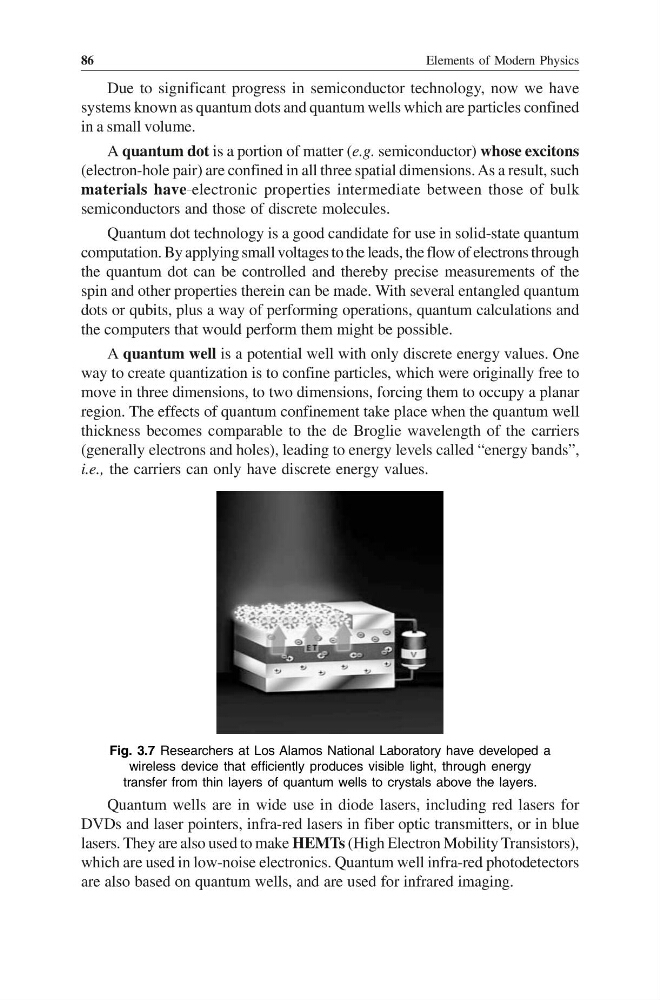
Fig. 3.7 Researchers at Los Alamos National Laboratory have developed a
wireless device that efficiently produces visible light, through energy
transfer from thin layers of quantum wells to crystals above the layers.
Quantum wells are in wide use in diode lasers, including red lasers for
DVDs and laser pointers, infra-red lasers in fiber optic transmitters, or in blue
lasers. They are also used to make HEMTs (High Electron Mobility Transistors),
which are used in low-noise electronics. Quantum well infra-red photodetectors
are also based on quantum wells, and are used for infrared imaging.
86
Due to significant progress in semiconductor technology, now we have
systems known as quantum dots and quantum wells which are particles confined
in a small volume.
A quantum dot is a portion of matter (e.g. semiconductor) whose excitons
(electron-hole pair) are confined in all three spatial dimensions. As a result, such
materials have
_
electronic properties intermediate between those of bulk
semiconductors and those of discrete molecules.
Quantum dot technology is a good candidate for use in solid-state quantum
computation. By applying small voltages to the leads, the flow of electrons through
the quantum dot can be controlled and thereby precise measurements of the
spin and other properties therein can be made. With several entangled quantum
dots or qubits, plus a way of performing operations, quantum calculations and
the computers that would perform them might be possible.
A quantum well is a potential well with only discrete energy values. One
way to create quantization is to confine particles, which were originally free to
move in three dimensions, to two dimensions, forcing them to occupy a planar
region. The effects of quantum confinement take place when the quantum well
thickness becomes comparable to the de Broglie wavelength of the carriers
(generally electrons and holes), leading to energy levels called “energy bands”,
i.e., the carriers can only have discrete energy values.
Fig. 3.7 Researchers at Los Alamos National Laboratory have developed a
wireless device that efficiently produces visible light, through energy
transfer from thin layers of quantum wells to crystals above the layers.
Quantum wells are in wide use in diode lasers, including red lasers for
DVDs and laser pointers, infra-red lasers in fiber optic transmitters, or in blue
lasers. They are also used to make HEMTs (High Electron Mobility Transistors),
which are used in low-noise electronics. Quantum well infra-red photodetectors
are also based on quantum wells, and are used for infrared imaging.