

Atoms and Molecules
139
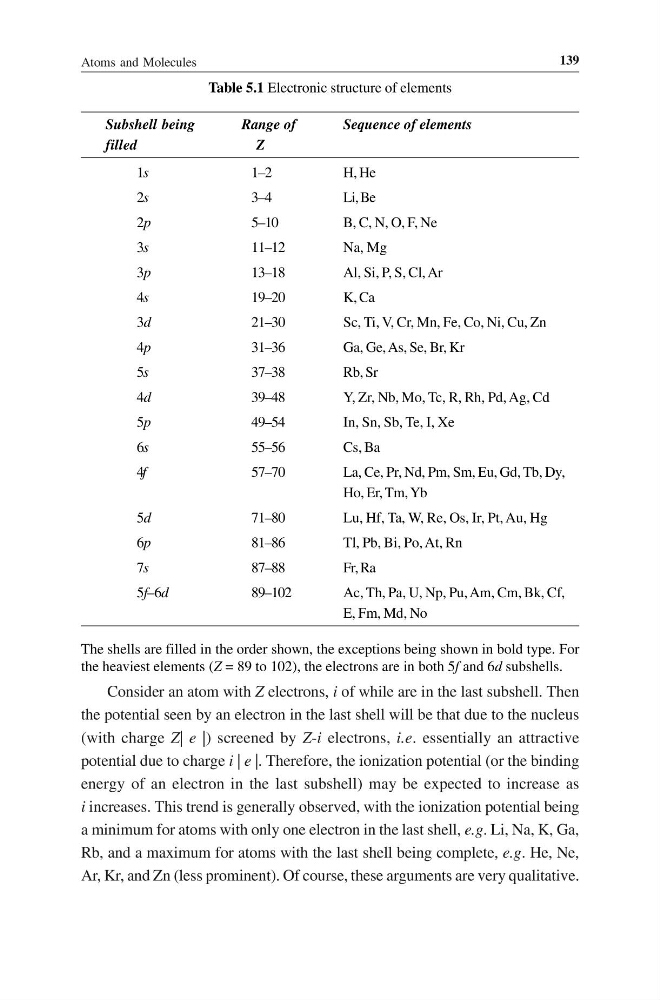
Table 5.1 Electronic structure of elements
Subshell being
Range of
Sequence of elements
filled
Z
1s
1–2
H, He
2s
3–4
Li, Be
2p
5–10
B, C, N, O, F, Ne
3s
11–12
Na, Mg
3p
13–18
Al, Si, P, S, Cl, Ar
4s
19–20
K, Ca
3d
21–30
Sc, Ti, V, Cr, Mn, Fe, Co, Ni, Cu, Zn
4p
31–36
Ga, Ge, As, Se, Br, Kr
5s
37–38
Rb, Sr
4d
39–48
Y, Zr, Nb, Mo, Tc, R, Rh, Pd, Ag, Cd
5p
49–54
In, Sn, Sb, Te, I, Xe
6s
55–56
Cs, Ba
4f
57–70
La, Ce, Pr, Nd, Pm, Sm, Eu, Gd, Tb, Dy,
Ho, Er, Tm, Yb
5d
71–80
Lu, Hf, Ta, W, Re, Os, Ir, Pt, Au, Hg
6p
81–86
Tl, Pb, Bi, Po, At, Rn
7s
87–88
Fr, Ra
5f–6d
89–102
Ac, Th, Pa, U, Np, Pu, Am, Cm, Bk, Cf,
E, Fm, Md, No
The shells are filled in the order shown, the exceptions being shown in bold type. For
the heaviest elements (Z = 89 to 102), the electrons are in both 5f and 6d subshells.
Consider an atom with Z electrons, i of while are in the last subshell. Then
the potential seen by an electron in the last shell will be that due to the nucleus
(with charge Z| e |) screened by Z-i electrons, i.e. essentially an attractive
potential due to charge i | e |. Therefore, the ionization potential (or the binding
energy of an electron in the last subshell) may be expected to increase as
i increases. This trend is generally observed, with the ionization potential being
a minimum for atoms with only one electron in the last shell, e.g. Li, Na, K, Ga,
Rb, and a maximum for atoms with the last shell being complete, e.g. He, Ne,
Ar, Kr, and Zn (less prominent). Of course, these arguments are very qualitative.
139
Table 5.1 Electronic structure of elements
Subshell being
Range of
Sequence of elements
filled
Z
1s
1–2
H, He
2s
3–4
Li, Be
2p
5–10
B, C, N, O, F, Ne
3s
11–12
Na, Mg
3p
13–18
Al, Si, P, S, Cl, Ar
4s
19–20
K, Ca
3d
21–30
Sc, Ti, V, Cr, Mn, Fe, Co, Ni, Cu, Zn
4p
31–36
Ga, Ge, As, Se, Br, Kr
5s
37–38
Rb, Sr
4d
39–48
Y, Zr, Nb, Mo, Tc, R, Rh, Pd, Ag, Cd
5p
49–54
In, Sn, Sb, Te, I, Xe
6s
55–56
Cs, Ba
4f
57–70
La, Ce, Pr, Nd, Pm, Sm, Eu, Gd, Tb, Dy,
Ho, Er, Tm, Yb
5d
71–80
Lu, Hf, Ta, W, Re, Os, Ir, Pt, Au, Hg
6p
81–86
Tl, Pb, Bi, Po, At, Rn
7s
87–88
Fr, Ra
5f–6d
89–102
Ac, Th, Pa, U, Np, Pu, Am, Cm, Bk, Cf,
E, Fm, Md, No
The shells are filled in the order shown, the exceptions being shown in bold type. For
the heaviest elements (Z = 89 to 102), the electrons are in both 5f and 6d subshells.
Consider an atom with Z electrons, i of while are in the last subshell. Then
the potential seen by an electron in the last shell will be that due to the nucleus
(with charge Z| e |) screened by Z-i electrons, i.e. essentially an attractive
potential due to charge i | e |. Therefore, the ionization potential (or the binding
energy of an electron in the last subshell) may be expected to increase as
i increases. This trend is generally observed, with the ionization potential being
a minimum for atoms with only one electron in the last shell, e.g. Li, Na, K, Ga,
Rb, and a maximum for atoms with the last shell being complete, e.g. He, Ne,
Ar, Kr, and Zn (less prominent). Of course, these arguments are very qualitative.