

36
P. K. Muduli et al.
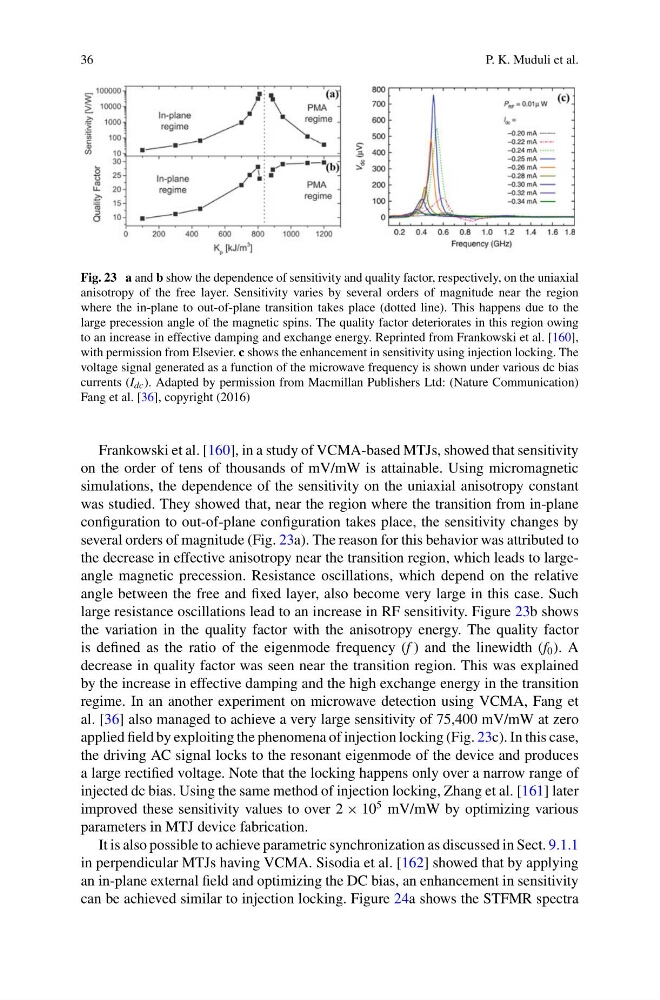
Fig. 23 a and b show the dependence of sensitivity and quality factor, respectively, on the uniaxial
anisotropy of the free layer. Sensitivity varies by several orders of magnitude near the region
where the in-plane to out-of-plane transition takes place (dotted line). This happens due to the
large precession angle of the magnetic spins. The quality factor deteriorates in this region owing
to an increase in effective damping and exchange energy. Reprinted from Frankowski et al. [160],
with permission from Elsevier. c shows the enhancement in sensitivity using injection locking. The
voltage signal generated as a function of the microwave frequency is shown under various dc bias
currents (I dc ). Adapted by permission from Macmillan Publishers Ltd: (Nature Communication)
Fang et al. [36], copyright (2016)
Frankowski et al. [160], in a study of VCMA-based MTJs, showed that sensitivity
on the order of tens of thousands of mV/mW is attainable. Using micromagnetic
simulations, the dependence of the sensitivity on the uniaxial anisotropy constant
was studied. They showed that, near the region where the transition from in-plane
configuration to out-of-plane configuration takes place, the sensitivity changes by
several orders of magnitude (Fig. 23a). The reason for this behavior was attributed to
the decrease in effective anisotropy near the transition region, which leads to largeangle magnetic precession. Resistance oscillations, which depend on the relative
angle between the free and fixed layer, also become very large in this case. Such
large resistance oscillations lead to an increase in RF sensitivity. Figure 23b shows
the variation in the quality factor with the anisotropy energy. The quality factor
is defined as the ratio of the eigenmode frequency (f ) and the linewidth (f 0 ). A
decrease in quality factor was seen near the transition region. This was explained
by the increase in effective damping and the high exchange energy in the transition
regime. In an another experiment on microwave detection using VCMA, Fang et
al. [36] also managed to achieve a very large sensitivity of 75,400 mV/mW at zero
applied field by exploiting the phenomena of injection locking (Fig. 23c). In this case,
the driving AC signal locks to the resonant eigenmode of the device and produces
a large rectified voltage. Note that the locking happens only over a narrow range of
injected dc bias. Using the same method of injection locking, Zhang et al. [161] later
improved these sensitivity values to over 2 × 10
5 mV/mW by optimizing various
parameters in MTJ device fabrication.
It is also possible to achieve parametric synchronization as discussed in Sect. 9.1.1
in perpendicular MTJs having VCMA. Sisodia et al. [162] showed that by applying
an in-plane external field and optimizing the DC bias, an enhancement in sensitivity
can be achieved similar to injection locking. Figure 24a shows the STFMR spectra
P. K. Muduli et al.
Fig. 23 a and b show the dependence of sensitivity and quality factor, respectively, on the uniaxial
anisotropy of the free layer. Sensitivity varies by several orders of magnitude near the region
where the in-plane to out-of-plane transition takes place (dotted line). This happens due to the
large precession angle of the magnetic spins. The quality factor deteriorates in this region owing
to an increase in effective damping and exchange energy. Reprinted from Frankowski et al. [160],
with permission from Elsevier. c shows the enhancement in sensitivity using injection locking. The
voltage signal generated as a function of the microwave frequency is shown under various dc bias
currents (I dc ). Adapted by permission from Macmillan Publishers Ltd: (Nature Communication)
Fang et al. [36], copyright (2016)
Frankowski et al. [160], in a study of VCMA-based MTJs, showed that sensitivity
on the order of tens of thousands of mV/mW is attainable. Using micromagnetic
simulations, the dependence of the sensitivity on the uniaxial anisotropy constant
was studied. They showed that, near the region where the transition from in-plane
configuration to out-of-plane configuration takes place, the sensitivity changes by
several orders of magnitude (Fig. 23a). The reason for this behavior was attributed to
the decrease in effective anisotropy near the transition region, which leads to largeangle magnetic precession. Resistance oscillations, which depend on the relative
angle between the free and fixed layer, also become very large in this case. Such
large resistance oscillations lead to an increase in RF sensitivity. Figure 23b shows
the variation in the quality factor with the anisotropy energy. The quality factor
is defined as the ratio of the eigenmode frequency (f ) and the linewidth (f 0 ). A
decrease in quality factor was seen near the transition region. This was explained
by the increase in effective damping and the high exchange energy in the transition
regime. In an another experiment on microwave detection using VCMA, Fang et
al. [36] also managed to achieve a very large sensitivity of 75,400 mV/mW at zero
applied field by exploiting the phenomena of injection locking (Fig. 23c). In this case,
the driving AC signal locks to the resonant eigenmode of the device and produces
a large rectified voltage. Note that the locking happens only over a narrow range of
injected dc bias. Using the same method of injection locking, Zhang et al. [161] later
improved these sensitivity values to over 2 × 10
5 mV/mW by optimizing various
parameters in MTJ device fabrication.
It is also possible to achieve parametric synchronization as discussed in Sect. 9.1.1
in perpendicular MTJs having VCMA. Sisodia et al. [162] showed that by applying
an in-plane external field and optimizing the DC bias, an enhancement in sensitivity
can be achieved similar to injection locking. Figure 24a shows the STFMR spectra