

228
S. Goolaup et al.
2.2 Chirality Dependent Transverse Domain Wall Selective
Switching
Transverse DW trajectory in a bifurcated nanowire based on its chirality is key to
the development of the proposed magnetic network logic device. The field driven
magnetization reversal process in a network structure was first investigated using
OOMMF micromagnetic simulations [31]. The width and thickness of the bifurcated
nanowire are chosen to be 100 and 10 nm, respectively to ensure TDWs are the only
stable configurations. The branches of the bifurcated nanowire deviate at an angle
φ = 70° from the nanowire long axis (x-axis). Material parameters for Permalloy,
Ni 81 Fe 19, were considered for the simulation.
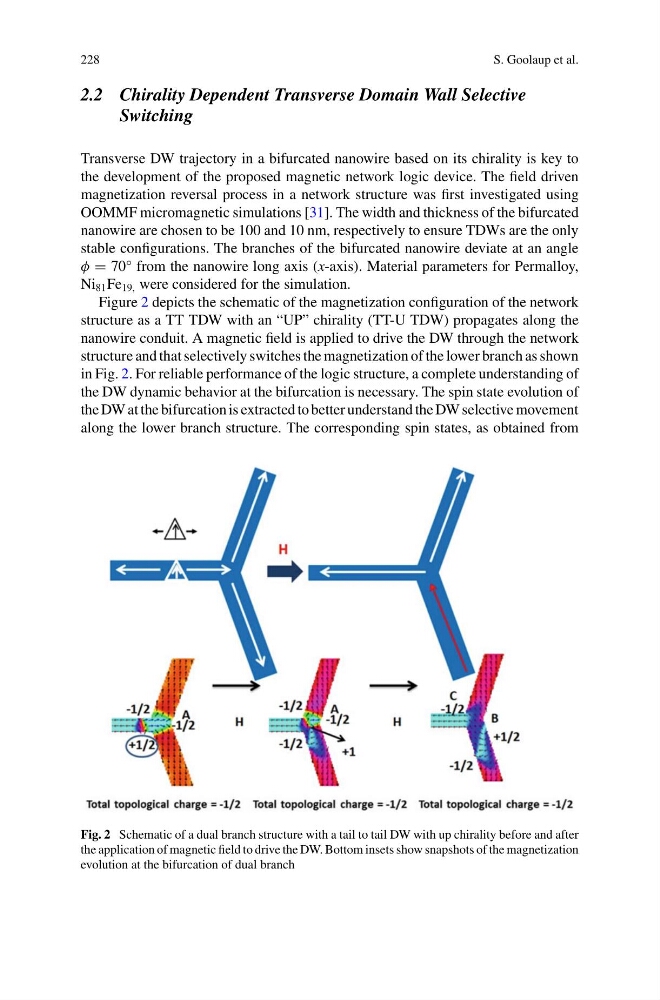
Figure 2 depicts the schematic of the magnetization configuration of the network
structure as a TT TDW with an “UP” chirality (TT-U TDW) propagates along the
nanowire conduit. A magnetic field is applied to drive the DW through the network
structure and that selectively switches the magnetization of the lower branch as shown
in Fig. 2. For reliable performance of the logic structure, a complete understanding of
the DW dynamic behavior at the bifurcation is necessary. The spin state evolution of
the DW at the bifurcation is extracted to better understand the DW selective movement
along the lower branch structure. The corresponding spin states, as obtained from
Fig. 2 Schematic of a dual branch structure with a tail to tail DW with up chirality before and after
the application of magnetic field to drive the DW. Bottom insets show snapshots of the magnetization
evolution at the bifurcation of dual branch
S. Goolaup et al.
2.2 Chirality Dependent Transverse Domain Wall Selective
Switching
Transverse DW trajectory in a bifurcated nanowire based on its chirality is key to
the development of the proposed magnetic network logic device. The field driven
magnetization reversal process in a network structure was first investigated using
OOMMF micromagnetic simulations [31]. The width and thickness of the bifurcated
nanowire are chosen to be 100 and 10 nm, respectively to ensure TDWs are the only
stable configurations. The branches of the bifurcated nanowire deviate at an angle
φ = 70° from the nanowire long axis (x-axis). Material parameters for Permalloy,
Ni 81 Fe 19, were considered for the simulation.
Figure 2 depicts the schematic of the magnetization configuration of the network
structure as a TT TDW with an “UP” chirality (TT-U TDW) propagates along the
nanowire conduit. A magnetic field is applied to drive the DW through the network
structure and that selectively switches the magnetization of the lower branch as shown
in Fig. 2. For reliable performance of the logic structure, a complete understanding of
the DW dynamic behavior at the bifurcation is necessary. The spin state evolution of
the DW at the bifurcation is extracted to better understand the DW selective movement
along the lower branch structure. The corresponding spin states, as obtained from
Fig. 2 Schematic of a dual branch structure with a tail to tail DW with up chirality before and after
the application of magnetic field to drive the DW. Bottom insets show snapshots of the magnetization
evolution at the bifurcation of dual branch