

138
S. Krishnia and W. S. Lew
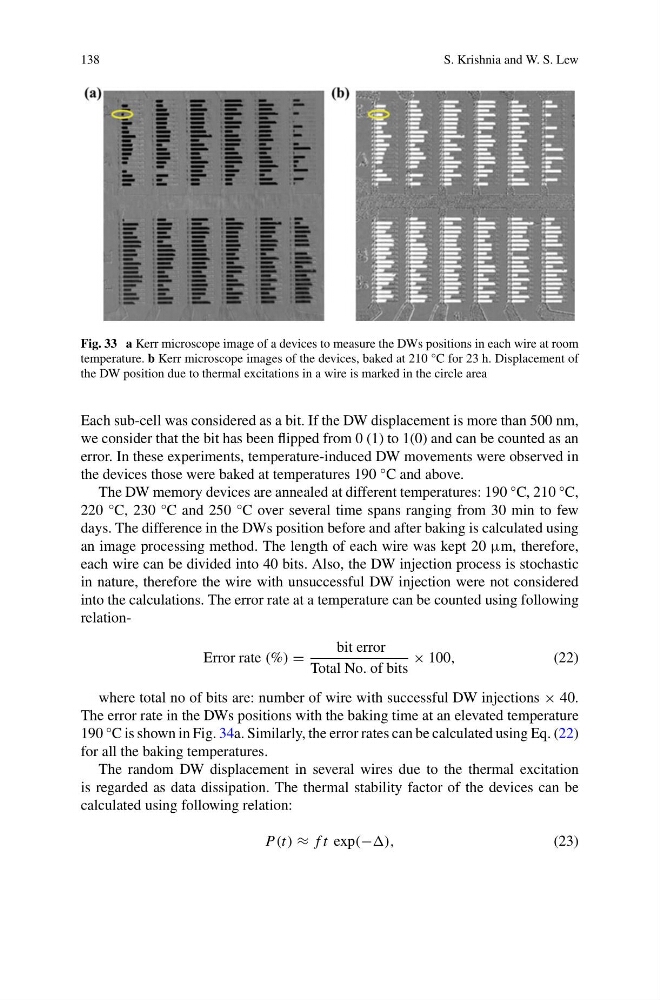
Fig. 33 a Kerr microscope image of a devices to measure the DWs positions in each wire at room
temperature. b Kerr microscope images of the devices, baked at 210 °C for 23 h. Displacement of
the DW position due to thermal excitations in a wire is marked in the circle area
Each sub-cell was considered as a bit. If the DW displacement is more than 500 nm,
we consider that the bit has been flipped from 0 (1) to 1(0) and can be counted as an
error. In these experiments, temperature-induced DW movements were observed in
the devices those were baked at temperatures 190 °C and above.
The DW memory devices are annealed at different temperatures: 190 °C, 210 °C,
220 °C, 230 °C and 250 °C over several time spans ranging from 30 min to few
days. The difference in the DWs position before and after baking is calculated using
an image processing method. The length of each wire was kept 20 μm, therefore,
each wire can be divided into 40 bits. Also, the DW injection process is stochastic
in nature, therefore the wire with unsuccessful DW injection were not considered
into the calculations. The error rate at a temperature can be counted using following
relationError rate (%) =
bit error
Total No. of bits
× 100,
(22)
where total no of bits are: number of wire with successful DW injections × 40.
The error rate in the DWs positions with the baking time at an elevated temperature
190 °C is shown in Fig. 34a. Similarly, the error rates can be calculated using Eq. (22)
for all the baking temperatures.
The random DW displacement in several wires due to the thermal excitation
is regarded as data dissipation. The thermal stability factor of the devices can be
calculated using following relation:
P(t) ≈ f t exp(−),
(23)
S. Krishnia and W. S. Lew
Fig. 33 a Kerr microscope image of a devices to measure the DWs positions in each wire at room
temperature. b Kerr microscope images of the devices, baked at 210 °C for 23 h. Displacement of
the DW position due to thermal excitations in a wire is marked in the circle area
Each sub-cell was considered as a bit. If the DW displacement is more than 500 nm,
we consider that the bit has been flipped from 0 (1) to 1(0) and can be counted as an
error. In these experiments, temperature-induced DW movements were observed in
the devices those were baked at temperatures 190 °C and above.
The DW memory devices are annealed at different temperatures: 190 °C, 210 °C,
220 °C, 230 °C and 250 °C over several time spans ranging from 30 min to few
days. The difference in the DWs position before and after baking is calculated using
an image processing method. The length of each wire was kept 20 μm, therefore,
each wire can be divided into 40 bits. Also, the DW injection process is stochastic
in nature, therefore the wire with unsuccessful DW injection were not considered
into the calculations. The error rate at a temperature can be counted using following
relationError rate (%) =
bit error
Total No. of bits
× 100,
(22)
where total no of bits are: number of wire with successful DW injections × 40.
The error rate in the DWs positions with the baking time at an elevated temperature
190 °C is shown in Fig. 34a. Similarly, the error rates can be calculated using Eq. (22)
for all the baking temperatures.
The random DW displacement in several wires due to the thermal excitation
is regarded as data dissipation. The thermal stability factor of the devices can be
calculated using following relation:
P(t) ≈ f t exp(−),
(23)