

61
In the Cooperation Sea, which is located in the Seasonal
Ice Zone as defined by Tréguer and Jacques (1992), nutrient
concentrations increase throughout the year until December,
where nitrate and silicate drop notably followed by a phosphate decrease. Here, the largest species diversity occurs
during summer, while plenty of dead diatoms are observable
in winter (Perrin et al. 1987).
On the Weddell Sea ice edge, huge differences between
spring and autumn can be observed. During spring, long
chains of vegetative cells form and diatoms as well as haptophytes build up gelatinous colonies in the open water, while
only short chains and few single cells occur under the ice.
The same conditions hold true for autumn, where short
chains and single cells dominate. Furthermore, diatom spores
with storage products and enlarged cells are produced then,
as results of their sexual reproduction cycle. Thus, the ice
edge serves as boundary of different life stages (Fryxell
1989).
One of the most productive regions in the Southern Ocean
is the Western Antarctic Peninsula, where phytoplankton
blooms occur around November to December, after the sea
ice retreats in October. In 2012, the bloom was dominated by
diatoms and Phaeocystis sp., with diatoms being the most
dominant group at the peak of the bloom. Mixing events can
cause a crash in the phytoplankton population, which happened in mid-December in this region. Afterwards, the population consisted of large groups of cryptophytes and
Phaeocystis sp. In March, a second, smaller bloom,
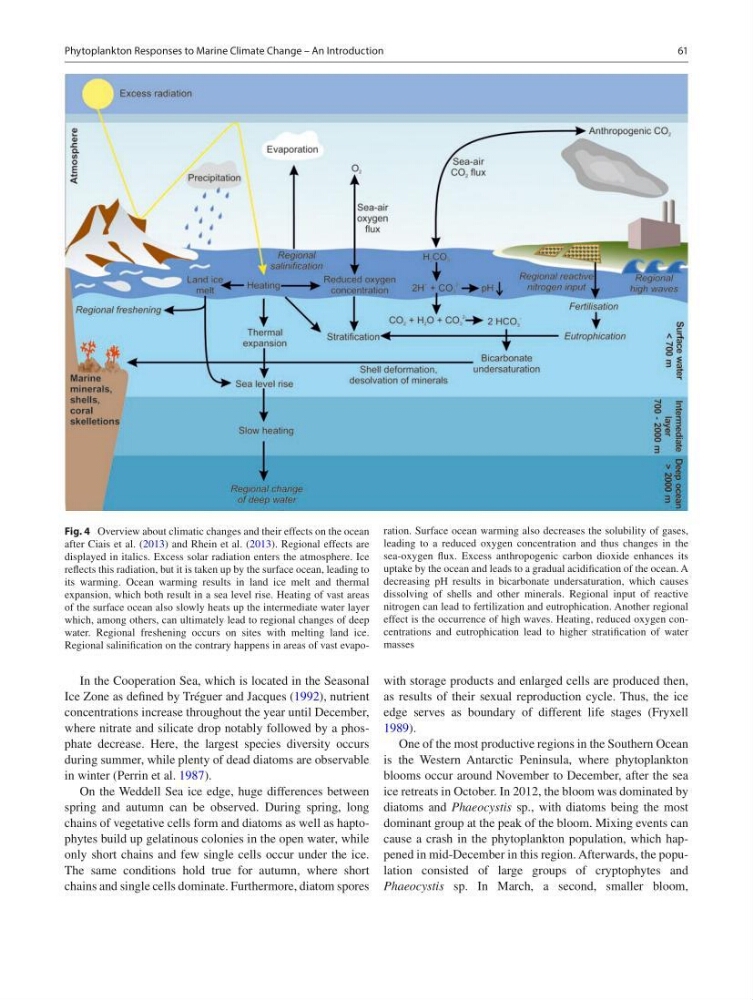
Fig. 4 Overview about climatic changes and their effects on the ocean
after Ciais et al. (2013) and Rhein et al. (2013). Regional effects are
displayed in italics. Excess solar radiation enters the atmosphere. Ice
reflects this radiation, but it is taken up by the surface ocean, leading to
its warming. Ocean warming results in land ice melt and thermal
expansion, which both result in a sea level rise. Heating of vast areas
of the surface ocean also slowly heats up the intermediate water layer
which, among others, can ultimately lead to regional changes of deep
water. Regional freshening occurs on sites with melting land ice.
Regional salinification on the contrary happens in areas of vast evaporation. Surface ocean warming also decreases the solubility of gases,
leading to a reduced oxygen concentration and thus changes in the
sea-oxygen flux. Excess anthropogenic carbon dioxide enhances its
uptake by the ocean and leads to a gradual acidification of the ocean. A
decreasing pH results in bicarbonate undersaturation, which causes
dissolving of shells and other minerals. Regional input of reactive
nitrogen can lead to fertilization and eutrophication. Another regional
effect is the occurrence of high waves. Heating, reduced oxygen concentrations and eutrophication lead to higher stratification of water
masses
Phytoplankton Responses to Marine Climate Change – An Introduction
In the Cooperation Sea, which is located in the Seasonal
Ice Zone as defined by Tréguer and Jacques (1992), nutrient
concentrations increase throughout the year until December,
where nitrate and silicate drop notably followed by a phosphate decrease. Here, the largest species diversity occurs
during summer, while plenty of dead diatoms are observable
in winter (Perrin et al. 1987).
On the Weddell Sea ice edge, huge differences between
spring and autumn can be observed. During spring, long
chains of vegetative cells form and diatoms as well as haptophytes build up gelatinous colonies in the open water, while
only short chains and few single cells occur under the ice.
The same conditions hold true for autumn, where short
chains and single cells dominate. Furthermore, diatom spores
with storage products and enlarged cells are produced then,
as results of their sexual reproduction cycle. Thus, the ice
edge serves as boundary of different life stages (Fryxell
1989).
One of the most productive regions in the Southern Ocean
is the Western Antarctic Peninsula, where phytoplankton
blooms occur around November to December, after the sea
ice retreats in October. In 2012, the bloom was dominated by
diatoms and Phaeocystis sp., with diatoms being the most
dominant group at the peak of the bloom. Mixing events can
cause a crash in the phytoplankton population, which happened in mid-December in this region. Afterwards, the population consisted of large groups of cryptophytes and
Phaeocystis sp. In March, a second, smaller bloom,
Fig. 4 Overview about climatic changes and their effects on the ocean
after Ciais et al. (2013) and Rhein et al. (2013). Regional effects are
displayed in italics. Excess solar radiation enters the atmosphere. Ice
reflects this radiation, but it is taken up by the surface ocean, leading to
its warming. Ocean warming results in land ice melt and thermal
expansion, which both result in a sea level rise. Heating of vast areas
of the surface ocean also slowly heats up the intermediate water layer
which, among others, can ultimately lead to regional changes of deep
water. Regional freshening occurs on sites with melting land ice.
Regional salinification on the contrary happens in areas of vast evaporation. Surface ocean warming also decreases the solubility of gases,
leading to a reduced oxygen concentration and thus changes in the
sea-oxygen flux. Excess anthropogenic carbon dioxide enhances its
uptake by the ocean and leads to a gradual acidification of the ocean. A
decreasing pH results in bicarbonate undersaturation, which causes
dissolving of shells and other minerals. Regional input of reactive
nitrogen can lead to fertilization and eutrophication. Another regional
effect is the occurrence of high waves. Heating, reduced oxygen concentrations and eutrophication lead to higher stratification of water
masses
Phytoplankton Responses to Marine Climate Change – An Introduction