

60
regions near the equator undergo relatively small changes in
temperature during the year, the poles are influenced by large
changes caused by severe differences in sunshine intensity
and daylight duration. As the environmental factors are
already highly influenced by these changes, phytoplankton
communities need to adapt to these different conditions as
well. Specifically useful study sites are the poles, since seasonal climate variability is very distinct. Other sites that are
under continuous and alternating changes are shelf and
coastal systems, which are for example influenced by freshwater inflow from the mainland as well as tides and wave
actions. The following examples of different regional seasonal changes over the globe and the corresponding phytoplankton community successions shall give a small overview
about the vast influence of climate conditions on phytoplankton communities.
In the Arctic summer, glacial ice melt water adds iron and
other nutrients into the Labrador Sea (Fig. 2). Apart from the
coastal summer blooms resulting from that input, glacial
meltwater nutrients travel distances of up to 300 km on the
ocean’s surface (Arrigo et al. 2017). In the western Arctic,
even at closely located sites, different stages of seasonal
development could be observed for local phytoplankton
communities. The considerable variability in quantitative
abundances and biomass values of local phytoplankton species is highly dependent on the irregularity of seasonal processes in the physical environment, ice melting, heating, and
the dynamics of stratification (Sukhanova et al. 2009).
Furthermore, massive and widespread phytoplankton blooms
could occur under the Arctic sea ice, given regional nitrogen
concentrations higher than 10 μmol L
−1
in 50% of the ice
covered continental shelf. Those under-ice blooms are also
an important factor to be taken into account when estimating
changes in the arctic environment (Arrigo et al. 2012).
In the Antarctic, species abundance and composition are
largely influenced by seasons in the distinct regions subjected to
differences in environmental factors and processes (Deppeler
and Davidson 2017). Tréguer and Jacques (1992) divided the
Southern Ocean into four different zones, without considering
the Permanent Ice Zone, with regard to their different nutrient
regimes, physical parameters, and extents of primary production. While diatom-dominated blooms and severe nutrient
decreases can be observed in the Coastal and Continental Shelf
Zone, the Seasonal Ice Zone is characterized by a very variable
hydrological system depending on the ice cover retreat and
growth. The Permanently Open Ocean Zone is a nutrient rich
region, while the northern part is characterized by a silicate limitation and the Polar Front Zone can harbor high amounts of
phytoplankton. There are, however, vast regions, which are suffering under iron limitations. In general, nanoplankton dominates within sea ice and open water unless diatom blooms occur,
which happens in May, November and December at the bottom
of the ice as well as in January and February in open water (e.g.,
Perrin et al. 1987; Swart et al. 2015).
Water body
containing
phytoplankton
Sampling
Remote Sensing
Raw
sample
Fixation
Filtration
Microscopy
Light
Fluorescence
Electron
Flow
Cytometry
Pigment
Analysis
Nutrients
DNA/RNA
extraction
Molecular
characterisation
Molecular
methods
Chromatography
NMR
MS
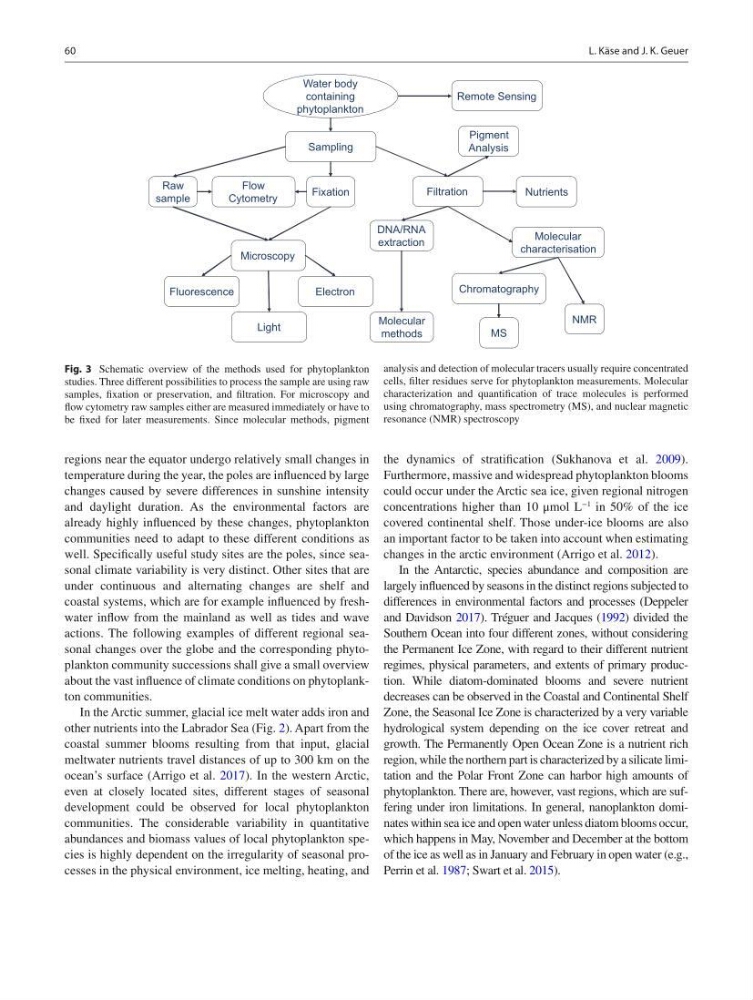
Fig. 3 Schematic overview of the methods used for phytoplankton
studies. Three different possibilities to process the sample are using raw
samples, fixation or preservation, and filtration. For microscopy and
flow cytometry raw samples either are measured immediately or have to
be fixed for later measurements. Since molecular methods, pigment
analysis and detection of molecular tracers usually require concentrated
cells, filter residues serve for phytoplankton measurements. Molecular
characterization and quantification of trace molecules is performed
using chromatography, mass spectrometry (MS), and nuclear magnetic
resonance (NMR) spectroscopy
L. Käse and J. K. Geuer
regions near the equator undergo relatively small changes in
temperature during the year, the poles are influenced by large
changes caused by severe differences in sunshine intensity
and daylight duration. As the environmental factors are
already highly influenced by these changes, phytoplankton
communities need to adapt to these different conditions as
well. Specifically useful study sites are the poles, since seasonal climate variability is very distinct. Other sites that are
under continuous and alternating changes are shelf and
coastal systems, which are for example influenced by freshwater inflow from the mainland as well as tides and wave
actions. The following examples of different regional seasonal changes over the globe and the corresponding phytoplankton community successions shall give a small overview
about the vast influence of climate conditions on phytoplankton communities.
In the Arctic summer, glacial ice melt water adds iron and
other nutrients into the Labrador Sea (Fig. 2). Apart from the
coastal summer blooms resulting from that input, glacial
meltwater nutrients travel distances of up to 300 km on the
ocean’s surface (Arrigo et al. 2017). In the western Arctic,
even at closely located sites, different stages of seasonal
development could be observed for local phytoplankton
communities. The considerable variability in quantitative
abundances and biomass values of local phytoplankton species is highly dependent on the irregularity of seasonal processes in the physical environment, ice melting, heating, and
the dynamics of stratification (Sukhanova et al. 2009).
Furthermore, massive and widespread phytoplankton blooms
could occur under the Arctic sea ice, given regional nitrogen
concentrations higher than 10 μmol L
−1
in 50% of the ice
covered continental shelf. Those under-ice blooms are also
an important factor to be taken into account when estimating
changes in the arctic environment (Arrigo et al. 2012).
In the Antarctic, species abundance and composition are
largely influenced by seasons in the distinct regions subjected to
differences in environmental factors and processes (Deppeler
and Davidson 2017). Tréguer and Jacques (1992) divided the
Southern Ocean into four different zones, without considering
the Permanent Ice Zone, with regard to their different nutrient
regimes, physical parameters, and extents of primary production. While diatom-dominated blooms and severe nutrient
decreases can be observed in the Coastal and Continental Shelf
Zone, the Seasonal Ice Zone is characterized by a very variable
hydrological system depending on the ice cover retreat and
growth. The Permanently Open Ocean Zone is a nutrient rich
region, while the northern part is characterized by a silicate limitation and the Polar Front Zone can harbor high amounts of
phytoplankton. There are, however, vast regions, which are suffering under iron limitations. In general, nanoplankton dominates within sea ice and open water unless diatom blooms occur,
which happens in May, November and December at the bottom
of the ice as well as in January and February in open water (e.g.,
Perrin et al. 1987; Swart et al. 2015).
Water body
containing
phytoplankton
Sampling
Remote Sensing
Raw
sample
Fixation
Filtration
Microscopy
Light
Fluorescence
Electron
Flow
Cytometry
Pigment
Analysis
Nutrients
DNA/RNA
extraction
Molecular
characterisation
Molecular
methods
Chromatography
NMR
MS
Fig. 3 Schematic overview of the methods used for phytoplankton
studies. Three different possibilities to process the sample are using raw
samples, fixation or preservation, and filtration. For microscopy and
flow cytometry raw samples either are measured immediately or have to
be fixed for later measurements. Since molecular methods, pigment
analysis and detection of molecular tracers usually require concentrated
cells, filter residues serve for phytoplankton measurements. Molecular
characterization and quantification of trace molecules is performed
using chromatography, mass spectrometry (MS), and nuclear magnetic
resonance (NMR) spectroscopy
L. Käse and J. K. Geuer