

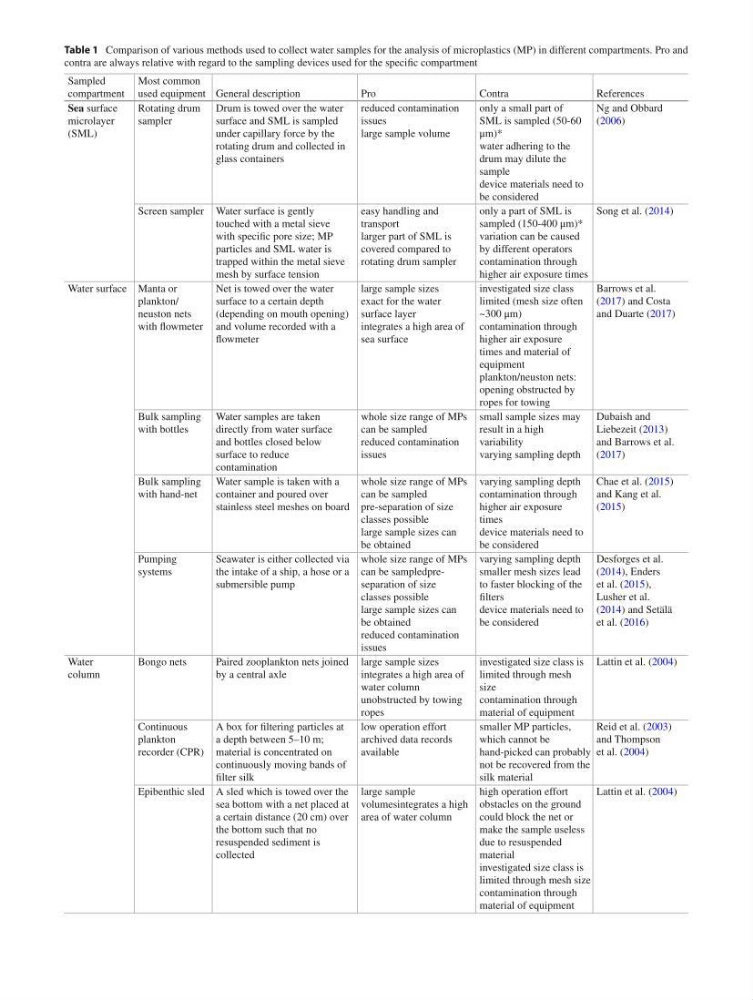
Table 1 Comparison of various methods used to collect water samples for the analysis of microplastics (MP) in different compartments. Pro and
contra are always relative with regard to the sampling devices used for the specific compartment
Sampled
compartment
Most common
used equipment General description
Pro
Contra
References
Sea surface
microlayer
(SML)
Rotating drum
sampler
Drum is towed over the water
surface and SML is sampled
under capillary force by the
rotating drum and collected in
glass containers
reduced contamination
issues
large sample volume
only a small part of
SML is sampled (50-60
μm)*
water adhering to the
drum may dilute the
sample
device materials need to
be considered
Ng and Obbard
(2006)
Screen sampler Water surface is gently
touched with a metal sieve
with specific pore size; MP
particles and SML water is
trapped within the metal sieve
mesh by surface tension
easy handling and
transport
larger part of SML is
covered compared to
rotating drum sampler
only a part of SML is
sampled (150-400 μm)*
variation can be caused
by different operators
contamination through
higher air exposure times
Song et al. (2014)
Water surface Manta or
plankton/
neuston nets
with flowmeter
Net is towed over the water
surface to a certain depth
(depending on mouth opening)
and volume recorded with a
flowmeter
large sample sizes
exact for the water
surface layer
integrates a high area of
sea surface
investigated size class
limited (mesh size often
~300 μm)
contamination through
higher air exposure
times and material of
equipment
plankton/neuston nets:
opening obstructed by
ropes for towing
Barrows et al.
(2017) and Costa
and Duarte (2017)
Bulk sampling
with bottles
Water samples are taken
directly from water surface
and bottles closed below
surface to reduce
contamination
whole size range of MPs
can be sampled
reduced contamination
issues
small sample sizes may
result in a high
variability
varying sampling depth
Dubaish and
Liebezeit (2013)
and Barrows et al.
(2017)
Bulk sampling
with hand-net
Water sample is taken with a
container and poured over
stainless steel meshes on board
whole size range of MPs
can be sampled
pre-separation of size
classes possible
large sample sizes can
be obtained
varying sampling depth
contamination through
higher air exposure
times
device materials need to
be considered
Chae et al. (2015)
and Kang et al.
(2015)
Pumping
systems
Seawater is either collected via
the intake of a ship, a hose or a
submersible pump
whole size range of MPs
can be sampledpreseparation of size
classes possible
large sample sizes can
be obtained
reduced contamination
issues
varying sampling depth
smaller mesh sizes lead
to faster blocking of the
filters
device materials need to
be considered
Desforges et al.
(2014), Enders
et al. (2015),
Lusher et al.
(2014) and Setälä
et al. (2016)
Water
column
Bongo nets
Paired zooplankton nets joined
by a central axle
large sample sizes
integrates a high area of
water column
unobstructed by towing
ropes
investigated size class is
limited through mesh
size
contamination through
material of equipment
Lattin et al. (2004)
Continuous
plankton
recorder (CPR)
A box for filtering particles at
a depth between 5–10 m;
material is concentrated on
continuously moving bands of
filter silk
low operation effort
archived data records
available
smaller MP particles,
which cannot be
hand-picked can probably
not be recovered from the
silk material
Reid et al. (2003)
and Thompson
et al. (2004)
Epibenthic sled A sled which is towed over the
sea bottom with a net placed at
a certain distance (20 cm) over
the bottom such that no
resuspended sediment is
collected
large sample
volumesintegrates a high
area of water column
high operation effort
obstacles on the ground
could block the net or
make the sample useless
due to resuspended
material
investigated size class is
limited through mesh size
contamination through
material of equipment
Lattin et al. (2004)
contra are always relative with regard to the sampling devices used for the specific compartment
Sampled
compartment
Most common
used equipment General description
Pro
Contra
References
Sea surface
microlayer
(SML)
Rotating drum
sampler
Drum is towed over the water
surface and SML is sampled
under capillary force by the
rotating drum and collected in
glass containers
reduced contamination
issues
large sample volume
only a small part of
SML is sampled (50-60
μm)*
water adhering to the
drum may dilute the
sample
device materials need to
be considered
Ng and Obbard
(2006)
Screen sampler Water surface is gently
touched with a metal sieve
with specific pore size; MP
particles and SML water is
trapped within the metal sieve
mesh by surface tension
easy handling and
transport
larger part of SML is
covered compared to
rotating drum sampler
only a part of SML is
sampled (150-400 μm)*
variation can be caused
by different operators
contamination through
higher air exposure times
Song et al. (2014)
Water surface Manta or
plankton/
neuston nets
with flowmeter
Net is towed over the water
surface to a certain depth
(depending on mouth opening)
and volume recorded with a
flowmeter
large sample sizes
exact for the water
surface layer
integrates a high area of
sea surface
investigated size class
limited (mesh size often
~300 μm)
contamination through
higher air exposure
times and material of
equipment
plankton/neuston nets:
opening obstructed by
ropes for towing
Barrows et al.
(2017) and Costa
and Duarte (2017)
Bulk sampling
with bottles
Water samples are taken
directly from water surface
and bottles closed below
surface to reduce
contamination
whole size range of MPs
can be sampled
reduced contamination
issues
small sample sizes may
result in a high
variability
varying sampling depth
Dubaish and
Liebezeit (2013)
and Barrows et al.
(2017)
Bulk sampling
with hand-net
Water sample is taken with a
container and poured over
stainless steel meshes on board
whole size range of MPs
can be sampled
pre-separation of size
classes possible
large sample sizes can
be obtained
varying sampling depth
contamination through
higher air exposure
times
device materials need to
be considered
Chae et al. (2015)
and Kang et al.
(2015)
Pumping
systems
Seawater is either collected via
the intake of a ship, a hose or a
submersible pump
whole size range of MPs
can be sampledpreseparation of size
classes possible
large sample sizes can
be obtained
reduced contamination
issues
varying sampling depth
smaller mesh sizes lead
to faster blocking of the
filters
device materials need to
be considered
Desforges et al.
(2014), Enders
et al. (2015),
Lusher et al.
(2014) and Setälä
et al. (2016)
Water
column
Bongo nets
Paired zooplankton nets joined
by a central axle
large sample sizes
integrates a high area of
water column
unobstructed by towing
ropes
investigated size class is
limited through mesh
size
contamination through
material of equipment
Lattin et al. (2004)
Continuous
plankton
recorder (CPR)
A box for filtering particles at
a depth between 5–10 m;
material is concentrated on
continuously moving bands of
filter silk
low operation effort
archived data records
available
smaller MP particles,
which cannot be
hand-picked can probably
not be recovered from the
silk material
Reid et al. (2003)
and Thompson
et al. (2004)
Epibenthic sled A sled which is towed over the
sea bottom with a net placed at
a certain distance (20 cm) over
the bottom such that no
resuspended sediment is
collected
large sample
volumesintegrates a high
area of water column
high operation effort
obstacles on the ground
could block the net or
make the sample useless
due to resuspended
material
investigated size class is
limited through mesh size
contamination through
material of equipment
Lattin et al. (2004)