

156
Appendix B
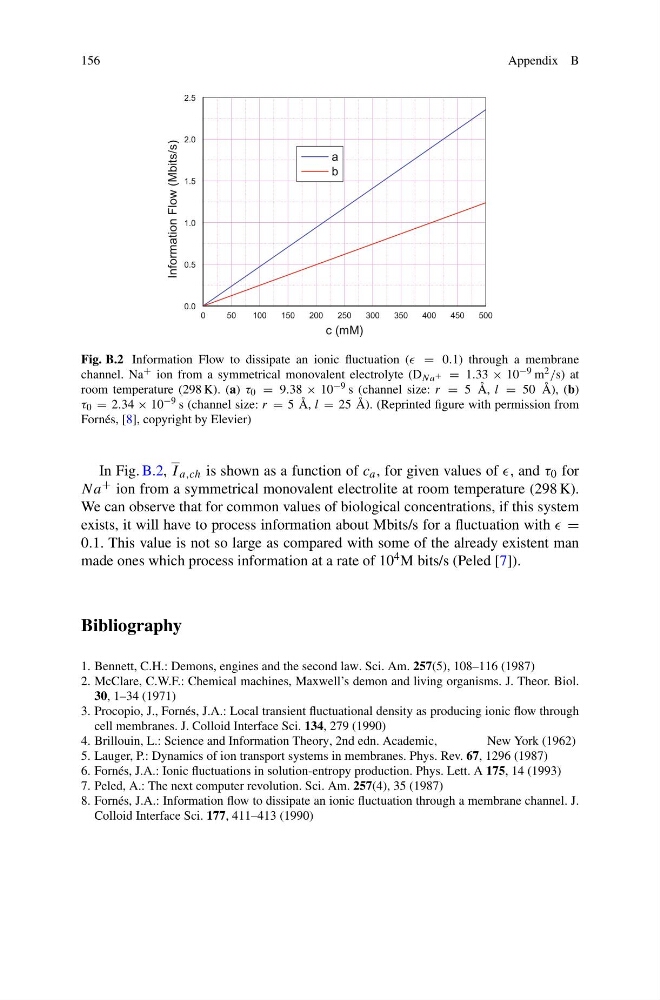
Fig. B.2 Information Flow to dissipate an ionic fluctuation ( = 0.1) through a membrane
channel. Na + ion from a symmetrical monovalent electrolyte (D Na + = 1.33 × 10 −9 m 2 /s) at
room temperature (298 K). (a) τ 0 = 9.38 × 10 −9 s (channel size: r = 5 Å, l = 50 Å), (b)
τ 0 = 2.34 × 10 −9 s (channel size: r = 5 Å, l = 25 Å). (Reprinted figure with permission from
Fornés, [8], copyright by Elevier)
In Fig. B.2, I a,ch is shown as a function of c a , for given values of , and τ 0 for
Na + ion from a symmetrical monovalent electrolite at room temperature (298 K).
We can observe that for common values of biological concentrations, if this system
exists, it will have to process information about Mbits/s for a fluctuation with =
0.1. This value is not so large as compared with some of the already existent man
made ones which process information at a rate of 10 4 M bits/s (Peled [7]).
Bibliography
1. Bennett, C.H.: Demons, engines and the second law. Sci. Am. 257(5), 108–116 (1987)
2. McClare, C.W.F.: Chemical machines, Maxwell’s demon and living organisms. J. Theor. Biol.
30, 1–34 (1971)
3. Procopio, J., Fornés, J.A.: Local transient fluctuational density as producing ionic flow through
cell membranes. J. Colloid Interface Sci. 134, 279 (1990)
4. Brillouin, L.: Science and Information Theory, 2nd edn. Academic,
New York (1962)
5. Lauger, P.: Dynamics of ion transport systems in membranes. Phys. Rev. 67, 1296 (1987)
6. Fornés, J.A.: Ionic fluctuations in solution-entropy production. Phys. Lett. A 175, 14 (1993)
7. Peled, A.: The next computer revolution. Sci. Am. 257(4), 35 (1987)
8. Fornés, J.A.: Information flow to dissipate an ionic fluctuation through a membrane channel. J.
Colloid Interface Sci. 177, 411–413 (1990)
Appendix B
Fig. B.2 Information Flow to dissipate an ionic fluctuation ( = 0.1) through a membrane
channel. Na + ion from a symmetrical monovalent electrolyte (D Na + = 1.33 × 10 −9 m 2 /s) at
room temperature (298 K). (a) τ 0 = 9.38 × 10 −9 s (channel size: r = 5 Å, l = 50 Å), (b)
τ 0 = 2.34 × 10 −9 s (channel size: r = 5 Å, l = 25 Å). (Reprinted figure with permission from
Fornés, [8], copyright by Elevier)
In Fig. B.2, I a,ch is shown as a function of c a , for given values of , and τ 0 for
Na + ion from a symmetrical monovalent electrolite at room temperature (298 K).
We can observe that for common values of biological concentrations, if this system
exists, it will have to process information about Mbits/s for a fluctuation with =
0.1. This value is not so large as compared with some of the already existent man
made ones which process information at a rate of 10 4 M bits/s (Peled [7]).
Bibliography
1. Bennett, C.H.: Demons, engines and the second law. Sci. Am. 257(5), 108–116 (1987)
2. McClare, C.W.F.: Chemical machines, Maxwell’s demon and living organisms. J. Theor. Biol.
30, 1–34 (1971)
3. Procopio, J., Fornés, J.A.: Local transient fluctuational density as producing ionic flow through
cell membranes. J. Colloid Interface Sci. 134, 279 (1990)
4. Brillouin, L.: Science and Information Theory, 2nd edn. Academic,
New York (1962)
5. Lauger, P.: Dynamics of ion transport systems in membranes. Phys. Rev. 67, 1296 (1987)
6. Fornés, J.A.: Ionic fluctuations in solution-entropy production. Phys. Lett. A 175, 14 (1993)
7. Peled, A.: The next computer revolution. Sci. Am. 257(4), 35 (1987)
8. Fornés, J.A.: Information flow to dissipate an ionic fluctuation through a membrane channel. J.
Colloid Interface Sci. 177, 411–413 (1990)