

124
6 Unsupervised Deep Learning
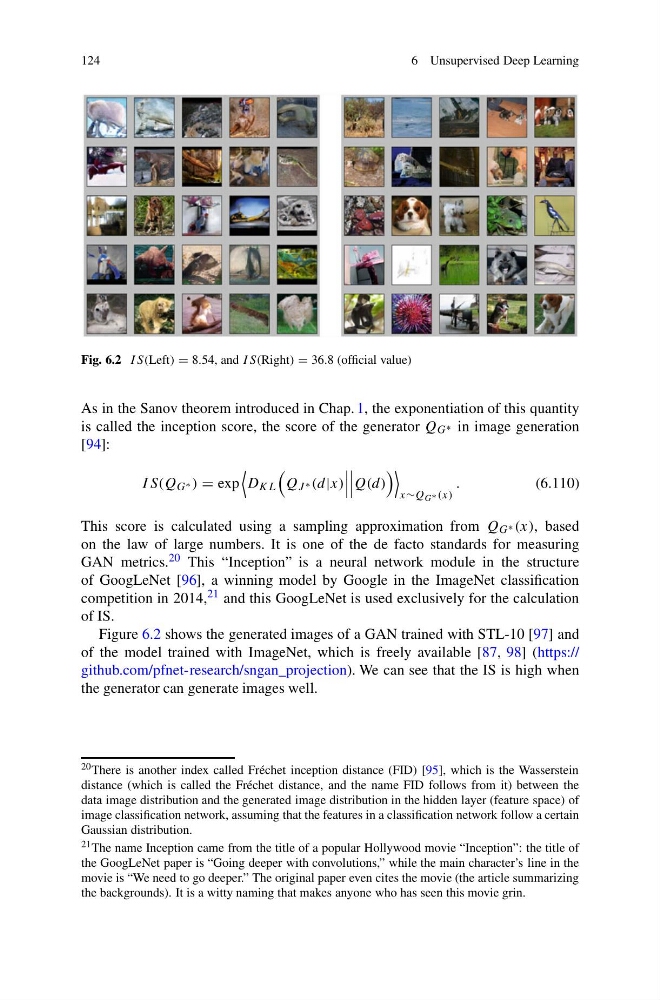
Fig. 6.2 IS(Left) = 8.54, and IS(Right) = 36.8 (official value)
As in the Sanov theorem introduced in Chap. 1, the exponentiation of this quantity
is called the inception score, the score of the generator Q G ∗ in image generation
[94]:
I S(Q G ∗ ) = exp
D KL
Q J ∗ (d|x)
Q(d)
x∼Q G ∗ (x)
.
(6.110)
This score is calculated using a sampling approximation from Q G ∗ (x), based
on the law of large numbers. It is one of the de facto standards for measuring
GAN metrics. 20 This “Inception” is a neural network module in the structure
of GoogLeNet [96], a winning model by Google in the ImageNet classification
competition in 2014, 21 and this GoogLeNet is used exclusively for the calculation
of IS.
Figure 6.2 shows the generated images of a GAN trained with STL-10 [97] and
of the model trained with ImageNet, which is freely available [87, 98] (https://
github.com/pfnet-research/sngan_projection). We can see that the IS is high when
the generator can generate images well.
20 There is another index called Fréchet inception distance (FID) [95], which is the Wasserstein
distance (which is called the Fréchet distance, and the name FID follows from it) between the
data image distribution and the generated image distribution in the hidden layer (feature space) of
image classification network, assuming that the features in a classification network follow a certain
Gaussian distribution.
21 The name Inception came from the title of a popular Hollywood movie “Inception”: the title of
the GoogLeNet paper is “Going deeper with convolutions,” while the main character’s line in the
movie is “We need to go deeper.” The original paper even cites the movie (the article summarizing
the backgrounds). It is a witty naming that makes anyone who has seen this movie grin.
6 Unsupervised Deep Learning
Fig. 6.2 IS(Left) = 8.54, and IS(Right) = 36.8 (official value)
As in the Sanov theorem introduced in Chap. 1, the exponentiation of this quantity
is called the inception score, the score of the generator Q G ∗ in image generation
[94]:
I S(Q G ∗ ) = exp
D KL
Q J ∗ (d|x)
Q(d)
x∼Q G ∗ (x)
.
(6.110)
This score is calculated using a sampling approximation from Q G ∗ (x), based
on the law of large numbers. It is one of the de facto standards for measuring
GAN metrics. 20 This “Inception” is a neural network module in the structure
of GoogLeNet [96], a winning model by Google in the ImageNet classification
competition in 2014, 21 and this GoogLeNet is used exclusively for the calculation
of IS.
Figure 6.2 shows the generated images of a GAN trained with STL-10 [97] and
of the model trained with ImageNet, which is freely available [87, 98] (https://
github.com/pfnet-research/sngan_projection). We can see that the IS is high when
the generator can generate images well.
20 There is another index called Fréchet inception distance (FID) [95], which is the Wasserstein
distance (which is called the Fréchet distance, and the name FID follows from it) between the
data image distribution and the generated image distribution in the hidden layer (feature space) of
image classification network, assuming that the features in a classification network follow a certain
Gaussian distribution.
21 The name Inception came from the title of a popular Hollywood movie “Inception”: the title of
the GoogLeNet paper is “Going deeper with convolutions,” while the main character’s line in the
movie is “We need to go deeper.” The original paper even cites the movie (the article summarizing
the backgrounds). It is a witty naming that makes anyone who has seen this movie grin.