

65
6.3.2.3 Allocation Procedures
Two different approaches have been followed to divide the environmental loads and
energy consumption between ethanol and its byproducts. Thus, energy-based allocation and system expansion approaches were selected. In the energy-based allocation, environmental burdens were allocated based on the energy content of each of
the products and byproducts. Accordingly, in the farming phase, loads have been
portioned between sugarcane stalks and straw, over 98% of the loads being associated to the former. In the fuel production stage, loads were divided between ethanol,
bagasse, and filter cake. Being ethanol the final product of the system, allocation
factor accounts for nearly 78% in the baseline scenario (2030). As for the enhanced
ethanol scenario, the allocation factor is larger, as it assumes maximization of ethanol production. On the contrary, in the enhanced electricity pathway, the allocation
factor is lower because higher amount of electricity is produced than in the baseline
scenario.
Alternatively, the system expansion approach assumes that the surplus electricity
produced from the bagasse and sugarcane straw recovery displace Brazilian electricity grid. Thereby, 1 kWh of surplus electricity substitutes kWh of grid electricity.
6.3.3 Life Cycle Inventory Analysis
The life cycle inventory analysis provides the necessary input and output flows to
model the environmental burdens associated to the sugarcane ethanol production
and utilization in vehicle. As for the production stage, data include agrochemical
production and usage in the farmland, diesel consumed during farming activities,
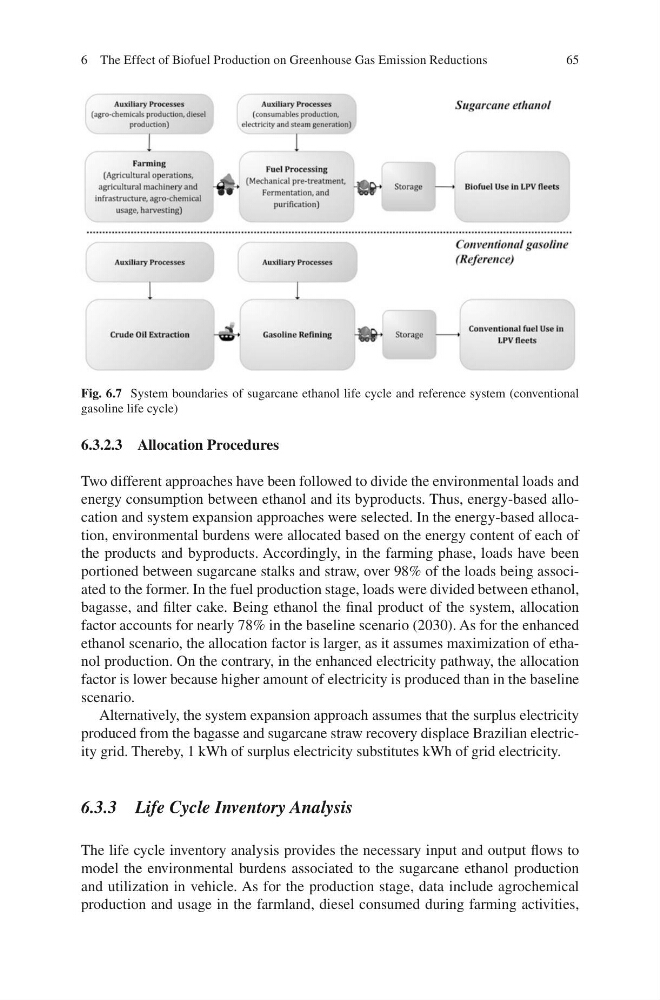
Fig. 6.7 System boundaries of sugarcane ethanol life cycle and reference system (conventional
gasoline life cycle)
6 The Effect of Biofuel Production on Greenhouse Gas Emission Reductions
6.3.2.3 Allocation Procedures
Two different approaches have been followed to divide the environmental loads and
energy consumption between ethanol and its byproducts. Thus, energy-based allocation and system expansion approaches were selected. In the energy-based allocation, environmental burdens were allocated based on the energy content of each of
the products and byproducts. Accordingly, in the farming phase, loads have been
portioned between sugarcane stalks and straw, over 98% of the loads being associated to the former. In the fuel production stage, loads were divided between ethanol,
bagasse, and filter cake. Being ethanol the final product of the system, allocation
factor accounts for nearly 78% in the baseline scenario (2030). As for the enhanced
ethanol scenario, the allocation factor is larger, as it assumes maximization of ethanol production. On the contrary, in the enhanced electricity pathway, the allocation
factor is lower because higher amount of electricity is produced than in the baseline
scenario.
Alternatively, the system expansion approach assumes that the surplus electricity
produced from the bagasse and sugarcane straw recovery displace Brazilian electricity grid. Thereby, 1 kWh of surplus electricity substitutes kWh of grid electricity.
6.3.3 Life Cycle Inventory Analysis
The life cycle inventory analysis provides the necessary input and output flows to
model the environmental burdens associated to the sugarcane ethanol production
and utilization in vehicle. As for the production stage, data include agrochemical
production and usage in the farmland, diesel consumed during farming activities,
Fig. 6.7 System boundaries of sugarcane ethanol life cycle and reference system (conventional
gasoline life cycle)
6 The Effect of Biofuel Production on Greenhouse Gas Emission Reductions