

260
domestic construction waste wood (case 4) is reduced in 2035 because imports of
complementary bioethanol are increased to achieve the target.
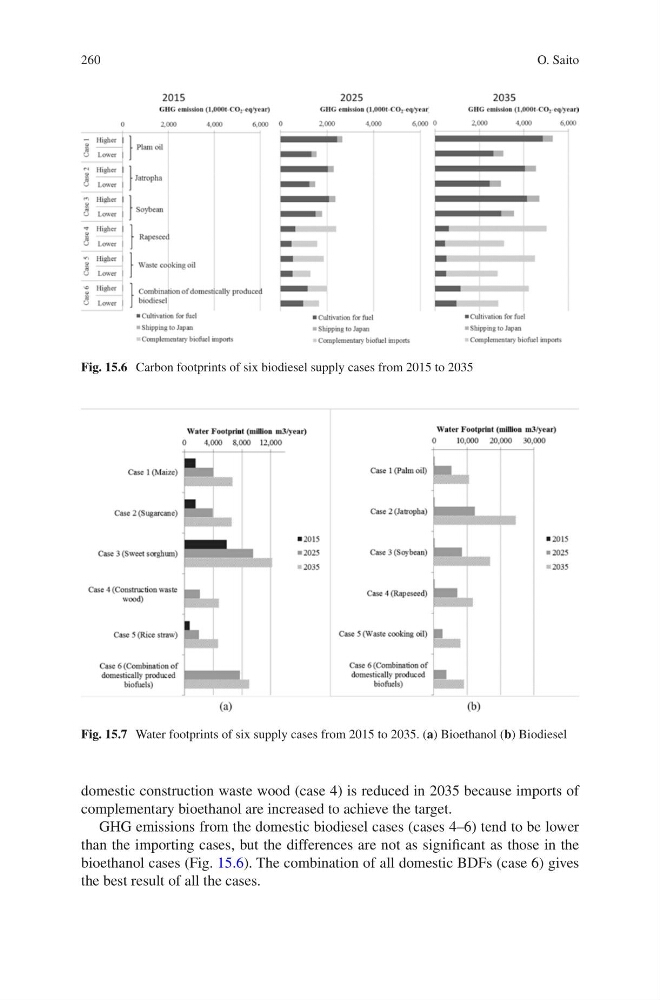
GHG emissions from the domestic biodiesel cases (cases 4–6) tend to be lower
than the importing cases, but the differences are not as significant as those in the
bioethanol cases (Fig. 15.6). The combination of all domestic BDFs (case 6) gives
the best result of all the cases.
Fig. 15.6 Carbon footprints of six biodiesel supply cases from 2015 to 2035
Fig. 15.7 Water footprints of six supply cases from 2015 to 2035. (a) Bioethanol (b) Biodiesel
O. Saito
domestic construction waste wood (case 4) is reduced in 2035 because imports of
complementary bioethanol are increased to achieve the target.
GHG emissions from the domestic biodiesel cases (cases 4–6) tend to be lower
than the importing cases, but the differences are not as significant as those in the
bioethanol cases (Fig. 15.6). The combination of all domestic BDFs (case 6) gives
the best result of all the cases.
Fig. 15.6 Carbon footprints of six biodiesel supply cases from 2015 to 2035
Fig. 15.7 Water footprints of six supply cases from 2015 to 2035. (a) Bioethanol (b) Biodiesel
O. Saito