

49
If the site does not meet all the requirements above, the specific environment or
application should be recorded in a metadata file. The general template of a station
metadata file is presented in Sect. 2.6.
2.4.1 Temperature
In different LCZs, the following suggestions should be considered in finding suitable locations for air temperature measurement:
• The sensor should be relatively far from warm surfaces, walls, roads, or vehicles
with hot engines, and it might receive reflected heat from glassed surfaces.
• In very densely built-up LCZs (such as LCZ 1, LCZ 2, LCZ 4, and LCZ 5) sensors should be set up 5–10 m from buildings of height 20–30 m, as shown in Fig.
2.6.
• Sometimes in slightly greater source areas, sensor damage can be prevented by
placing the sensor away from the path of vehicles, thereby avoiding exhaust heat
and dust contamination. Measurement heights of 3 m or 5 m are accepted as a
standard.
• There is no simple, general scheme for extrapolating air temperature horizontally
inside the Urban Canopy Layer (UCL).
The following recommendations are made for choosing the most reliable height for
a thermometer:
• The recommended screen height is between 1.25 m and 2 m above ground level
for urban sites (similar to non-urban stations), but it is better to allow a greater
height in densely built-up areas (such as LCZ 1, LCZ 2, LCZ 4, and LCZ 5).
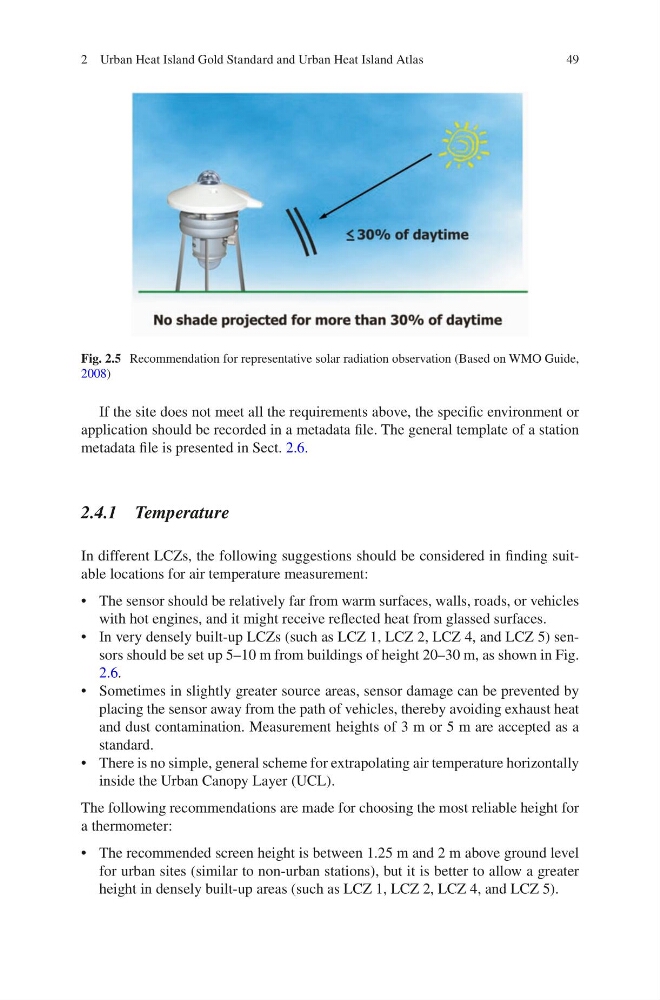
Fig. 2.5 Recommendation for representative solar radiation observation (Based on WMO Guide,
2008)
2 Urban Heat Island Gold Standard and Urban Heat Island Atlas
If the site does not meet all the requirements above, the specific environment or
application should be recorded in a metadata file. The general template of a station
metadata file is presented in Sect. 2.6.
2.4.1 Temperature
In different LCZs, the following suggestions should be considered in finding suitable locations for air temperature measurement:
• The sensor should be relatively far from warm surfaces, walls, roads, or vehicles
with hot engines, and it might receive reflected heat from glassed surfaces.
• In very densely built-up LCZs (such as LCZ 1, LCZ 2, LCZ 4, and LCZ 5) sensors should be set up 5–10 m from buildings of height 20–30 m, as shown in Fig.
2.6.
• Sometimes in slightly greater source areas, sensor damage can be prevented by
placing the sensor away from the path of vehicles, thereby avoiding exhaust heat
and dust contamination. Measurement heights of 3 m or 5 m are accepted as a
standard.
• There is no simple, general scheme for extrapolating air temperature horizontally
inside the Urban Canopy Layer (UCL).
The following recommendations are made for choosing the most reliable height for
a thermometer:
• The recommended screen height is between 1.25 m and 2 m above ground level
for urban sites (similar to non-urban stations), but it is better to allow a greater
height in densely built-up areas (such as LCZ 1, LCZ 2, LCZ 4, and LCZ 5).
Fig. 2.5 Recommendation for representative solar radiation observation (Based on WMO Guide,
2008)
2 Urban Heat Island Gold Standard and Urban Heat Island Atlas