

382
A mild summer day of 21st June 2013 was chosen for the simulation of all proposed scenarios. Temperature effect was also modelled on a tropical day of 18th
June (Fig. 14.11).
The simulation results for all scenarios in the mild summer day (T A,max = 26 °C)
show a possible effect of PET reduction of 2.3° in shade. During the tropical day
(T A,max = 37 °C) the reduction can reach 3.5°. However, all scenarios show also more
or less negative impact on the ventilation conditions for air pollutants.
In the scenario with small trees positioned densely along the sidewalks, there is
quite short time period of shade provided to one assessed point. On the other hand,
the street canyon ventilation in not worsened noticeably (Fig. 14.12).
The effect of PET reduction in the scenario with large trees along the sidewalks
lasts for a longer afternoon period due to a larger shade. However, the large crowns
significantly impact the air flow and cause a serious concentrations increase on the
windward sidewalk (Fig. 14.13).
The simulation of the scenario with an axial position of small trees in one row in
the centre of the street shows no impact on PET, providing no shade on the sidewalks. At the same time, this arrangement constitutes an obstacle to the vortex and
thus causes additional increase of already worse high concentrations on the leeward
sidewalk (Fig. 14.14).
High trees in the street bring more shade with a positive effect on PET, but also
create less favourable ventilation conditions. The scenario with the small trees
planted densely along the sidewalks seems to be the optimal solution for UHI
mitigation for Legerova Street. This scenario does not have such a negative effect
on ventilation conditions and provides shade and a positive effect on PET.
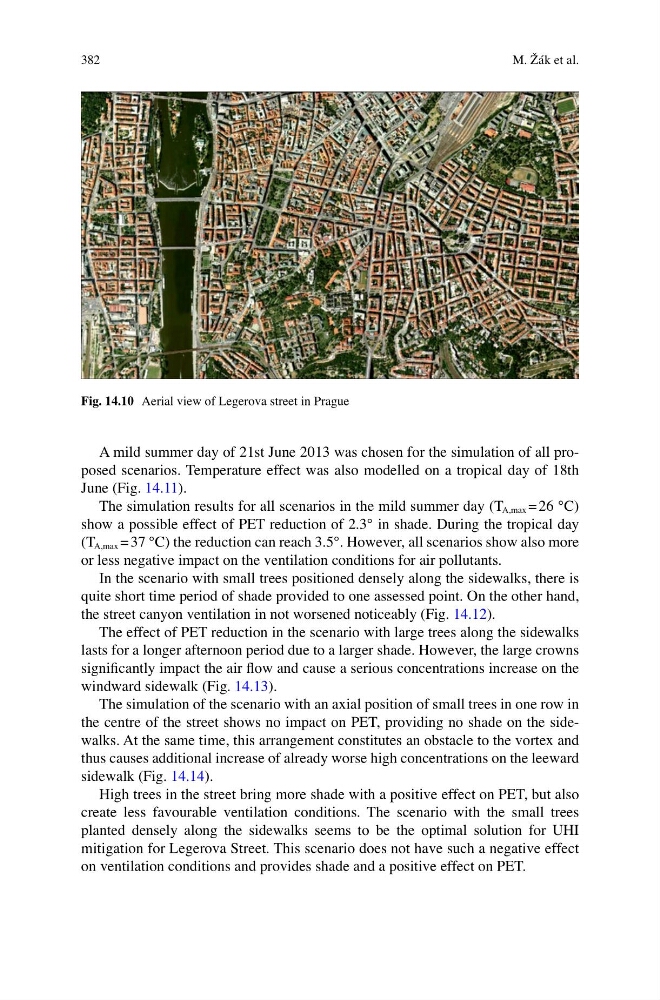
Fig. 14.10 Aerial view of Legerova street in Prague
M. Žák et al.
A mild summer day of 21st June 2013 was chosen for the simulation of all proposed scenarios. Temperature effect was also modelled on a tropical day of 18th
June (Fig. 14.11).
The simulation results for all scenarios in the mild summer day (T A,max = 26 °C)
show a possible effect of PET reduction of 2.3° in shade. During the tropical day
(T A,max = 37 °C) the reduction can reach 3.5°. However, all scenarios show also more
or less negative impact on the ventilation conditions for air pollutants.
In the scenario with small trees positioned densely along the sidewalks, there is
quite short time period of shade provided to one assessed point. On the other hand,
the street canyon ventilation in not worsened noticeably (Fig. 14.12).
The effect of PET reduction in the scenario with large trees along the sidewalks
lasts for a longer afternoon period due to a larger shade. However, the large crowns
significantly impact the air flow and cause a serious concentrations increase on the
windward sidewalk (Fig. 14.13).
The simulation of the scenario with an axial position of small trees in one row in
the centre of the street shows no impact on PET, providing no shade on the sidewalks. At the same time, this arrangement constitutes an obstacle to the vortex and
thus causes additional increase of already worse high concentrations on the leeward
sidewalk (Fig. 14.14).
High trees in the street bring more shade with a positive effect on PET, but also
create less favourable ventilation conditions. The scenario with the small trees
planted densely along the sidewalks seems to be the optimal solution for UHI
mitigation for Legerova Street. This scenario does not have such a negative effect
on ventilation conditions and provides shade and a positive effect on PET.
Fig. 14.10 Aerial view of Legerova street in Prague
M. Žák et al.