

298
stressed areas in the district are indentifi ed. Also effective and realisable measure
for reducing the thermal stress on the hotspots are choosen for the implementation
into the development strategy and the development outline plan for the district.
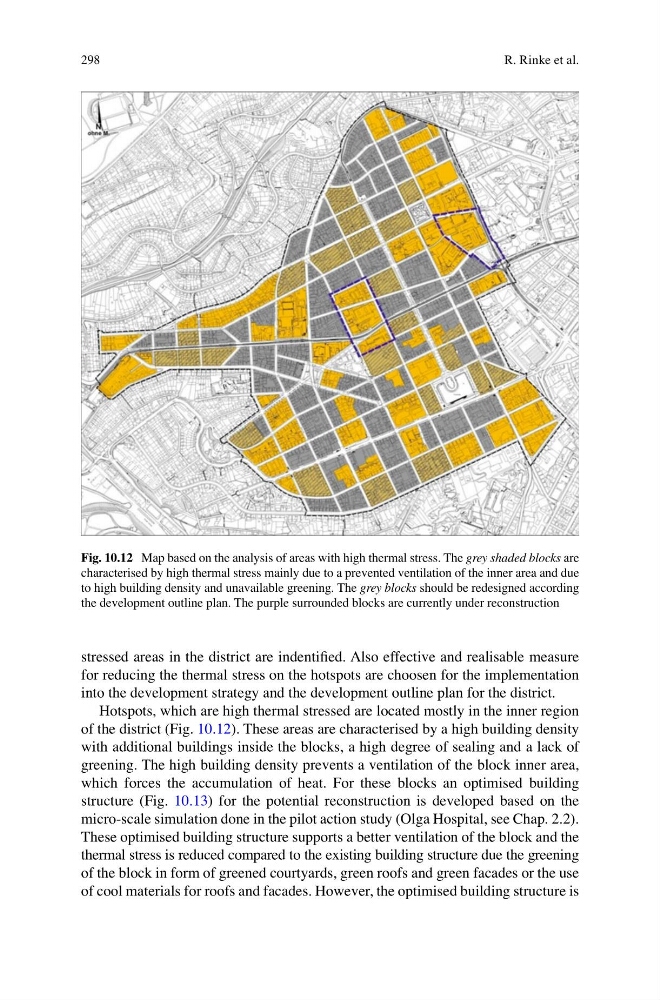
Hotspots, which are high thermal stressed are located mostly in the inner region
of the district (Fig. 10.12 ). These areas are characterised by a high building density
with additional buildings inside the blocks, a high degree of sealing and a lack of
greening. The high building density prevents a ventilation of the block inner area,
which forces the accumulation of heat. For these blocks an optimised building
structure (Fig. 10.13 ) for the potential reconstruction is developed based on the
micro-scale simulation done in the pilot action study (Olga Hospital, see Chap. 2.2).
These optimised building structure supports a better ventilation of the block and the
thermal stress is reduced compared to the existing building structure due the greening
of the block in form of greened courtyards, green roofs and green facades or the use
of cool materials for roofs and facades. However, the optimised building structure is
Fig. 10.12 Map based on the analysis of areas with high thermal stress. The grey shaded blocks are
characterised by high thermal stress mainly due to a prevented ventilation of the inner area and due
to high building density and unavailable greening. The grey blocks should be redesigned according
the development outline plan. The purple surrounded blocks are currently under reconstruction
R. Rinke et al.
stressed areas in the district are indentifi ed. Also effective and realisable measure
for reducing the thermal stress on the hotspots are choosen for the implementation
into the development strategy and the development outline plan for the district.
Hotspots, which are high thermal stressed are located mostly in the inner region
of the district (Fig. 10.12 ). These areas are characterised by a high building density
with additional buildings inside the blocks, a high degree of sealing and a lack of
greening. The high building density prevents a ventilation of the block inner area,
which forces the accumulation of heat. For these blocks an optimised building
structure (Fig. 10.13 ) for the potential reconstruction is developed based on the
micro-scale simulation done in the pilot action study (Olga Hospital, see Chap. 2.2).
These optimised building structure supports a better ventilation of the block and the
thermal stress is reduced compared to the existing building structure due the greening
of the block in form of greened courtyards, green roofs and green facades or the use
of cool materials for roofs and facades. However, the optimised building structure is
Fig. 10.12 Map based on the analysis of areas with high thermal stress. The grey shaded blocks are
characterised by high thermal stress mainly due to a prevented ventilation of the inner area and due
to high building density and unavailable greening. The grey blocks should be redesigned according
the development outline plan. The purple surrounded blocks are currently under reconstruction
R. Rinke et al.