

133
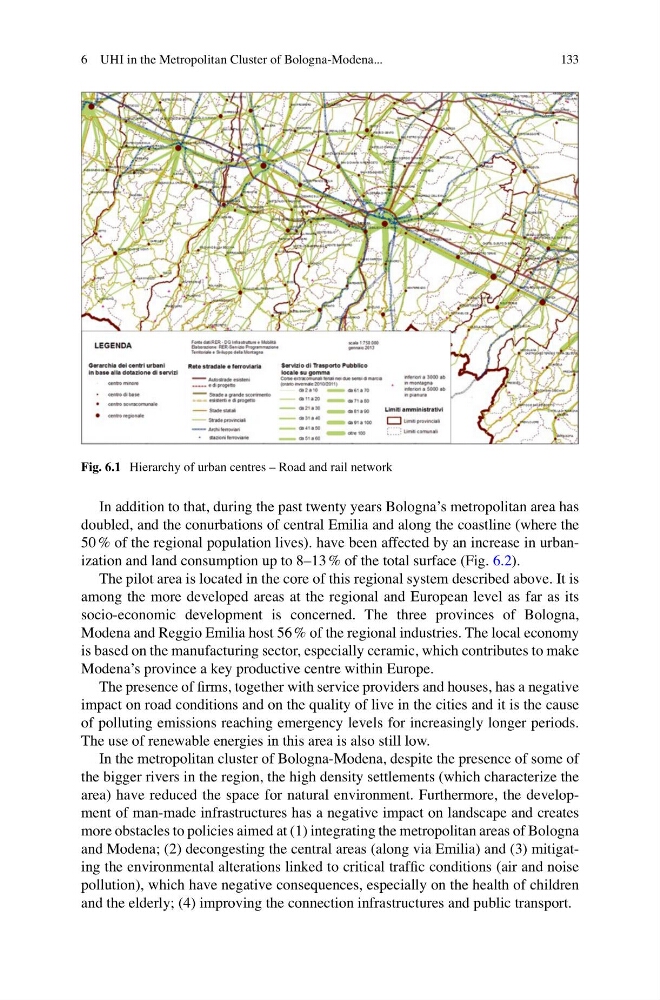
Fig. 6.1 Hierarchy of urban centres – Road and rail network
In addition to that, during the past twenty years Bologna’s metropolitan area has
doubled, and the conurbations of central Emilia and along the coastline (where the
50 % of the regional population lives). have been affected by an increase in urbanization and land consumption up to 8–13 % of the total surface (Fig. 6.2).
The pilot area is located in the core of this regional system described above. It is
among the more developed areas at the regional and European level as far as its
socio-economic development is concerned. The three provinces of Bologna,
Modena and Reggio Emilia host 56 % of the regional industries. The local economy
is based on the manufacturing sector, especially ceramic, which contributes to make
Modena’s province a key productive centre within Europe.
The presence of firms, together with service providers and houses, has a negative
impact on road conditions and on the quality of live in the cities and it is the cause
of polluting emissions reaching emergency levels for increasingly longer periods.
The use of renewable energies in this area is also still low.
In the metropolitan cluster of Bologna-Modena, despite the presence of some of
the bigger rivers in the region, the high density settlements (which characterize the
area) have reduced the space for natural environment. Furthermore, the development of man-made infrastructures has a negative impact on landscape and creates
more obstacles to policies aimed at (1) integrating the metropolitan areas of Bologna
and Modena; (2) decongesting the central areas (along via Emilia) and (3) mitigating the environmental alterations linked to critical traffic conditions (air and noise
pollution), which have negative consequences, especially on the health of children
and the elderly; (4) improving the connection infrastructures and public transport.
6 UHI in the Metropolitan Cluster of Bologna-Modena...
Fig. 6.1 Hierarchy of urban centres – Road and rail network
In addition to that, during the past twenty years Bologna’s metropolitan area has
doubled, and the conurbations of central Emilia and along the coastline (where the
50 % of the regional population lives). have been affected by an increase in urbanization and land consumption up to 8–13 % of the total surface (Fig. 6.2).
The pilot area is located in the core of this regional system described above. It is
among the more developed areas at the regional and European level as far as its
socio-economic development is concerned. The three provinces of Bologna,
Modena and Reggio Emilia host 56 % of the regional industries. The local economy
is based on the manufacturing sector, especially ceramic, which contributes to make
Modena’s province a key productive centre within Europe.
The presence of firms, together with service providers and houses, has a negative
impact on road conditions and on the quality of live in the cities and it is the cause
of polluting emissions reaching emergency levels for increasingly longer periods.
The use of renewable energies in this area is also still low.
In the metropolitan cluster of Bologna-Modena, despite the presence of some of
the bigger rivers in the region, the high density settlements (which characterize the
area) have reduced the space for natural environment. Furthermore, the development of man-made infrastructures has a negative impact on landscape and creates
more obstacles to policies aimed at (1) integrating the metropolitan areas of Bologna
and Modena; (2) decongesting the central areas (along via Emilia) and (3) mitigating the environmental alterations linked to critical traffic conditions (air and noise
pollution), which have negative consequences, especially on the health of children
and the elderly; (4) improving the connection infrastructures and public transport.
6 UHI in the Metropolitan Cluster of Bologna-Modena...