

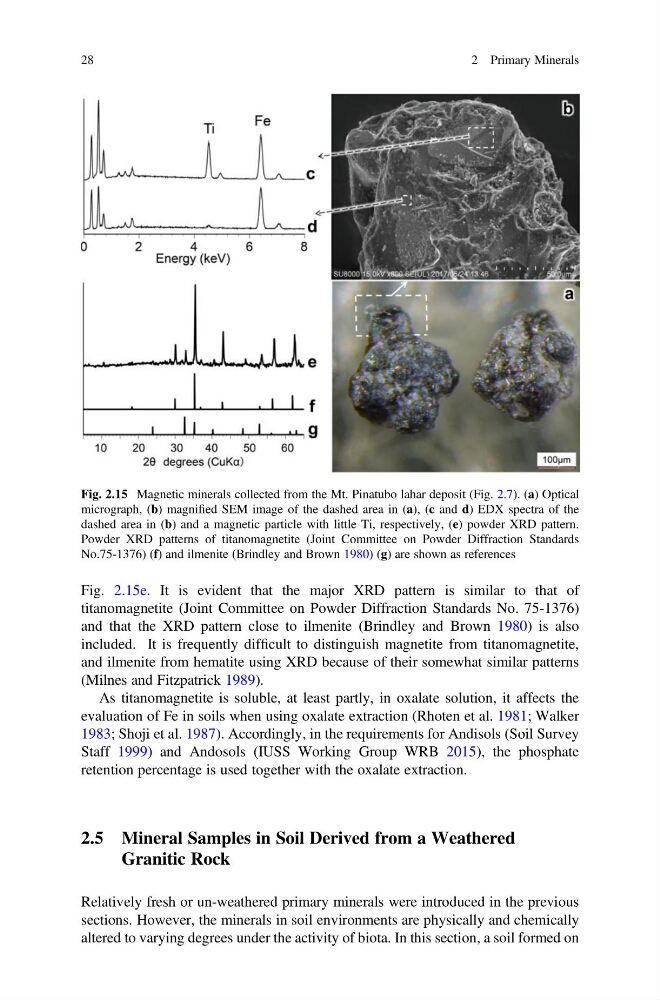
Fig. 2.15e. It is evident that the major XRD pattern is similar to that of
titanomagnetite (Joint Committee on Powder Diffraction Standards No. 75-1376)
and that the XRD pattern close to ilmenite (Brindley and Brown 1980) is also
included. It is frequently difficult to distinguish magnetite from titanomagnetite,
and ilmenite from hematite using XRD because of their somewhat similar patterns
(Milnes and Fitzpatrick 1989).
As titanomagnetite is soluble, at least partly, in oxalate solution, it affects the
evaluation of Fe in soils when using oxalate extraction (Rhoten et al. 1981; Walker
1983; Shoji et al. 1987). Accordingly, in the requirements for Andisols (Soil Survey
Staff 1999) and Andosols (IUSS Working Group WRB 2015), the phosphate
retention percentage is used together with the oxalate extraction.
2.5 Mineral Samples in Soil Derived from a Weathered
Granitic Rock
Relatively fresh or un-weathered primary minerals were introduced in the previous
sections. However, the minerals in soil environments are physically and chemically
altered to varying degrees under the activity of biota. In this section, a soil formed on
Fig. 2.15 Magnetic minerals collected from the Mt. Pinatubo lahar deposit (Fig. 2.7). (a) Optical
micrograph, (b) magnified SEM image of the dashed area in (a), (c and d) EDX spectra of the
dashed area in (b) and a magnetic particle with little Ti, respectively, (e) powder XRD pattern.
Powder XRD patterns of titanomagnetite (Joint Committee on Powder Diffraction Standards
No.75-1376) (f) and ilmenite (Brindley and Brown 1980) (g) are shown as references
28
2 Primary Minerals
titanomagnetite (Joint Committee on Powder Diffraction Standards No. 75-1376)
and that the XRD pattern close to ilmenite (Brindley and Brown 1980) is also
included. It is frequently difficult to distinguish magnetite from titanomagnetite,
and ilmenite from hematite using XRD because of their somewhat similar patterns
(Milnes and Fitzpatrick 1989).
As titanomagnetite is soluble, at least partly, in oxalate solution, it affects the
evaluation of Fe in soils when using oxalate extraction (Rhoten et al. 1981; Walker
1983; Shoji et al. 1987). Accordingly, in the requirements for Andisols (Soil Survey
Staff 1999) and Andosols (IUSS Working Group WRB 2015), the phosphate
retention percentage is used together with the oxalate extraction.
2.5 Mineral Samples in Soil Derived from a Weathered
Granitic Rock
Relatively fresh or un-weathered primary minerals were introduced in the previous
sections. However, the minerals in soil environments are physically and chemically
altered to varying degrees under the activity of biota. In this section, a soil formed on
Fig. 2.15 Magnetic minerals collected from the Mt. Pinatubo lahar deposit (Fig. 2.7). (a) Optical
micrograph, (b) magnified SEM image of the dashed area in (a), (c and d) EDX spectra of the
dashed area in (b) and a magnetic particle with little Ti, respectively, (e) powder XRD pattern.
Powder XRD patterns of titanomagnetite (Joint Committee on Powder Diffraction Standards
No.75-1376) (f) and ilmenite (Brindley and Brown 1980) (g) are shown as references
28
2 Primary Minerals