

3.3 Solutions
177
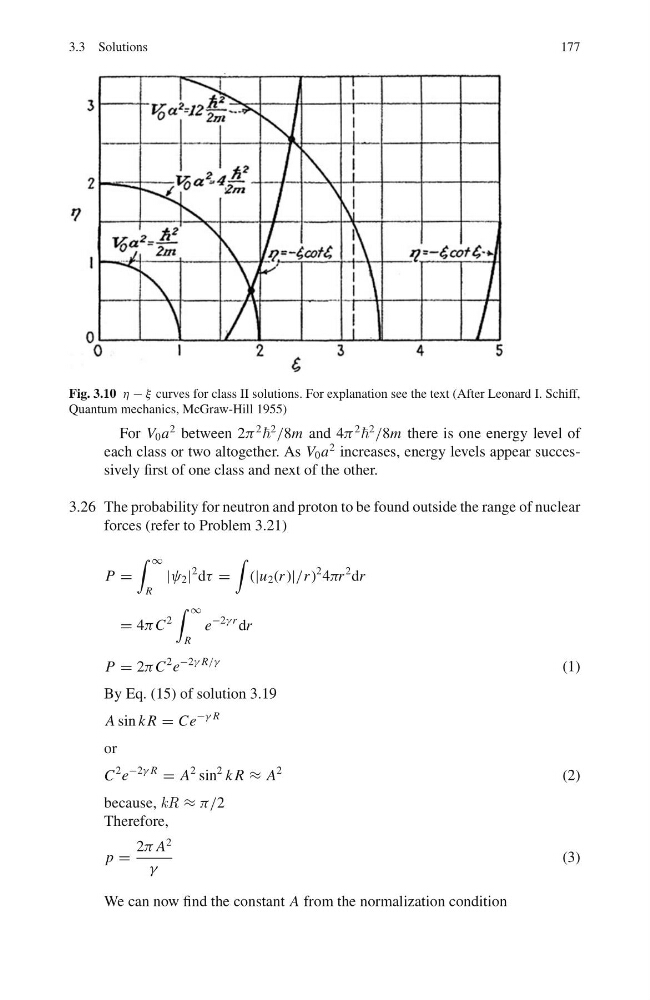
Fig. 3.10 η − ξ curves for class II solutions. For explanation see the text (After Leonard I. Schiff,
Quantum mechanics, McGraw-Hill 1955)
For V 0 a
2 between 2π
2
2
/8m and 4π
2
2
/8m there is one energy level of
each class or two altogether. As V 0 a
2 increases, energy levels appear successively first of one class and next of the other.
3.26 The probability for neutron and proton to be found outside the range of nuclear
forces (refer to Problem 3.21)
P =
∞
R
|ψ 2 |
2 dτ =
(|u 2 (r )|/r )
2 4πr
2 dr
= 4πC
2
∞
R
e
−2γ r dr
P = 2πC
2 e
−2γ R/γ
(1)
By Eq. (15) of solution 3.19
A sin k R = Ce
−γ R
or
C
2 e
−2γ R
= A
2 sin
2 k R ≈ A
2
(2)
because, kR ≈ π/2
Therefore,
p =
2π A
2
γ
(3)
We can now find the constant A from the normalization condition
177
Fig. 3.10 η − ξ curves for class II solutions. For explanation see the text (After Leonard I. Schiff,
Quantum mechanics, McGraw-Hill 1955)
For V 0 a
2 between 2π
2
2
/8m and 4π
2
2
/8m there is one energy level of
each class or two altogether. As V 0 a
2 increases, energy levels appear successively first of one class and next of the other.
3.26 The probability for neutron and proton to be found outside the range of nuclear
forces (refer to Problem 3.21)
P =
∞
R
|ψ 2 |
2 dτ =
(|u 2 (r )|/r )
2 4πr
2 dr
= 4πC
2
∞
R
e
−2γ r dr
P = 2πC
2 e
−2γ R/γ
(1)
By Eq. (15) of solution 3.19
A sin k R = Ce
−γ R
or
C
2 e
−2γ R
= A
2 sin
2 k R ≈ A
2
(2)
because, kR ≈ π/2
Therefore,
p =
2π A
2
γ
(3)
We can now find the constant A from the normalization condition