

158
R. N. Mohapatra
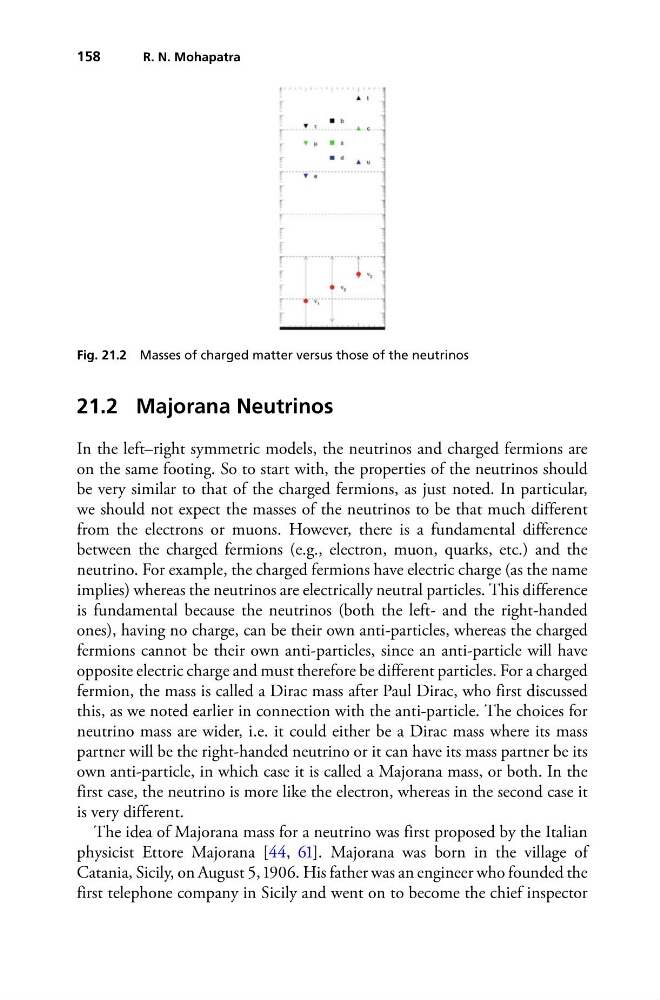
Fig. 21.2 Masses of charged matter versus those of the neutrinos
21.2 Majorana Neutrinos
In the left–right symmetric models, the neutrinos and charged fermions are
on the same footing. So to start with, the properties of the neutrinos should
be very similar to that of the charged fermions, as just noted. In particular,
we should not expect the masses of the neutrinos to be that much different
from the electrons or muons. However, there is a fundamental difference
between the charged fermions (e.g., electron, muon, quarks, etc.) and the
neutrino. For example, the charged fermions have electric charge (as the name
implies) whereas the neutrinos are electrically neutral particles. This difference
is fundamental because the neutrinos (both the left- and the right-handed
ones), having no charge, can be their own anti-particles, whereas the charged
fermions cannot be their own anti-particles, since an anti-particle will have
opposite electric charge and must therefore be different particles. For a charged
fermion, the mass is called a Dirac mass after Paul Dirac, who first discussed
this, as we noted earlier in connection with the anti-particle. The choices for
neutrino mass are wider, i.e. it could either be a Dirac mass where its mass
partner will be the right-handed neutrino or it can have its mass partner be its
own anti-particle, in which case it is called a Majorana mass, or both. In the
first case, the neutrino is more like the electron, whereas in the second case it
is very different.
The idea of Majorana mass for a neutrino was first proposed by the Italian
physicist Ettore Majorana [44, 61]. Majorana was born in the village of
Catania, Sicily, on August 5, 1906. His father was an engineer who founded the
first telephone company in Sicily and went on to become the chief inspector
R. N. Mohapatra
Fig. 21.2 Masses of charged matter versus those of the neutrinos
21.2 Majorana Neutrinos
In the left–right symmetric models, the neutrinos and charged fermions are
on the same footing. So to start with, the properties of the neutrinos should
be very similar to that of the charged fermions, as just noted. In particular,
we should not expect the masses of the neutrinos to be that much different
from the electrons or muons. However, there is a fundamental difference
between the charged fermions (e.g., electron, muon, quarks, etc.) and the
neutrino. For example, the charged fermions have electric charge (as the name
implies) whereas the neutrinos are electrically neutral particles. This difference
is fundamental because the neutrinos (both the left- and the right-handed
ones), having no charge, can be their own anti-particles, whereas the charged
fermions cannot be their own anti-particles, since an anti-particle will have
opposite electric charge and must therefore be different particles. For a charged
fermion, the mass is called a Dirac mass after Paul Dirac, who first discussed
this, as we noted earlier in connection with the anti-particle. The choices for
neutrino mass are wider, i.e. it could either be a Dirac mass where its mass
partner will be the right-handed neutrino or it can have its mass partner be its
own anti-particle, in which case it is called a Majorana mass, or both. In the
first case, the neutrino is more like the electron, whereas in the second case it
is very different.
The idea of Majorana mass for a neutrino was first proposed by the Italian
physicist Ettore Majorana [44, 61]. Majorana was born in the village of
Catania, Sicily, on August 5, 1906. His father was an engineer who founded the
first telephone company in Sicily and went on to become the chief inspector