

19 Stars as the Cooking Pots for Heavy Nuclei
143
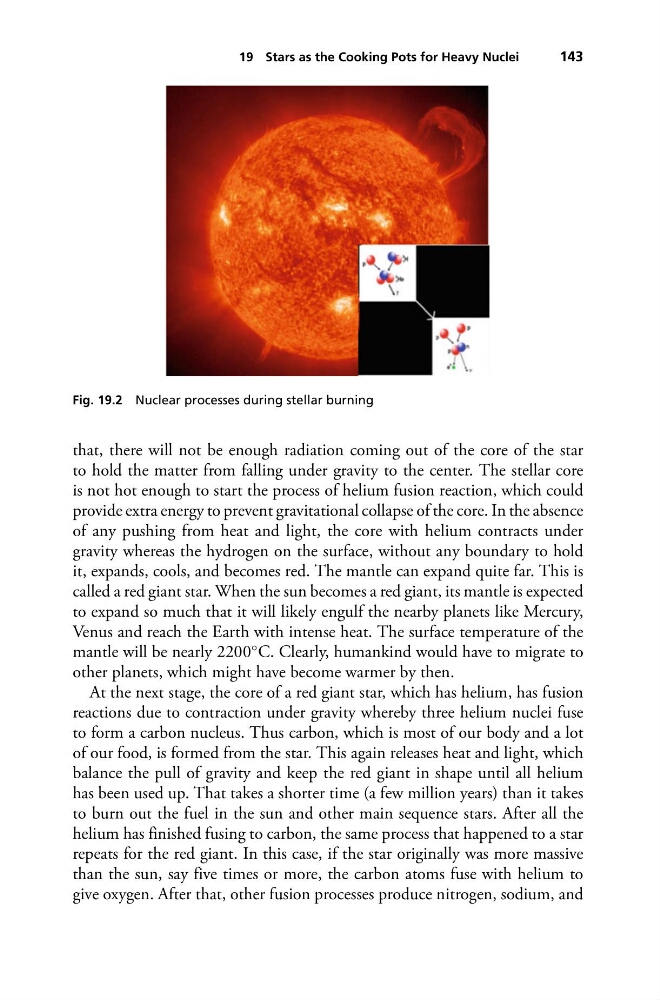
Fig. 19.2 Nuclear processes during stellar burning
that, there will not be enough radiation coming out of the core of the star
to hold the matter from falling under gravity to the center. The stellar core
is not hot enough to start the process of helium fusion reaction, which could
provide extra energy to prevent gravitational collapse of the core. In the absence
of any pushing from heat and light, the core with helium contracts under
gravity whereas the hydrogen on the surface, without any boundary to hold
it, expands, cools, and becomes red. The mantle can expand quite far. This is
called a red giant star. When the sun becomes a red giant, its mantle is expected
to expand so much that it will likely engulf the nearby planets like Mercury,
Venus and reach the Earth with intense heat. The surface temperature of the
mantle will be nearly 2200
◦ C. Clearly, humankind would have to migrate to
other planets, which might have become warmer by then.
At the next stage, the core of a red giant star, which has helium, has fusion
reactions due to contraction under gravity whereby three helium nuclei fuse
to form a carbon nucleus. Thus carbon, which is most of our body and a lot
of our food, is formed from the star. This again releases heat and light, which
balance the pull of gravity and keep the red giant in shape until all helium
has been used up. That takes a shorter time (a few million years) than it takes
to burn out the fuel in the sun and other main sequence stars. After all the
helium has finished fusing to carbon, the same process that happened to a star
repeats for the red giant. In this case, if the star originally was more massive
than the sun, say five times or more, the carbon atoms fuse with helium to
give oxygen. After that, other fusion processes produce nitrogen, sodium, and
143
Fig. 19.2 Nuclear processes during stellar burning
that, there will not be enough radiation coming out of the core of the star
to hold the matter from falling under gravity to the center. The stellar core
is not hot enough to start the process of helium fusion reaction, which could
provide extra energy to prevent gravitational collapse of the core. In the absence
of any pushing from heat and light, the core with helium contracts under
gravity whereas the hydrogen on the surface, without any boundary to hold
it, expands, cools, and becomes red. The mantle can expand quite far. This is
called a red giant star. When the sun becomes a red giant, its mantle is expected
to expand so much that it will likely engulf the nearby planets like Mercury,
Venus and reach the Earth with intense heat. The surface temperature of the
mantle will be nearly 2200
◦ C. Clearly, humankind would have to migrate to
other planets, which might have become warmer by then.
At the next stage, the core of a red giant star, which has helium, has fusion
reactions due to contraction under gravity whereby three helium nuclei fuse
to form a carbon nucleus. Thus carbon, which is most of our body and a lot
of our food, is formed from the star. This again releases heat and light, which
balance the pull of gravity and keep the red giant in shape until all helium
has been used up. That takes a shorter time (a few million years) than it takes
to burn out the fuel in the sun and other main sequence stars. After all the
helium has finished fusing to carbon, the same process that happened to a star
repeats for the red giant. In this case, if the star originally was more massive
than the sun, say five times or more, the carbon atoms fuse with helium to
give oxygen. After that, other fusion processes produce nitrogen, sodium, and