

142
R. N. Mohapatra
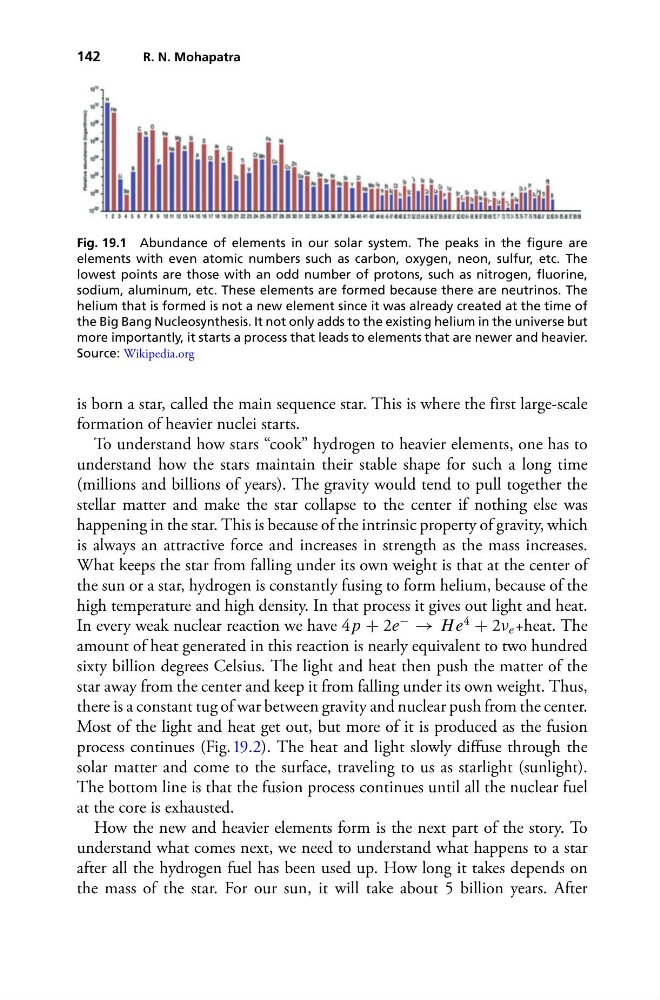
Fig. 19.1 Abundance of elements in our solar system. The peaks in the figure are
elements with even atomic numbers such as carbon, oxygen, neon, sulfur, etc. The
lowest points are those with an odd number of protons, such as nitrogen, fluorine,
sodium, aluminum, etc. These elements are formed because there are neutrinos. The
helium that is formed is not a new element since it was already created at the time of
the Big Bang Nucleosynthesis. It not only adds to the existing helium in the universe but
more importantly, it starts a process that leads to elements that are newer and heavier.
Source: Wikipedia.org
is born a star, called the main sequence star. This is where the first large-scale
formation of heavier nuclei starts.
To understand how stars “cook” hydrogen to heavier elements, one has to
understand how the stars maintain their stable shape for such a long time
(millions and billions of years). The gravity would tend to pull together the
stellar matter and make the star collapse to the center if nothing else was
happening in the star. This is because of the intrinsic property of gravity, which
is always an attractive force and increases in strength as the mass increases.
What keeps the star from falling under its own weight is that at the center of
the sun or a star, hydrogen is constantly fusing to form helium, because of the
high temperature and high density. In that process it gives out light and heat.
In every weak nuclear reaction we have 4p + 2e
−
→ H e
4
+ 2ν e +heat. The
amount of heat generated in this reaction is nearly equivalent to two hundred
sixty billion degrees Celsius. The light and heat then push the matter of the
star away from the center and keep it from falling under its own weight. Thus,
there is a constant tug of war between gravity and nuclear push from the center.
Most of the light and heat get out, but more of it is produced as the fusion
process continues (Fig. 19.2). The heat and light slowly diffuse through the
solar matter and come to the surface, traveling to us as starlight (sunlight).
The bottom line is that the fusion process continues until all the nuclear fuel
at the core is exhausted.
How the new and heavier elements form is the next part of the story. To
understand what comes next, we need to understand what happens to a star
after all the hydrogen fuel has been used up. How long it takes depends on
the mass of the star. For our sun, it will take about 5 billion years. After
R. N. Mohapatra
Fig. 19.1 Abundance of elements in our solar system. The peaks in the figure are
elements with even atomic numbers such as carbon, oxygen, neon, sulfur, etc. The
lowest points are those with an odd number of protons, such as nitrogen, fluorine,
sodium, aluminum, etc. These elements are formed because there are neutrinos. The
helium that is formed is not a new element since it was already created at the time of
the Big Bang Nucleosynthesis. It not only adds to the existing helium in the universe but
more importantly, it starts a process that leads to elements that are newer and heavier.
Source: Wikipedia.org
is born a star, called the main sequence star. This is where the first large-scale
formation of heavier nuclei starts.
To understand how stars “cook” hydrogen to heavier elements, one has to
understand how the stars maintain their stable shape for such a long time
(millions and billions of years). The gravity would tend to pull together the
stellar matter and make the star collapse to the center if nothing else was
happening in the star. This is because of the intrinsic property of gravity, which
is always an attractive force and increases in strength as the mass increases.
What keeps the star from falling under its own weight is that at the center of
the sun or a star, hydrogen is constantly fusing to form helium, because of the
high temperature and high density. In that process it gives out light and heat.
In every weak nuclear reaction we have 4p + 2e
−
→ H e
4
+ 2ν e +heat. The
amount of heat generated in this reaction is nearly equivalent to two hundred
sixty billion degrees Celsius. The light and heat then push the matter of the
star away from the center and keep it from falling under its own weight. Thus,
there is a constant tug of war between gravity and nuclear push from the center.
Most of the light and heat get out, but more of it is produced as the fusion
process continues (Fig. 19.2). The heat and light slowly diffuse through the
solar matter and come to the surface, traveling to us as starlight (sunlight).
The bottom line is that the fusion process continues until all the nuclear fuel
at the core is exhausted.
How the new and heavier elements form is the next part of the story. To
understand what comes next, we need to understand what happens to a star
after all the hydrogen fuel has been used up. How long it takes depends on
the mass of the star. For our sun, it will take about 5 billion years. After