

108
R. N. Mohapatra
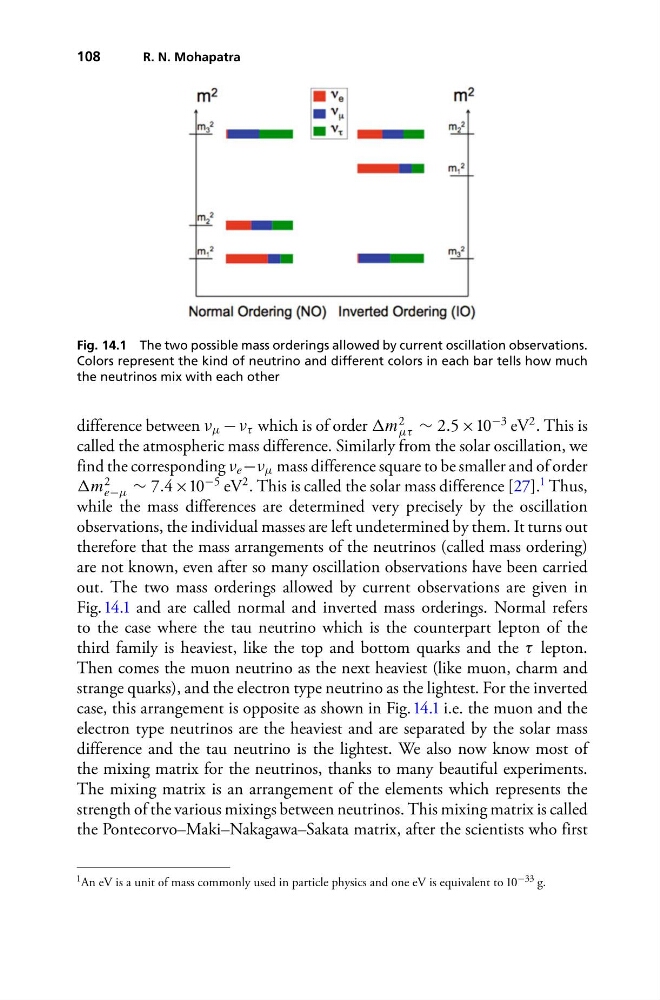
Fig. 14.1 The two possible mass orderings allowed by current oscillation observations.
Colors represent the kind of neutrino and different colors in each bar tells how much
the neutrinos mix with each other
difference between ν μ − ν τ which is of order m
2
μτ ∼ 2.5 × 10
−3 eV
2 . This is
called the atmospheric mass difference. Similarly from the solar oscillation, we
find the corresponding ν e −ν μ mass difference square to be smaller and of order
m
2
e−μ ∼ 7.4 × 10
−5 eV
2 . This is called the solar mass difference [27].
1 Thus,
while the mass differences are determined very precisely by the oscillation
observations, the individual masses are left undetermined by them. It turns out
therefore that the mass arrangements of the neutrinos (called mass ordering)
are not known, even after so many oscillation observations have been carried
out. The two mass orderings allowed by current observations are given in
Fig. 14.1 and are called normal and inverted mass orderings. Normal refers
to the case where the tau neutrino which is the counterpart lepton of the
third family is heaviest, like the top and bottom quarks and the τ lepton.
Then comes the muon neutrino as the next heaviest (like muon, charm and
strange quarks), and the electron type neutrino as the lightest. For the inverted
case, this arrangement is opposite as shown in Fig. 14.1 i.e. the muon and the
electron type neutrinos are the heaviest and are separated by the solar mass
difference and the tau neutrino is the lightest. We also now know most of
the mixing matrix for the neutrinos, thanks to many beautiful experiments.
The mixing matrix is an arrangement of the elements which represents the
strength of the various mixings between neutrinos. This mixing matrix is called
the Pontecorvo–Maki–Nakagawa–Sakata matrix, after the scientists who first
1 An eV is a unit of mass commonly used in particle physics and one eV is equivalent to 10 −33 g.
R. N. Mohapatra
Fig. 14.1 The two possible mass orderings allowed by current oscillation observations.
Colors represent the kind of neutrino and different colors in each bar tells how much
the neutrinos mix with each other
difference between ν μ − ν τ which is of order m
2
μτ ∼ 2.5 × 10
−3 eV
2 . This is
called the atmospheric mass difference. Similarly from the solar oscillation, we
find the corresponding ν e −ν μ mass difference square to be smaller and of order
m
2
e−μ ∼ 7.4 × 10
−5 eV
2 . This is called the solar mass difference [27].
1 Thus,
while the mass differences are determined very precisely by the oscillation
observations, the individual masses are left undetermined by them. It turns out
therefore that the mass arrangements of the neutrinos (called mass ordering)
are not known, even after so many oscillation observations have been carried
out. The two mass orderings allowed by current observations are given in
Fig. 14.1 and are called normal and inverted mass orderings. Normal refers
to the case where the tau neutrino which is the counterpart lepton of the
third family is heaviest, like the top and bottom quarks and the τ lepton.
Then comes the muon neutrino as the next heaviest (like muon, charm and
strange quarks), and the electron type neutrino as the lightest. For the inverted
case, this arrangement is opposite as shown in Fig. 14.1 i.e. the muon and the
electron type neutrinos are the heaviest and are separated by the solar mass
difference and the tau neutrino is the lightest. We also now know most of
the mixing matrix for the neutrinos, thanks to many beautiful experiments.
The mixing matrix is an arrangement of the elements which represents the
strength of the various mixings between neutrinos. This mixing matrix is called
the Pontecorvo–Maki–Nakagawa–Sakata matrix, after the scientists who first
1 An eV is a unit of mass commonly used in particle physics and one eV is equivalent to 10 −33 g.