

13 Neutrinos Oscillate and Hence They Weigh
97
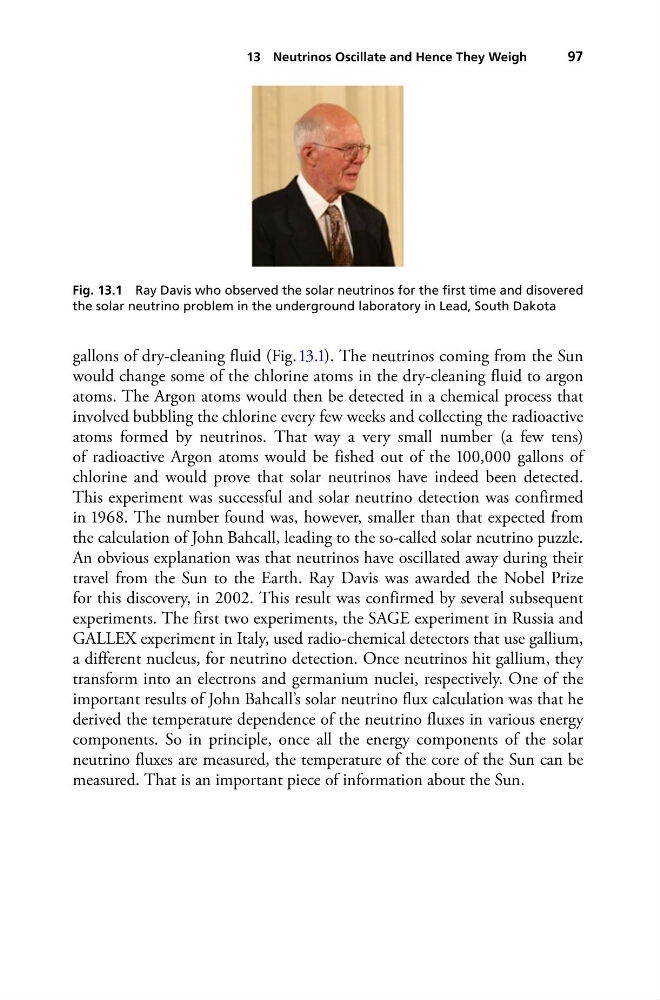
Fig. 13.1 Ray Davis who observed the solar neutrinos for the first time and disovered
the solar neutrino problem in the underground laboratory in Lead, South Dakota
gallons of dry-cleaning fluid (Fig. 13.1). The neutrinos coming from the Sun
would change some of the chlorine atoms in the dry-cleaning fluid to argon
atoms. The Argon atoms would then be detected in a chemical process that
involved bubbling the chlorine every few weeks and collecting the radioactive
atoms formed by neutrinos. That way a very small number (a few tens)
of radioactive Argon atoms would be fished out of the 100,000 gallons of
chlorine and would prove that solar neutrinos have indeed been detected.
This experiment was successful and solar neutrino detection was confirmed
in 1968. The number found was, however, smaller than that expected from
the calculation of John Bahcall, leading to the so-called solar neutrino puzzle.
An obvious explanation was that neutrinos have oscillated away during their
travel from the Sun to the Earth. Ray Davis was awarded the Nobel Prize
for this discovery, in 2002. This result was confirmed by several subsequent
experiments. The first two experiments, the SAGE experiment in Russia and
GALLEX experiment in Italy, used radio-chemical detectors that use gallium,
a different nucleus, for neutrino detection. Once neutrinos hit gallium, they
transform into an electrons and germanium nuclei, respectively. One of the
important results of John Bahcall’s solar neutrino flux calculation was that he
derived the temperature dependence of the neutrino fluxes in various energy
components. So in principle, once all the energy components of the solar
neutrino fluxes are measured, the temperature of the core of the Sun can be
measured. That is an important piece of information about the Sun.
97
Fig. 13.1 Ray Davis who observed the solar neutrinos for the first time and disovered
the solar neutrino problem in the underground laboratory in Lead, South Dakota
gallons of dry-cleaning fluid (Fig. 13.1). The neutrinos coming from the Sun
would change some of the chlorine atoms in the dry-cleaning fluid to argon
atoms. The Argon atoms would then be detected in a chemical process that
involved bubbling the chlorine every few weeks and collecting the radioactive
atoms formed by neutrinos. That way a very small number (a few tens)
of radioactive Argon atoms would be fished out of the 100,000 gallons of
chlorine and would prove that solar neutrinos have indeed been detected.
This experiment was successful and solar neutrino detection was confirmed
in 1968. The number found was, however, smaller than that expected from
the calculation of John Bahcall, leading to the so-called solar neutrino puzzle.
An obvious explanation was that neutrinos have oscillated away during their
travel from the Sun to the Earth. Ray Davis was awarded the Nobel Prize
for this discovery, in 2002. This result was confirmed by several subsequent
experiments. The first two experiments, the SAGE experiment in Russia and
GALLEX experiment in Italy, used radio-chemical detectors that use gallium,
a different nucleus, for neutrino detection. Once neutrinos hit gallium, they
transform into an electrons and germanium nuclei, respectively. One of the
important results of John Bahcall’s solar neutrino flux calculation was that he
derived the temperature dependence of the neutrino fluxes in various energy
components. So in principle, once all the energy components of the solar
neutrino fluxes are measured, the temperature of the core of the Sun can be
measured. That is an important piece of information about the Sun.