

610
THE ORGANIC CHEMISTRY OF INTERMEDIARY METABOLISM
In what can be considered a reversal of this sequence,
the acetyl-CoA acts as the nucleophile and is
carboxylated to malonyl-CoA with displacement of
the biotin–enzyme system.
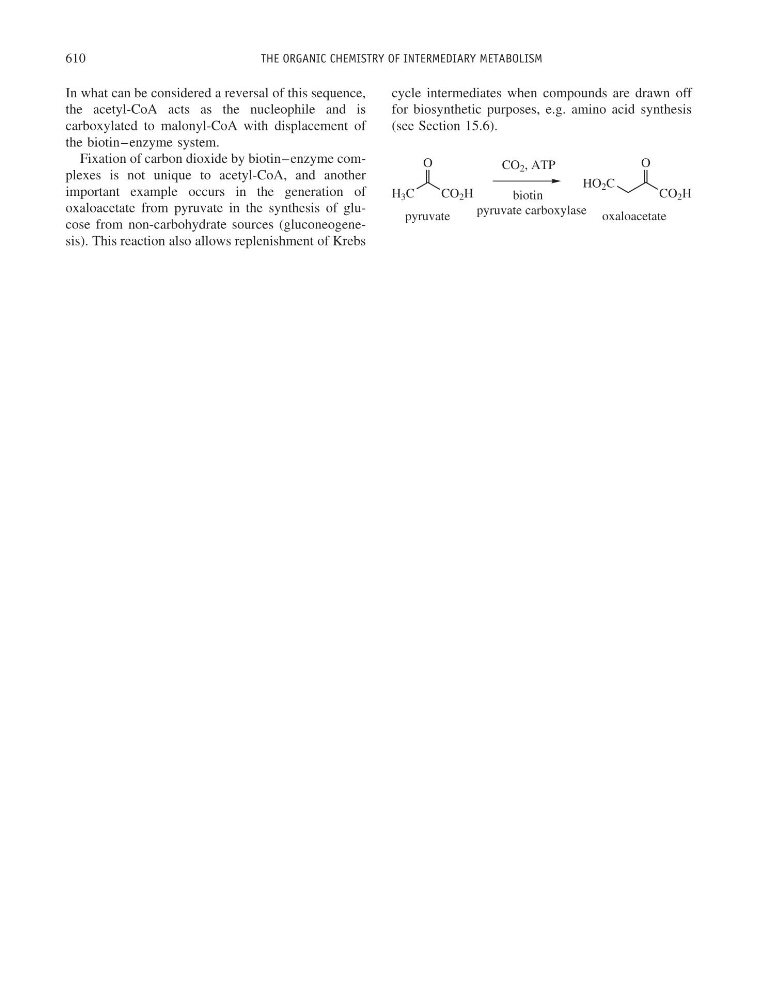
Fixation of carbon dioxide by biotin–enzyme complexes is not unique to acetyl-CoA, and another
important example occurs in the generation of
oxaloacetate from pyruvate in the synthesis of glucose from non-carbohydrate sources (gluconeogenesis). This reaction also allows replenishment of Krebs
cycle intermediates when compounds are drawn off
for biosynthetic purposes, e.g. amino acid synthesis
(see Section 15.6).
O
H 3 C
CO 2 H
CO 2 , ATP
biotin
pyruvate carboxylase
O
CO 2 H
HO 2 C
oxaloacetate
pyruvate