

520
AMINO ACIDS, PEPTIDES AND PROTEINS
Box 13.4 (continued)
N
N
His
Glu
CO 2
Me
O
NMe 3
O
O
H
H
N
N
His
Glu
CO 2
O
H
H
N
N
His
Glu
CO 2
Me
O
NMe 3
O
O
H
N
N
His
Glu
CO 2
Me
HO
NMe 3
O
H
H
O
Me
O
NMe 3
O
N
N
His
Glu
CO 2
HO
O
H
N
N
His
Glu
CO 2
HO
O
H
H
Me
Ser
Ser
Ser
Ser
O
Ser
O
O
Ser
acetylcholine attracted to
glutamic acid in active site
nucleophilic attack of serine
facilitated by imidazole nitrogen
loss of choline as leaving
group; imidazolium
cation provides proton
hydrolysis of serine ester
using water molecule
imidazole provides proton
to faciltate hydrolysis
release of acetic acid as
second hydrolysis product
H
H
Me
H
acetylated
acetylcholinesterase
acetylcholinesterase
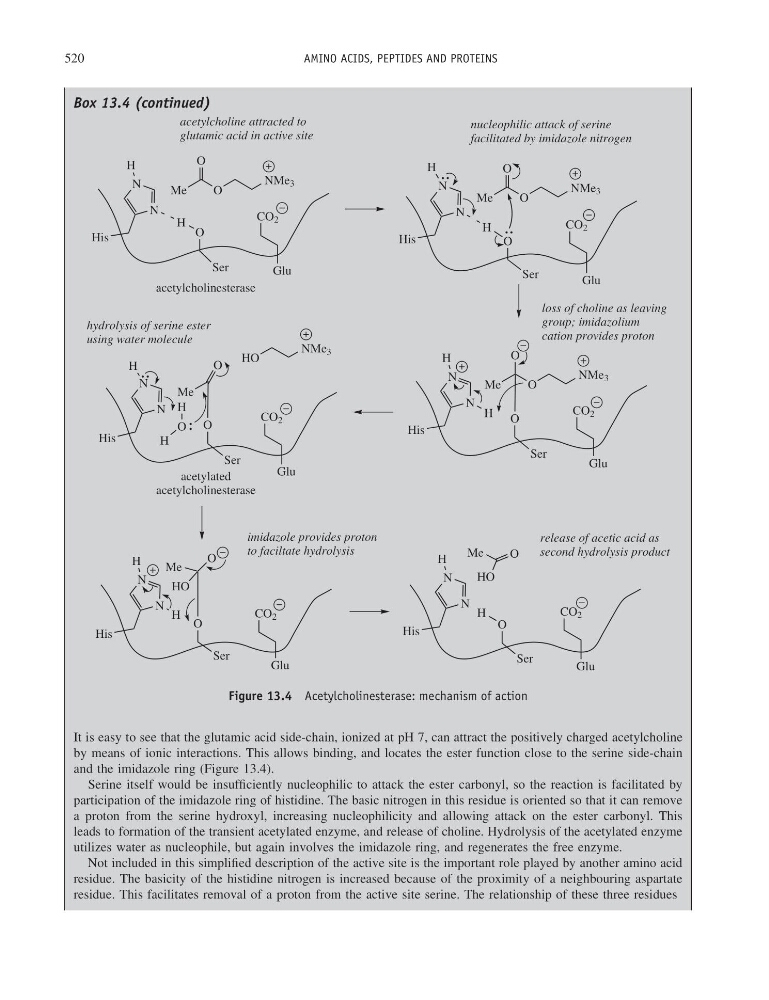
Figure 13.4 Acetylcholinesterase: mechanism of action
It is easy to see that the glutamic acid side-chain, ionized at pH 7, can attract the positively charged acetylcholine
by means of ionic interactions. This allows binding, and locates the ester function close to the serine side-chain
and the imidazole ring (Figure 13.4).
Serine itself would be insufficiently nucleophilic to attack the ester carbonyl, so the reaction is facilitated by
participation of the imidazole ring of histidine. The basic nitrogen in this residue is oriented so that it can remove
a proton from the serine hydroxyl, increasing nucleophilicity and allowing attack on the ester carbonyl. This
leads to formation of the transient acetylated enzyme, and release of choline. Hydrolysis of the acetylated enzyme
utilizes water as nucleophile, but again involves the imidazole ring, and regenerates the free enzyme.
Not included in this simplified description of the active site is the important role played by another amino acid
residue. The basicity of the histidine nitrogen is increased because of the proximity of a neighbouring aspartate
residue. This facilitates removal of a proton from the active site serine. The relationship of these three residues
AMINO ACIDS, PEPTIDES AND PROTEINS
Box 13.4 (continued)
N
N
His
Glu
CO 2
Me
O
NMe 3
O
O
H
H
N
N
His
Glu
CO 2
O
H
H
N
N
His
Glu
CO 2
Me
O
NMe 3
O
O
H
N
N
His
Glu
CO 2
Me
HO
NMe 3
O
H
H
O
Me
O
NMe 3
O
N
N
His
Glu
CO 2
HO
O
H
N
N
His
Glu
CO 2
HO
O
H
H
Me
Ser
Ser
Ser
Ser
O
Ser
O
O
Ser
acetylcholine attracted to
glutamic acid in active site
nucleophilic attack of serine
facilitated by imidazole nitrogen
loss of choline as leaving
group; imidazolium
cation provides proton
hydrolysis of serine ester
using water molecule
imidazole provides proton
to faciltate hydrolysis
release of acetic acid as
second hydrolysis product
H
H
Me
H
acetylated
acetylcholinesterase
acetylcholinesterase
Figure 13.4 Acetylcholinesterase: mechanism of action
It is easy to see that the glutamic acid side-chain, ionized at pH 7, can attract the positively charged acetylcholine
by means of ionic interactions. This allows binding, and locates the ester function close to the serine side-chain
and the imidazole ring (Figure 13.4).
Serine itself would be insufficiently nucleophilic to attack the ester carbonyl, so the reaction is facilitated by
participation of the imidazole ring of histidine. The basic nitrogen in this residue is oriented so that it can remove
a proton from the serine hydroxyl, increasing nucleophilicity and allowing attack on the ester carbonyl. This
leads to formation of the transient acetylated enzyme, and release of choline. Hydrolysis of the acetylated enzyme
utilizes water as nucleophile, but again involves the imidazole ring, and regenerates the free enzyme.
Not included in this simplified description of the active site is the important role played by another amino acid
residue. The basicity of the histidine nitrogen is increased because of the proximity of a neighbouring aspartate
residue. This facilitates removal of a proton from the active site serine. The relationship of these three residues