

COMPETING REACTIONS: ELIMINATIONS AND REARRANGEMENTS
209
lower energy transition state
resembles disubstituted alkene
Energy
Reaction coordinate
Br
H 3 C C
H
H
C
H
CH 3
Br
EtO
d−
d−
CH 2 C C
H
H
d−
d−
Br
H
OEt
H
higher energy transition state
resembles monosubstituted alkene
higher energy monosubstituted alkene
lower energy disubstituted alkene
H 3 C
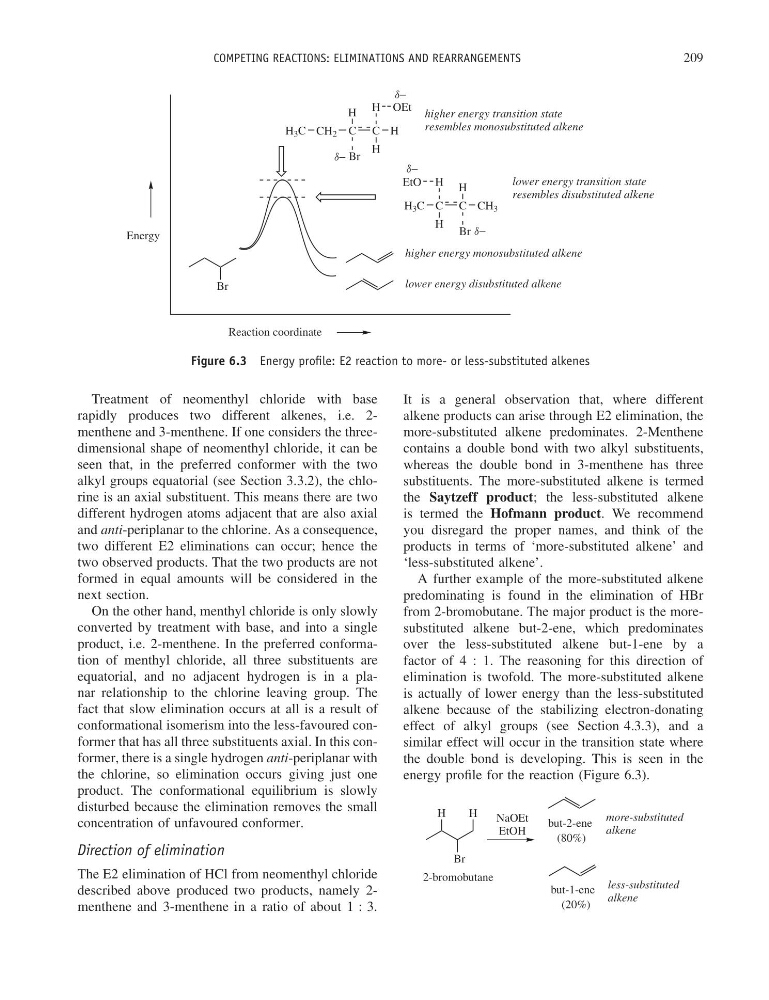
Figure 6.3 Energy profile: E2 reaction to more- or less-substituted alkenes
Treatment of neomenthyl chloride with base
rapidly produces two different alkenes, i.e. 2menthene and 3-menthene. If one considers the threedimensional shape of neomenthyl chloride, it can be
seen that, in the preferred conformer with the two
alkyl groups equatorial (see Section 3.3.2), the chlorine is an axial substituent. This means there are two
different hydrogen atoms adjacent that are also axial
and anti-periplanar to the chlorine. As a consequence,
two different E2 eliminations can occur; hence the
two observed products. That the two products are not
formed in equal amounts will be considered in the
next section.
On the other hand, menthyl chloride is only slowly
converted by treatment with base, and into a single
product, i.e. 2-menthene. In the preferred conformation of menthyl chloride, all three substituents are
equatorial, and no adjacent hydrogen is in a planar relationship to the chlorine leaving group. The
fact that slow elimination occurs at all is a result of
conformational isomerism into the less-favoured conformer that has all three substituents axial. In this conformer, there is a single hydrogen anti-periplanar with
the chlorine, so elimination occurs giving just one
product. The conformational equilibrium is slowly
disturbed because the elimination removes the small
concentration of unfavoured conformer.
Direction of elimination
The E2 elimination of HCl from neomenthyl chloride
described above produced two products, namely 2menthene and 3-menthene in a ratio of about 1 : 3.
It is a general observation that, where different
alkene products can arise through E2 elimination, the
more-substituted alkene predominates. 2-Menthene
contains a double bond with two alkyl substituents,
whereas the double bond in 3-menthene has three
substituents. The more-substituted alkene is termed
the Saytzeff product; the less-substituted alkene
is termed the Hofmann product. We recommend
you disregard the proper names, and think of the
products in terms of ‘more-substituted alkene’ and
‘less-substituted alkene’.
A further example of the more-substituted alkene
predominating is found in the elimination of HBr
from 2-bromobutane. The major product is the moresubstituted alkene but-2-ene, which predominates
over the less-substituted alkene but-1-ene by a
factor of 4 : 1. The reasoning for this direction of
elimination is twofold. The more-substituted alkene
is actually of lower energy than the less-substituted
alkene because of the stabilizing electron-donating
effect of alkyl groups (see Section 4.3.3), and a
similar effect will occur in the transition state where
the double bond is developing. This is seen in the
energy profile for the reaction (Figure 6.3).
Br
NaOEt
EtOH
H
H
(80%)
(20%)
more-substituted
alkene
less-substituted
alkene
2-bromobutane
but-2-ene
but-1-ene
209
lower energy transition state
resembles disubstituted alkene
Energy
Reaction coordinate
Br
H 3 C C
H
H
C
H
CH 3
Br
EtO
d−
d−
CH 2 C C
H
H
d−
d−
Br
H
OEt
H
higher energy transition state
resembles monosubstituted alkene
higher energy monosubstituted alkene
lower energy disubstituted alkene
H 3 C
Figure 6.3 Energy profile: E2 reaction to more- or less-substituted alkenes
Treatment of neomenthyl chloride with base
rapidly produces two different alkenes, i.e. 2menthene and 3-menthene. If one considers the threedimensional shape of neomenthyl chloride, it can be
seen that, in the preferred conformer with the two
alkyl groups equatorial (see Section 3.3.2), the chlorine is an axial substituent. This means there are two
different hydrogen atoms adjacent that are also axial
and anti-periplanar to the chlorine. As a consequence,
two different E2 eliminations can occur; hence the
two observed products. That the two products are not
formed in equal amounts will be considered in the
next section.
On the other hand, menthyl chloride is only slowly
converted by treatment with base, and into a single
product, i.e. 2-menthene. In the preferred conformation of menthyl chloride, all three substituents are
equatorial, and no adjacent hydrogen is in a planar relationship to the chlorine leaving group. The
fact that slow elimination occurs at all is a result of
conformational isomerism into the less-favoured conformer that has all three substituents axial. In this conformer, there is a single hydrogen anti-periplanar with
the chlorine, so elimination occurs giving just one
product. The conformational equilibrium is slowly
disturbed because the elimination removes the small
concentration of unfavoured conformer.
Direction of elimination
The E2 elimination of HCl from neomenthyl chloride
described above produced two products, namely 2menthene and 3-menthene in a ratio of about 1 : 3.
It is a general observation that, where different
alkene products can arise through E2 elimination, the
more-substituted alkene predominates. 2-Menthene
contains a double bond with two alkyl substituents,
whereas the double bond in 3-menthene has three
substituents. The more-substituted alkene is termed
the Saytzeff product; the less-substituted alkene
is termed the Hofmann product. We recommend
you disregard the proper names, and think of the
products in terms of ‘more-substituted alkene’ and
‘less-substituted alkene’.
A further example of the more-substituted alkene
predominating is found in the elimination of HBr
from 2-bromobutane. The major product is the moresubstituted alkene but-2-ene, which predominates
over the less-substituted alkene but-1-ene by a
factor of 4 : 1. The reasoning for this direction of
elimination is twofold. The more-substituted alkene
is actually of lower energy than the less-substituted
alkene because of the stabilizing electron-donating
effect of alkyl groups (see Section 4.3.3), and a
similar effect will occur in the transition state where
the double bond is developing. This is seen in the
energy profile for the reaction (Figure 6.3).
Br
NaOEt
EtOH
H
H
(80%)
(20%)
more-substituted
alkene
less-substituted
alkene
2-bromobutane
but-2-ene
but-1-ene