

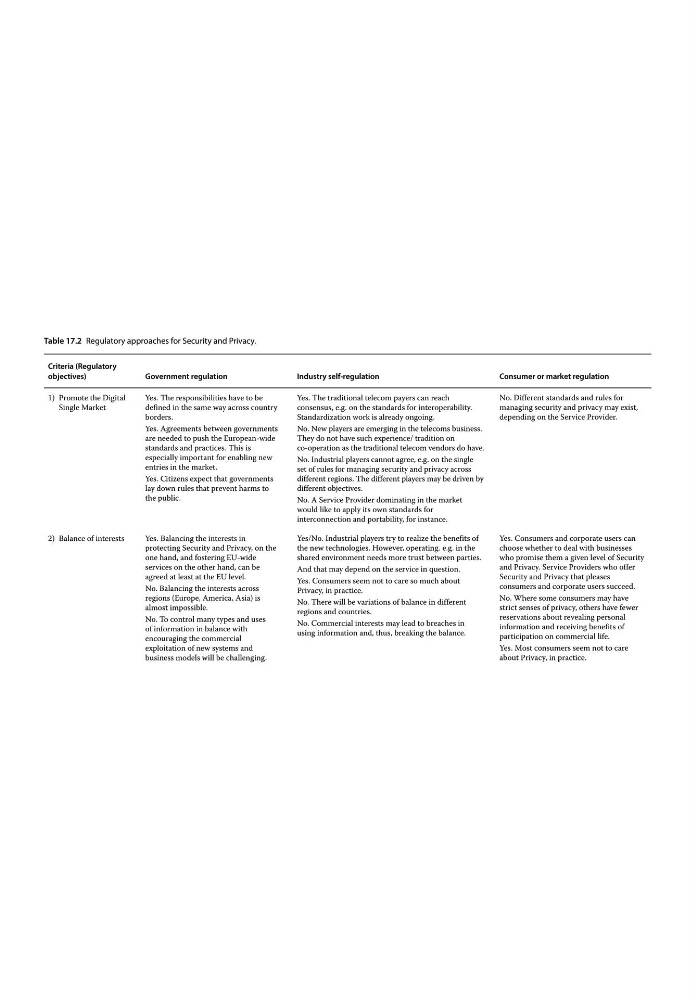
Table 17.2 Regulatory approaches for Security and Privacy.
Criteria (Regulatory
objectives)
Government regulation
Industry self‐regulation
Consumer or market regulation
1) Promote the Digital
Single Market
Yes. The responsibilities have to be
defined in the same way across country
borders.
Yes. Agreements between governments
are needed to push the European‐wide
standards and practices. This is
especially important for enabling new
entries in the market.
Yes. Citizens expect that governments
lay down rules that prevent harms to
the public.
Yes. The traditional telecom payers can reach
consensus, e.g. on the standards for interoperability.
Standardization work is already ongoing.
No. New players are emerging in the telecoms business.
They do not have such experience/ tradition on
co‐operation as the traditional telecom vendors do have.
No. Industrial players cannot agree, e.g. on the single
set of rules for managing security and privacy across
different regions. The different players may be driven by
different objectives.
No. A Service Provider dominating in the market
would like to apply its own standards for
interconnection and portability, for instance.
No. Different standards and rules for
managing security and privacy may exist,
depending on the Service Provider.
2) Balance of interests
Yes. Balancing the interests in
protecting Security and Privacy, on the
one hand, and fostering EU‐wide
services on the other hand, can be
agreed at least at the EU level.
No. Balancing the interests across
regions (Europe, America, Asia) is
almost impossible.
No. To control many types and uses
of information in balance with
encouraging the commercial
exploitation of new systems and
business models will be challenging.
Yes/No. Industrial players try to realize the benefits of
the new technologies. However, operating. e.g. in the
shared environment needs more trust between parties.
And that may depend on the service in question.
Yes. Consumers seem not to care so much about
Privacy, in practice.
No. There will be variations of balance in different
regions and countries.
No. Commercial interests may lead to breaches in
using information and, thus, breaking the balance.
Yes. Consumers and corporate users can
choose whether to deal with businesses
who promise them a given level of Security
and Privacy. Service Providers who offer
Security and Privacy that pleases
consumers and corporate users succeed.
No. Where some consumers may have
strict senses of privacy, others have fewer
reservations about revealing personal
information and receiving benefits of
participation on commercial life.
Yes. Most consumers seem not to care
about Privacy, in practice.
Criteria (Regulatory
objectives)
Government regulation
Industry self‐regulation
Consumer or market regulation
1) Promote the Digital
Single Market
Yes. The responsibilities have to be
defined in the same way across country
borders.
Yes. Agreements between governments
are needed to push the European‐wide
standards and practices. This is
especially important for enabling new
entries in the market.
Yes. Citizens expect that governments
lay down rules that prevent harms to
the public.
Yes. The traditional telecom payers can reach
consensus, e.g. on the standards for interoperability.
Standardization work is already ongoing.
No. New players are emerging in the telecoms business.
They do not have such experience/ tradition on
co‐operation as the traditional telecom vendors do have.
No. Industrial players cannot agree, e.g. on the single
set of rules for managing security and privacy across
different regions. The different players may be driven by
different objectives.
No. A Service Provider dominating in the market
would like to apply its own standards for
interconnection and portability, for instance.
No. Different standards and rules for
managing security and privacy may exist,
depending on the Service Provider.
2) Balance of interests
Yes. Balancing the interests in
protecting Security and Privacy, on the
one hand, and fostering EU‐wide
services on the other hand, can be
agreed at least at the EU level.
No. Balancing the interests across
regions (Europe, America, Asia) is
almost impossible.
No. To control many types and uses
of information in balance with
encouraging the commercial
exploitation of new systems and
business models will be challenging.
Yes/No. Industrial players try to realize the benefits of
the new technologies. However, operating. e.g. in the
shared environment needs more trust between parties.
And that may depend on the service in question.
Yes. Consumers seem not to care so much about
Privacy, in practice.
No. There will be variations of balance in different
regions and countries.
No. Commercial interests may lead to breaches in
using information and, thus, breaking the balance.
Yes. Consumers and corporate users can
choose whether to deal with businesses
who promise them a given level of Security
and Privacy. Service Providers who offer
Security and Privacy that pleases
consumers and corporate users succeed.
No. Where some consumers may have
strict senses of privacy, others have fewer
reservations about revealing personal
information and receiving benefits of
participation on commercial life.
Yes. Most consumers seem not to care
about Privacy, in practice.